
Photo Credit: Chinese Embassy in Nepal
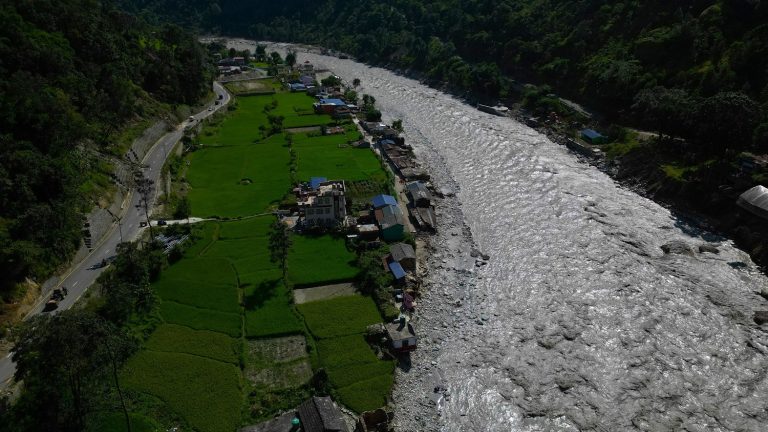
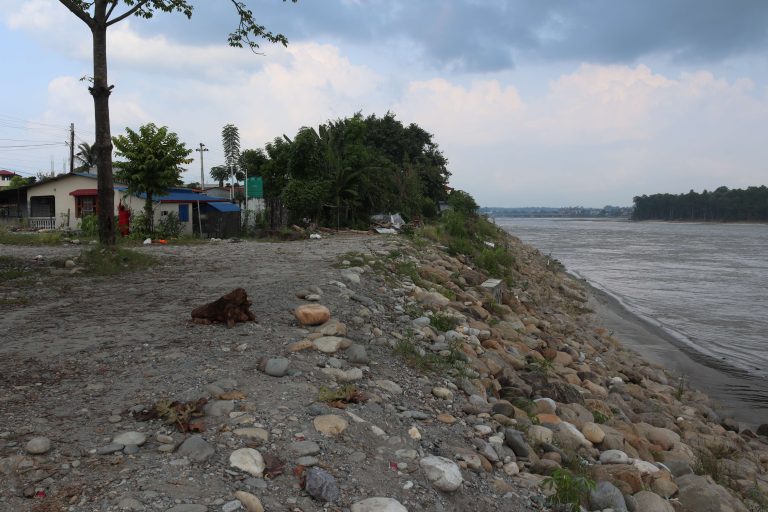
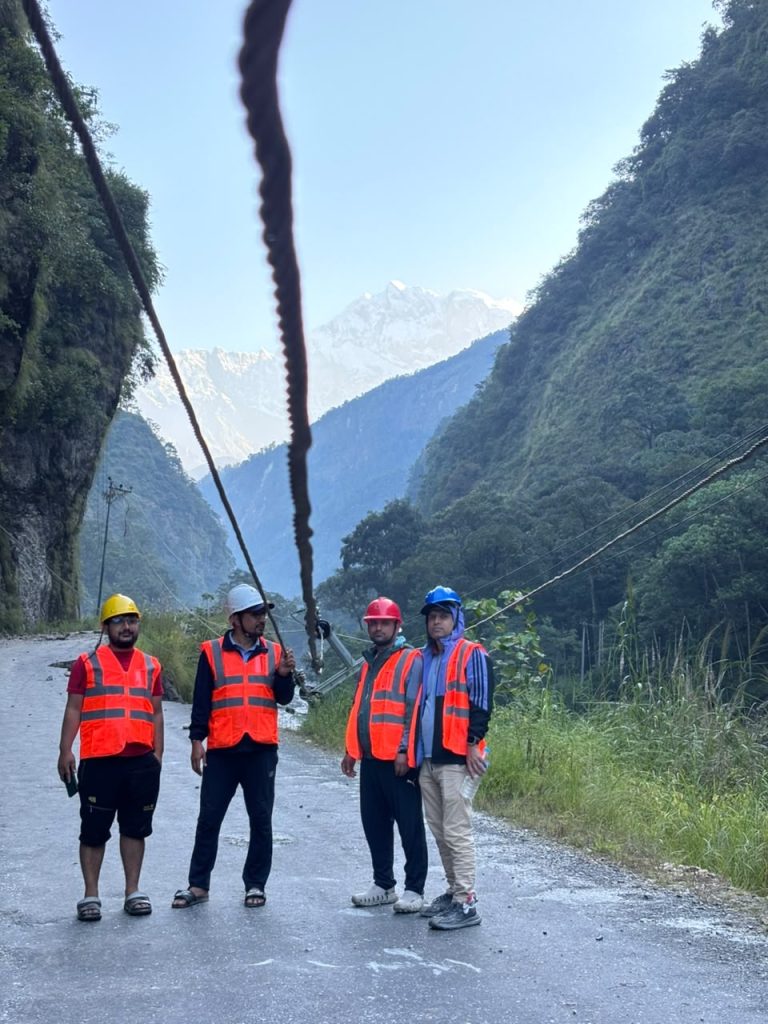
The mudslide in Rasuwa killed people. It destroyed homes. It washed away roads and bridges along the Bhotekoshi and Trishuli rivers. Nepal did not cause this disaster. Nepal contributes almost nothing to the greenhouse gases that are heating the planet. Yet Nepal is paying the price. This is the moment for Nepal to speak with one strong voice. Instead, the government is sending mixed signals to the world. That failure deserves a hard look.
One Minister, Two Different Messages
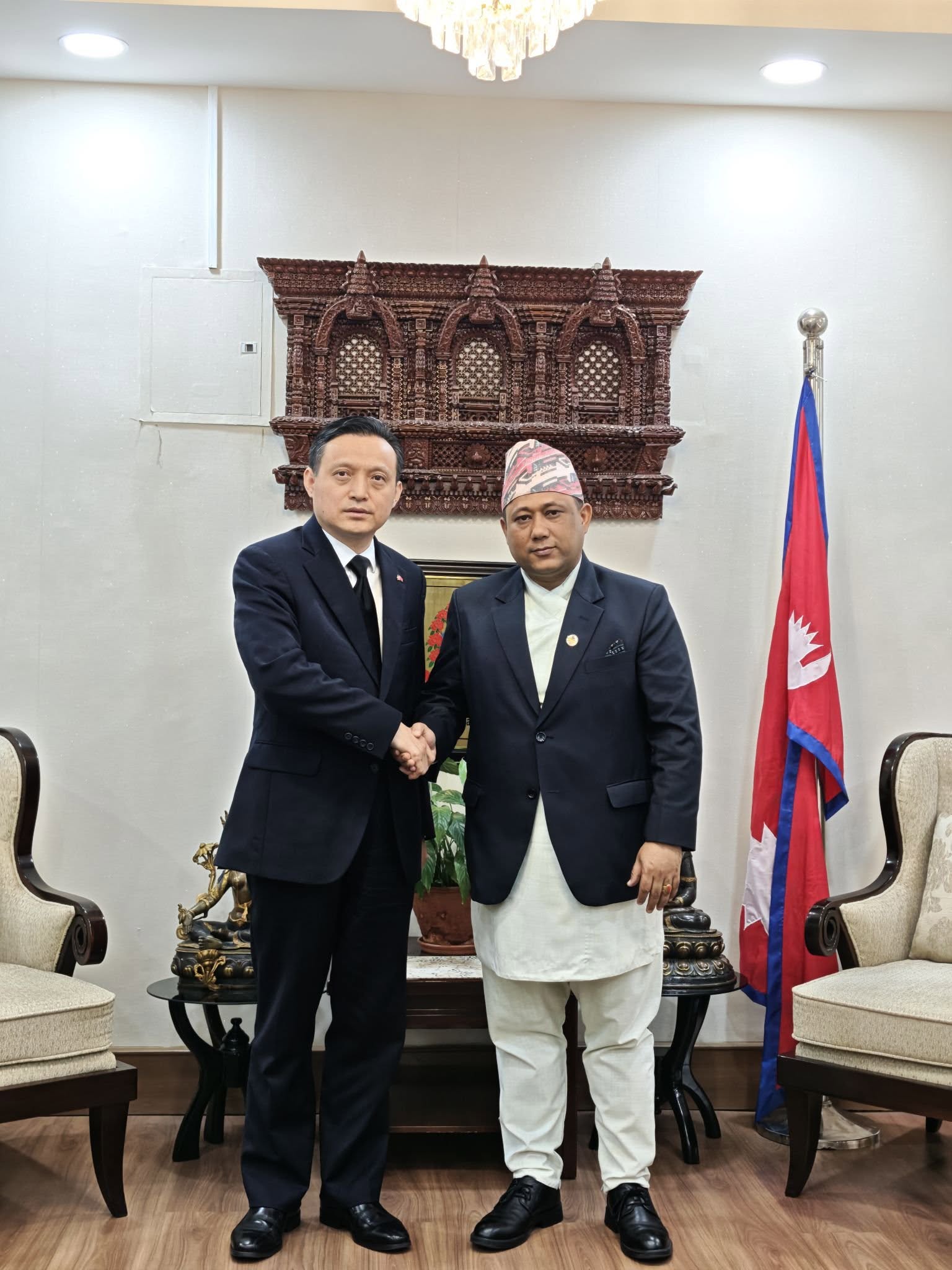
Start with Foreign Minister Shishir Khanal. On September 3, he met the Chinese ambassador, Zhang Maoming. The ambassador thanked Nepal for accepting Chinese aid. He called climate change a shared global challenge. Then Minister Khanal responded. He thanked China for its help. He said Nepal has no plan to seek “climate justice compensation” from any specific country, including China. He said Nepal will instead seek support through the United Nations climate framework and the Paris Agreement.
That sounds diplomatic. It also sounds like surrender.
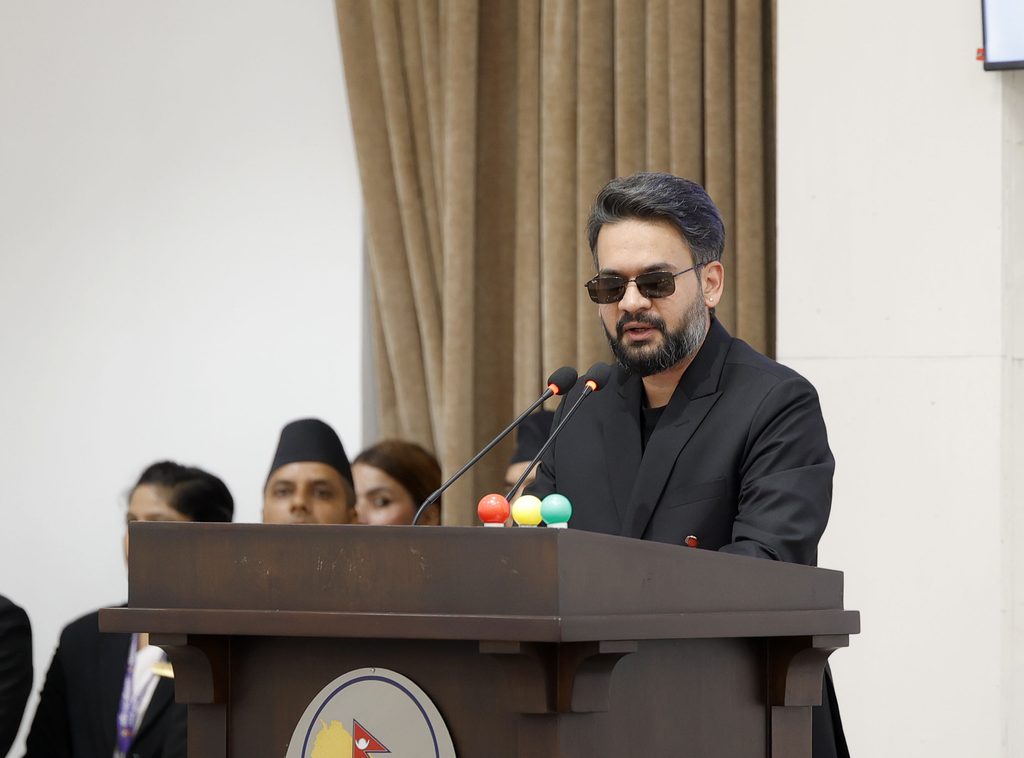
Compare this with what is happening inside Nepal’s own parliament. Reports say Prime Minister Balen is raising the demand for climate compensation and climate justice on the floor of parliament. So one branch of government is demanding accountability from the big emitters. At the same time, the foreign minister is telling China, in a private meeting, that Nepal will not name any country and will not press any specific claim. These two messages cannot both be true. Either Nepal wants climate justice or it does not. A country cannot ask its own citizens to believe one thing while it tells foreign governments something else.
This is not just an awkward contradiction. It weakens Nepal’s negotiating position before any negotiation even begins. When Bloomberg asked China’s foreign ministry spokesperson, Guo Jiakun, about calls from Nepal for compensation from the world’s biggest emitters, he gave a soft answer about China’s own climate efforts and its willingness to cooperate. He did not admit responsibility. He did not commit to any compensation. If Nepal’s own foreign minister publicly rules out asking China for anything, he has handed China exactly the answer it wanted, for free, before Nepal has even built its case.
A Summit Nepal Barely Showed Up For
On the same days, world leaders gathered in Belgrade to mark the 65th anniversary of the Non-Aligned Movement. This is one of the oldest platforms where developing countries speak together on shared problems like unfair global systems and unequal burdens. Nepal did not send its president or its prime minister or even its foreign minister. Nepal sent a joint secretary from the foreign ministry, Krishna Prasad Dhakal, to read a statement.
A joint secretary is a senior civil servant. He is not a head of state. He is not a minister. When Serbia’s own foreign minister personally expressed sympathy for Nepal’s flood victims at that same event, it only made the gap more visible. Serbia’s top diplomat showed up in person for sympathy. Nepal sent a bureaucrat to ask for solidarity. If Nepal wanted the Non-Aligned Movement to help carry its climate justice message to the world, this was the moment to send someone with real authority. Nepal chose not to.
New Friends in West Africa, While the House Is Flooding
In the middle of this crisis, Nepal also announced new diplomatic relations with Guinea-Bissau. Nepal now has formal ties with 184 countries. The announcement talked about shared membership in the Group of 77 and the Non-Aligned Movement. Guinea-Bissau is a small West African nation. There is nothing wrong with having friends everywhere. But timing matters. While flood victims are still being counted, while houses are still buried in mud, while the foreign minister is meeting foreign ambassadors about disaster aid, the same ministry found time to process and announce a brand new diplomatic relationship with a country that has no direct bearing on the flood crisis or Nepal’s climate case. It raises a fair question. Where are the priorities of Nepal’s foreign policy machine right now?
Add to this the reports that Nepal’s own prime minister is hesitant about attending the UN General Assembly this year. The General Assembly is exactly the stage where a small, vulnerable country can put its disaster in front of the whole world. If the prime minister skips it, or sends someone junior instead, Nepal loses one of its biggest chances to make its case heard.
What the Legal Scholars Are Saying
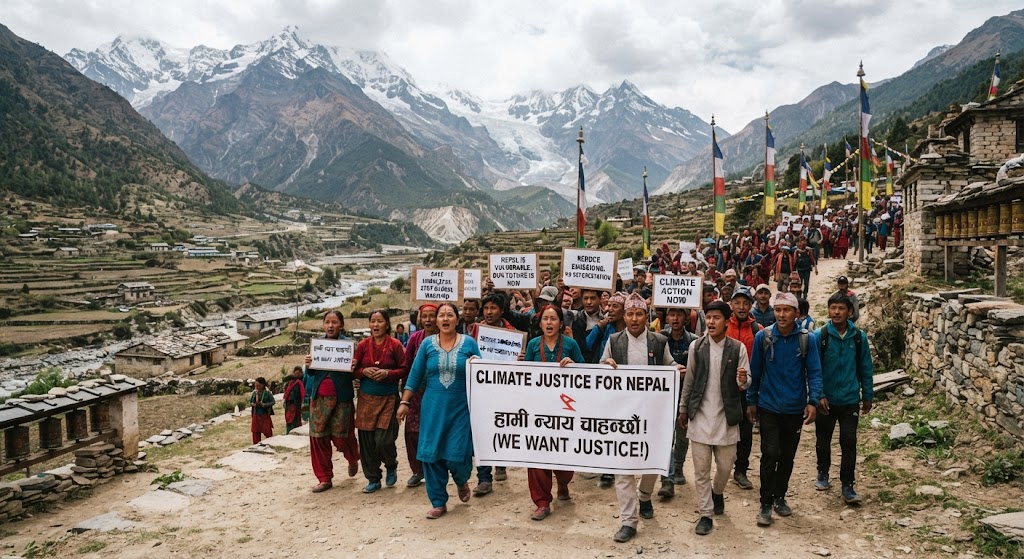
Not everyone in Nepal is staying quiet. International Law Professor Dr. Katak Malla from Stockholm University has laid out a clear path. He wants Nepali lawyers to form a Climate Justice Science and Law Group. Its job would be to document the losses from disasters like the Rasuwa mudslide, build scientific proof of who caused what, name the countries responsible, and push for real accountability at the International Court of Justice, the UN General Assembly, and the UN Security Council.
He does not spare the United States. He points out that America, the world’s largest historical emitter, has withdrawn from the Paris Agreement twice. He notes that the Biden administration had promised 17.5 million dollars to the loss and damage fund and that the Trump administration cancelled that promise in 2025 and pulled the United States out of the process entirely. He says that even though President Trump has offered help for Nepal’s current crisis, the broader American policy still refuses to accept real emission cuts or historical responsibility. He calls this a major obstacle to real climate justice.
Malla puts the moral case plainly. He says climate change is killing people in Nepal, and the world cannot keep treating these deaths as isolated natural disasters. He says the countries and industries that produced the largest share of historical emissions carry deep responsibility for what vulnerable nations like Nepal are now suffering. He points to the warming Himalayas, the melting glaciers, and the growing danger of glacial lake outburst floods as proof that this crisis is only getting worse. He argues that Nepal has contributed almost nothing to global emissions, yet its people are paying an enormous price. He calls this a crisis of responsibility, inequality, and justice, not just an environmental problem. He wants Nepal to demand climate justice with a stronger and more courageous voice while also calling for peace, because he says the world is wasting resources on war and rivalry instead of uniting against a shared threat.
Malla also lays out concrete steps. He wants Nepal to build on Vanuatu’s initiative at the International Court of Justice, but to go further than just asking for an advisory opinion. He wants real legal accountability. He wants Nepal to push the UN Security Council to treat climate change as a threat to regional stability, the same way the Security Council once treated the ecological collapse of the Lake Chad Basin in Resolution 2349. He wants the Ministry of Foreign Affairs to actively explain to the world why Nepal should not have to suffer for emissions it did not create.
This is the kind of clear, specific strategy a foreign ministry should be building on. Instead, Nepal’s actual foreign minister just told the Chinese ambassador that Nepal is not naming any country at all.
What International Watercourse Lawyer Dr. Kishor Uprety Adds!
International watercourse scholar Dr. Kishor Uprety looks at the same crisis from the water and river side, and he reaches a similar warning. He calls climate change a threat multiplier. He says it is changing the physical patterns of river basins across the region, and that this uncertainty is a serious threat to how countries manage the rivers they share. He points out that only a few transboundary river agreements even include a way to compensate for these changes. Most of them fix water sharing in rigid volumes rather than flexible shares of flow, so they cannot bend when the climate shifts under them.
Uprety argues that South Asia needs a new kind of hydro diplomacy. He wants countries to move past the old idea of cooperating on water alone, and instead build cooperation that blends water management with climate change together. He says water should become the center of a more formal regional partnership, with shared rules and shared institutions, not just informal goodwill between neighbors.
He also points to international law as a foundation Nepal can stand on. He lists the core principles that river-sharing countries are expected to follow: using shared water reasonably and fairly, avoiding significant harm to others, cooperating and sharing information, giving notice before changes, consulting when needed, negotiating in good faith, and settling disputes peacefully. He says there is a clear duty to cooperate under international law now, and that this duty is not just a moral idea anymore. He also notes that outside institutions, like the World Bank’s role in finalizing the Indus Waters Treaty, can help smaller countries reach fair agreements with bigger neighbors. For Nepal, sitting between two giants, this is exactly the kind of structured, rules-based leverage the government should be building, instead of quietly promising in private meetings that it will not name anyone.
The Bottom Line
Nepal’s flood was a natural disaster made worse by a changed climate that Nepal did not create. That much is not in dispute. What is in dispute is whether Nepal’s government can act with one voice, real seriousness, and real strategy to demand the support and accountability its people deserve. Right now, the evidence points the other way. A foreign minister who rules out naming any country while the prime minister demands compensation in parliament. A junior official is sent to represent Nepal at a major solidarity summit while a foreign minister meets with donors instead. New diplomatic ties announced with a distant country in the middle of a domestic disaster. A president or prime minister who may not even show up at the UN General Assembly.
International scholars like Katak Malla and Kishor Uprety have already suggested the further course of action, one legal and moral, one built on water law and regional diplomacy. Nepal has the moral case. Nepal has the scientific case. Nepal has the legal case. What Nepal does not yet have is a government willing to use them.