
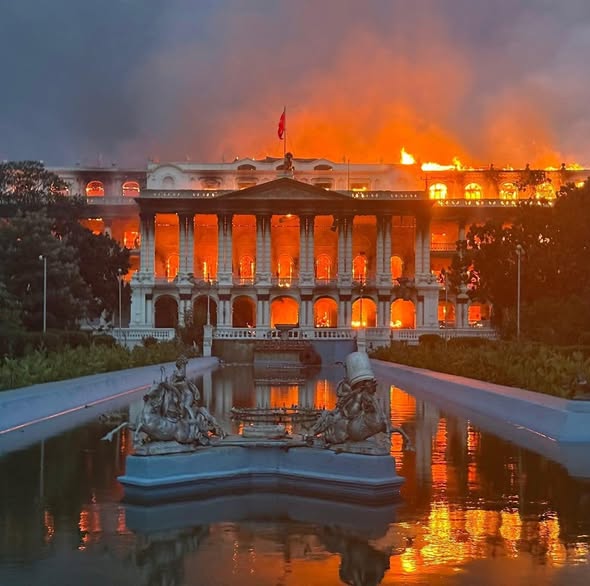
Kathmandu, September 9: September 9, 2025, remains one of the darkest days in Nepal’s recent history.
On that day, during the Gen Z-led protests, all three organs of the state—the legislature, executive and judiciary—came under widespread arson, vandalism and violent attacks. Media organisations, private businesses and properties belonging to individuals and institutions were also targeted.
A year later, much of the physical damage has been repaired or is in the process of being rebuilt. But the deeper damage is less visible and far more difficult to restore, confidence in the security of institutions, property and investment.
The attacks on parliament, government offices and courts, including the Supreme Court, were particularly disturbing because they exposed the vulnerability of institutions that are expected to uphold the rule of law.
At the same time, attacks on media houses and private businesses sent an equally troubling message to investors: political unrest could quickly translate into physical risks to their property and operations.
For investors, confidence is built on more than economic returns. They need assurance that their capital, property and businesses will be protected even during periods of political turmoil. The events of September 9 severely weakened that sense of security.
One year on, Nepal has yet to fully restore investor confidence. The problem is not simply a lack of capital or investment opportunities. Nepal continues to face a trust deficit arising from political uncertainty, policy instability, weak institutional protection and concerns over the security of private property.
The consequences extend beyond those who directly suffered losses on September 9. When investors perceive that state institutions and private property can become targets during political unrest, they naturally become more cautious about committing new capital. Existing investors may delay expansion, while potential investors may choose to wait or look elsewhere.
The challenge before the government, therefore, is not merely to rebuild what was destroyed. It is to demonstrate that the state has the capacity and political will to protect institutions, businesses, media organisations and private property regardless of political circumstances.
September 9 should consequently be remembered not only as a day of destruction but also as a test of Nepal’s commitment to the rule of law and economic stability.
Buildings can be rebuilt within months. Businesses can recover over time. But once investor confidence is shattered, restoring it can take years.