
Where Is the Constitution’s Promise of Social Justice?
Saptari, Sept. 11: Nepal’s Constitution guarantees the right to basic health services and commits the state to social justice. Yet the case of a poor woman giving birth on a pavement outside a government hospital in Saptari has exposed a disturbing gap between constitutional promises and the reality faced by the country’s poorest citizens.
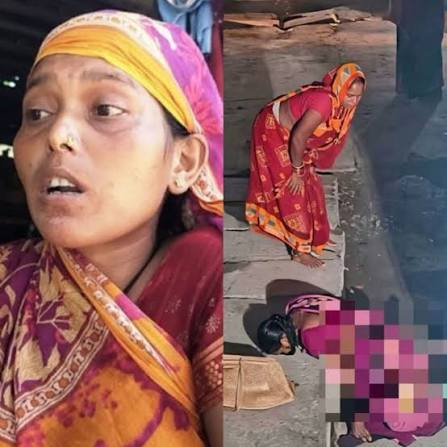
Babita Paswan, 30, of Parsahi Tole in Rajbiraj Municipality-14, had reached Gajendra Narayan Singh Hospital three days ago while in labor with her fourth child. She reportedly left the hospital after being unable to afford the treatment costs.
Paswan, who had previously delivered her three children at health facilities, eventually gave birth to her fourth child on the roadside after reportedly failing to arrange Rs. 3,200 for medical tests prescribed after her admission to the hospital.
The incident has triggered widespread public outrage after CCTV footage showing the woman giving birth outside the hospital went viral on social media and was reported by the media.
Three separate probe committees have now been formed at the federal, provincial and district levels to investigate how a woman who had been admitted to a government hospital ended up giving birth on the pavement outside it.
The committees have already begun their work.
According to the hospital administration, health professionals, security personnel, cleaning staff and Acting Medical Superintendent Dr. Jeetendra Kandel have been questioned over the incident.
Hospital Medical Superintendent Dr. Ranjit Jha said the investigation was examining the circumstances surrounding the incident, the woman’s condition, the conduct of health workers and other related issues. He said he was in Kathmandu on official business when the incident occurred.
In the preliminary phase of the investigation, four health workers, one security guard and one cleaner who were on duty in the obstetrics ward have been suspended. Further decisions will be taken after the investigation is completed.
But the incident raises a question much larger than whether individual hospital employees should be suspended.
How can a woman in labor be unable to receive treatment at a government hospital because she could not arrange Rs. 3,200?
The Constitution recognizes access to basic health services as a fundamental right. If a poor woman can be pushed out of a government hospital and forced to give birth on a pavement because she cannot afford medical tests, what does that constitutional guarantee mean in practice?
The incident also raises serious questions about the government’s commitment to the poor.
The Balen Shah government has repeatedly presented good governance and effective public service delivery as its priorities. But good governance cannot simply mean suspending employees after a shocking incident becomes public. Its first test should be whether the poorest citizen can actually receive essential public services when she needs them most.
The government’s health priorities also deserve scrutiny. At a time when the effectiveness and financing of Nepal’s health insurance system remain major concerns, any reduction in budgetary priority for health insurance and public healthcare raises legitimate questions about who ultimately bears the burden.
For a wealthy citizen, Rs. 3,200 may be an insignificant amount. For a poor family, it can become the difference between receiving medical care and being turned away from it.
That is precisely why public health systems exist.
If the state reduces its financial commitment to health insurance and essential public healthcare while poor citizens are increasingly required to pay out of pocket, the burden of the state’s policy choices falls disproportionately on those who can least afford it.
The government cannot claim to be committed to social justice while allowing poverty to become a barrier to basic medical care in its own hospitals.
If hospital staff were negligent, they must be held accountable. But accountability should not end with the suspension of a few employees. The government must also examine the institutional failures, financing arrangements, health insurance coverage and administrative practices that allowed a woman in labor to end up giving birth on a pavement outside a public hospital.
Babita Paswan’s ordeal is therefore not merely a story of hospital negligence. It is a stark reminder of the distance between Nepal’s constitutional promise of social justice and the lived reality of its poorest citizens.
The question is no longer simply who failed Babita that day.
The deeper question is whether the state itself has failed the poor.
And if a poor woman cannot safely give birth inside a government hospital because she cannot produce Rs. 3,200, where, exactly, is the constitutional promise of a socially just state?