
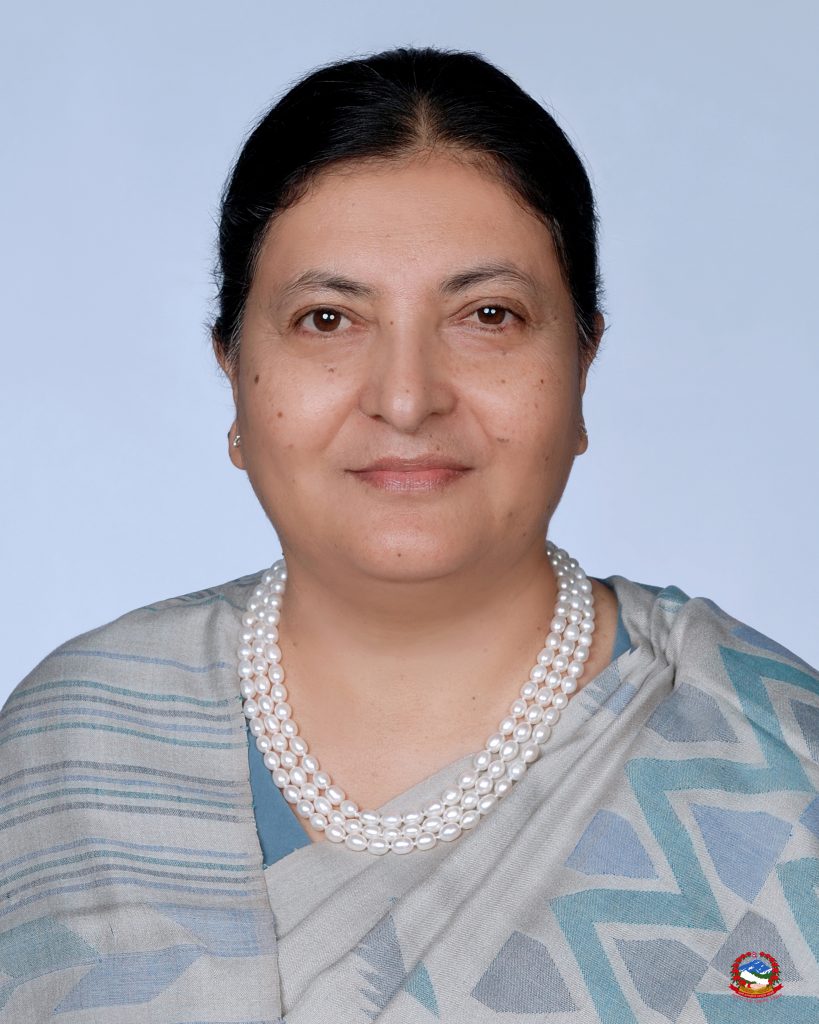
Photo Source: Office of the President
LALITPUR, Sept 24 — Former President Bidya Devi Bhandari has formally returned to active party politics, after the CPN UML Secretariat meeting preceding the Central Committee meeting nominated her as the party’s senior leader, placing her second in the party hierarchy after Chairman KP Sharma Oli.
Bhandari’s return to the leadership of a political party has raised a larger constitutional and institutional question for Nepal’s republican system. Can a person who has served as the country’s head of state and was entrusted with promoting national unity and protecting the Constitution subsequently return to active partisan leadership?
The Constitution identifies the President as the head of state and states that the President shall promote national unity, while making the protection and observance of the Constitution the President’s principal duty. It does not, however, expressly prohibit a former President from rejoining a political party after leaving office.
That legal gap has now gained renewed significance with Bhandari’s appointment as a senior UML leader. She previously served as UML vice chair before becoming President in 2015 and remained in the presidential office for two terms until 2023. She has since sought a return to active party politics.
The issue therefore goes beyond Bhandari herself. It raises questions about how Nepal understands the institutional character of the presidency under the republican Constitution. If the head of state can return directly to the leadership structure of a political party after leaving office, questions arise about the separation between the symbolic and constitutional role of the President and partisan political leadership.
The debate had already emerged within the UML. Some party leaders had argued that a person who had occupied the country’s highest constitutional position should remain above active party politics, while others maintained that Bhandari should not be prevented from returning to her political party.
The UML Central Committee ultimately approved her appointment as senior leader on Thursday. The decision followed the reopening of her party membership earlier this year after a prolonged internal dispute over her political return.
The development could now fuel a wider constitutional discussion in Nepal about whether the existing framework adequately defines the post-presidential status of former heads of state. It also raises a broader institutional question about whether the political neutrality, national representational character and public expectations attached to the presidency should continue to influence the conduct of former Presidents after leaving office.
The UML meeting also unanimously approved Chairman KP Sharma Oli’s political report and nominated leaders to the party’s Standing Committee and Central Committee. The meeting delegated authority to the Secretariat to finalise the Standing Committee and form the Politburo, Advisory Council and other organisational structures.
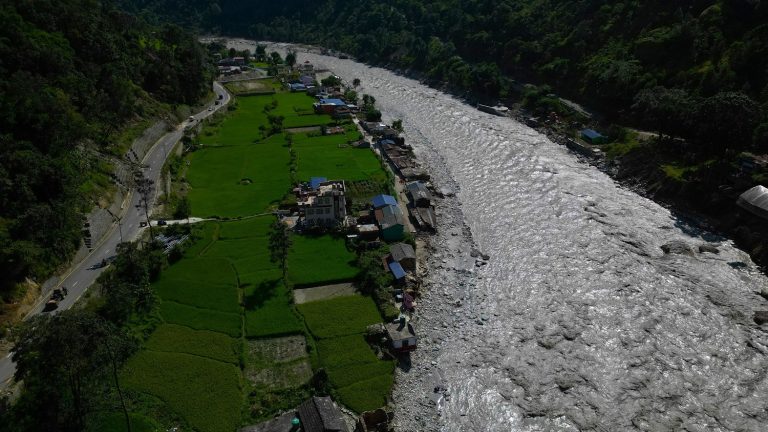
The meeting discussed the economic and humanitarian impact of the Bhote Koshi floods and called for rehabilitation of displaced people and reconstruction of damaged infrastructure. It also called for special attention to children, pregnant and postpartum women, elderly people and persons with disabilities during rehabilitation efforts.
The party also called for climate justice for developing countries and thanked friendly countries, international organisations and local authorities for their support in rescue and relief operations.
The UML further objected to the arrests of party Chairman KP Sharma Oli and Vice Chairman Bishnu Paudel in connection with investigations.
But beyond the party’s immediate organisational decisions, Bhandari’s return to the UML leadership has placed an important question before Nepal’s republican system. Question is what should be the political role of a person after serving as the country’s head of state?