
Shabd Sharma
One hundred days ago, Nepal did something it has never quite managed before as it elected a 36-year-old ex-mayor and rapper as prime minister, and, even more astonishingly, entrusted his four-year-old party with 182 of 275 seats in the legislature.
July 7 has brought the conclusion of Prime Minister Balendra ‘Balen’ Shah‘s honeymoon a peculiar political grace period borrowed from American mythology and now administered with equal zest in Kathmandu. So, has Nepal‘s most improbable premier earned a second act, or are the audience already searching for the rotting vegetables?
On his own thermometer of achievement, which the government‘s official mouthpiece, Education Minister Sasmit Pokharel, has established, the answer is a triumphant 87.2 percent seventy of the hundred points in Shah‘s reform agenda of government that were apparently delivered in full. That is the kind of figure that should make a school valedictorian flush, and has, of course, caused the Opposition a resentful eye roll. No one‘s grade for their own homework tends to be all A‘s.
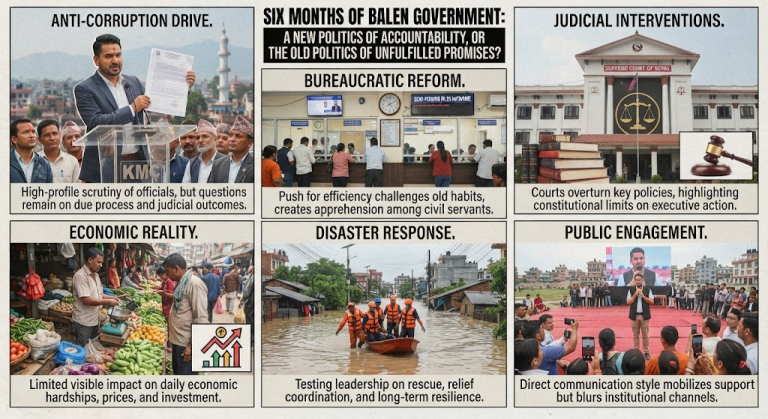
What can‘t be denied though is the speed. A day into the new government, on 27 March, Shah‘s government sanctioned the arrests of former prime minister K P Sharma Oli and his former home minister over the fatal 2025 Gen Z protests that unseated the previous regime former were later released without charges the message was sent. Ministries have been downsized, hospitals set up digital patient records, procurement and money-laundering laws amended and a 2.1trn rupee budget brought forward with a focus on infrastructure and IT. Even the civil service pay cycle was revamped, shifting to a bimonthly rhythm, making Nepal the first South Asian country to experiment with this.
And then there‘s the style. Shah, has likened governing to “driving on an expressway,” not slowing down until destination has been reached an analogy works well for a man who once rapped about corruption, rather than legislated against it. His backers praise his focus on concrete achievement to a degree Nepali politics has long lacked. Opponents argue an expressway without a stoplight is sure to result in clogging, and cite a governing style supported by executive directives rather than consensus building in the Legislature, the government even passed three of the twelve laws it had promised during its first one hundred days.
That criticism becomes more pointed in regard to Shah‘s tightly-knit inner circle of personal aides and confidants, who reporters have suggested have occasionally barged ahead of ministers and responded to bureaucrats and even foreign ambassadors in a manner that exceeds the power that their official titles grant them. Poor handling of a farce over a German passport-printing contractor, in which Nepali press declared Shah had issued a diplomatic protest that Berlin‘s embassy said never happened, did little to convince skeptics that the government‘s foreign policy managers can be counted on to handle themselves.
The economy continues to provide the most intractable homework problem for government. Investment has failed to gather pace; employment growth remains lackluster; revenue collection is lagging behind forecasts; unwelcome news for a government that had made its entry to power riding the youthful credulity of a frustrated electorate on precisely these matters. Reforms to taxes on electric vehicles, rushed through in a huff and puff, were followed in their wake by a seizure of 776 vehicles at two border crossing points, amid suspicions that the tax reform had been leaked early.
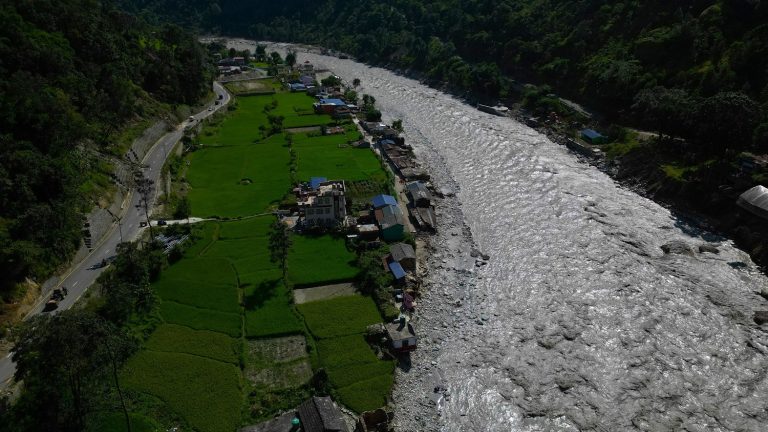
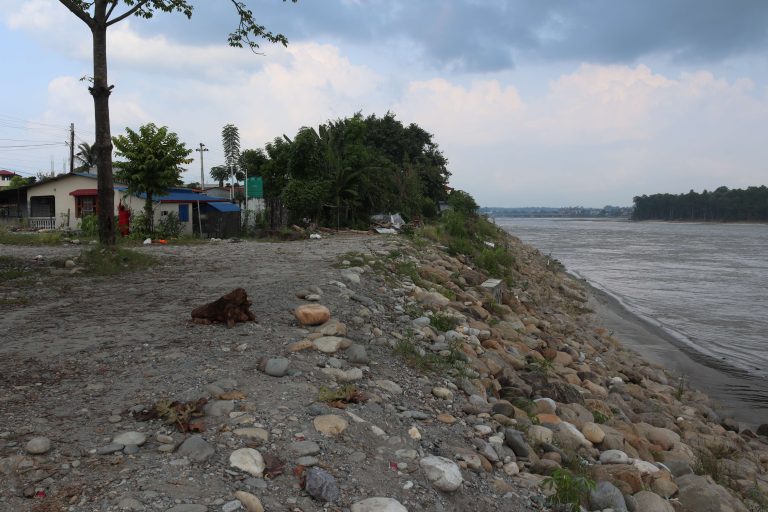
The harshest test of the hundred days is not in the press releases, but in holding centres. Since the riverbank and encroachment removal campaign was begun on 25 April, around 1500 people displaced from almost 400 households have been crammed into seven holding centres located in Kathmandu, Bhaktapur and Kavrepalanchok. While the government claims that food and shelter are being provided, the displaced have a less convincing account of their own: that they have only been given vegetarian meals, that their family elders and their children have gone hungry, and that the Rs. 25,000 in cash they have been provided is barely enough for rent, let alone basic essentials once landlords find out their new tenants are former squatters. Already the centre in Bode, Bhaktapur, has seen dozens of families move away rather than continue to live under such conditions. Three people are rumored to have died there in the process. A digital inventory of the displaced, promised within two months, has yet to be compiled.
And what about Balen Shah the rapper, the reformer, the reluctant prime minister? Right in the middle of both, between the anti-corruption hero his supporters see and the number-gobbling, rule-obsessed ‘technocrat’ his foes criticize. The world over his national government is on the move, Nepal‘s long-awaited government move has arrived: in the coming hundred days will it be moving forward or just moving quickly?
(Author is a freelance researcher. The opinion is his own and it does not reflect the editorial policy).