
BENGALURU, India, Sept 7, 2026 – A Bengaluru-based startup, Dognosis, is developing an experimental, non-invasive cancer screening method that combines dogs’ highly sensitive sense of smell with artificial intelligence.
Rescue dog Chloe, a Labrador mix, is among 15 dogs trained to detect cancer-related smells in human breath.
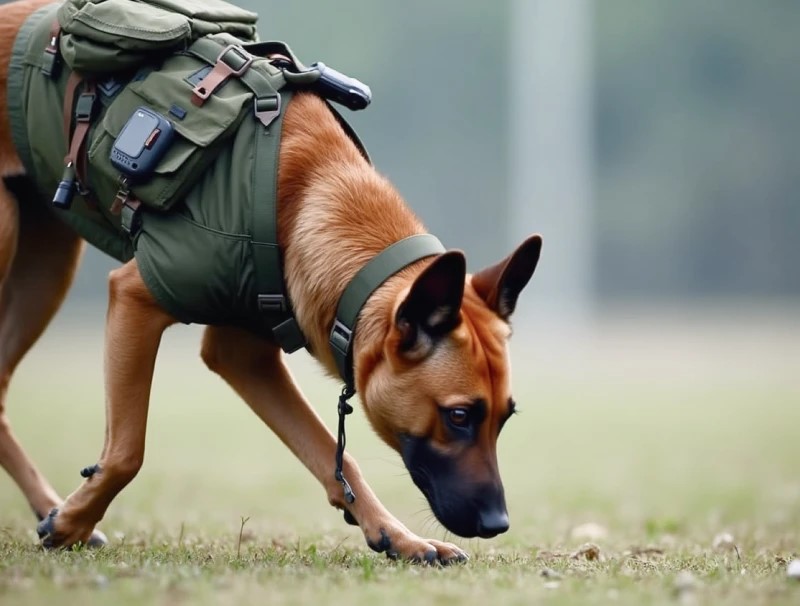
The dogs wear customised 3D-printed helmets and harnesses fitted with sensors that record their brain activity, breathing and body language, allowing AI to convert their reactions to scents into measurable data.
Global research has increasingly indicated that dogs can be trained to detect cancer and other diseases, including Parkinson’s disease and Covid-19. Dogs have around 300 million scent receptors, compared with about five million in humans, and diseases can change chemicals released by the body, producing distinctive odours.
Dognosis’s testing process is relatively simple. A patient breathes into a cotton mask for about 10 minutes. The mask is sealed in a bag and taken to a laboratory, meaning patients never need to come into contact with the dogs. The dogs can reportedly perform thousands of sniffs in an hour, with each sniff potentially evaluating a sample.
A recent Dognosis study involving more than 1,500 participants at six hospitals in Karnataka was published in the Journal of Clinical Oncology. The company reported more than 90 percent accuracy across seven major types of cancer and plans to conduct real-world testing programmes.
It hopes to obtain commercial approval and launch the technology next year, which it says would make it the third company of its kind, following companies in Germany and Israel. The startup is backed by venture-capital firms including Accel India and is working with government medical institutions.
The technology could be particularly significant in India, where cancer is considered a major public-health concern and many patients are diagnosed only after the disease has advanced.
India says one in nine of its 1.4 billion people are likely to develop cancer. Dognosis believes dog-based screening could offer an affordable, accessible first layer of detection, identifying people who need further medical testing.
Cancer specialists have nevertheless urged caution. Santhosh Kumar Devadas, head of oncology at Ramaiah Memorial Hospital, described the study as promising but said a much larger study is needed before definitive conclusions can be drawn. Neelesh Reddy, senior consultant oncologist at Manipal Hospitals, said only time will show how useful the technology will be for actual patients.
The startup also places emphasis on the dogs’ welfare. Most are beagles, alongside some Malinois and Shepherd mixes, acquired through adoption or legal breeders. Only the best-performing animals are selected and each dog is listed on the company website as an official “sniffer.” Their working time is limited to around 30–45 minutes a day, which co-founder Akash Kulgod describes as maintaining a good “work-life balance.”
At Dognosis’s “Sniffspace” centre, dogs examine samples on platforms equipped with automatic feeders that provide treats as rewards. Co-founder Itamar Bitan, who spent four years in an Israeli special-forces canine unit, says the dogs are trained through positive reinforcement to identify a specific distinctive smell.
Their reactions vary: some run directly to the feeder, some freeze, while others excitedly scratch the sample. For Dognosis, however, the exact behaviour matters less than the consistency with which AI can learn and interpret those reactions.
AFP