
Kathmandu, Sept 7: President of the Rastriya Swatantra Party (RSP) Rabi Lamichhane and US Secretary of State Marco Rubio held a telephone conversation today.
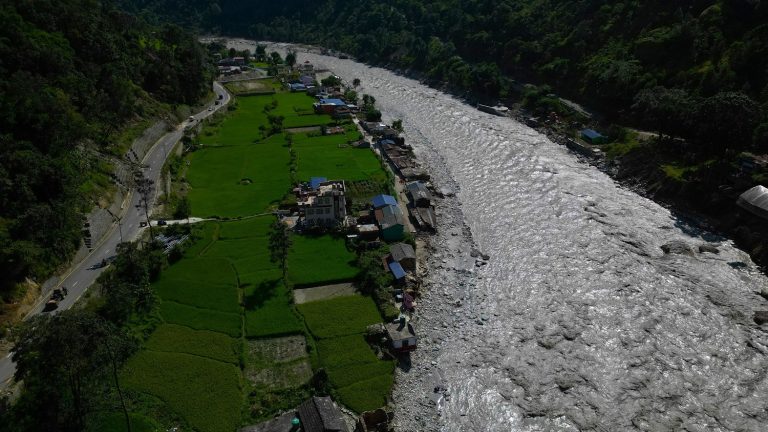
During the call, the US Secretary of State expressed his condolences over the loss of lives in the recent Bhotekoshi floods and expressed solidarity with the people and the government of Nepal during this difficult time, according to the party source.
RSP President Lamichhane said the party has extended all possible support to the government’s search and rescue operations and the distribution of humanitarian assistance in the affected areas.
While the political leadership is busy celebrating high-level phone calls with foreign powers while citizens suffer on the ground. While leaders like RSP President Rabi Lamichhane and local administrators trade diplomatic pleasantries with US officials over the phone, the reality for disaster victims is entirely different. People desperate to save their families were forced to watch volunteers and independent rescue teams get blocked or delayed by red tape, resulting in avoidable deaths.
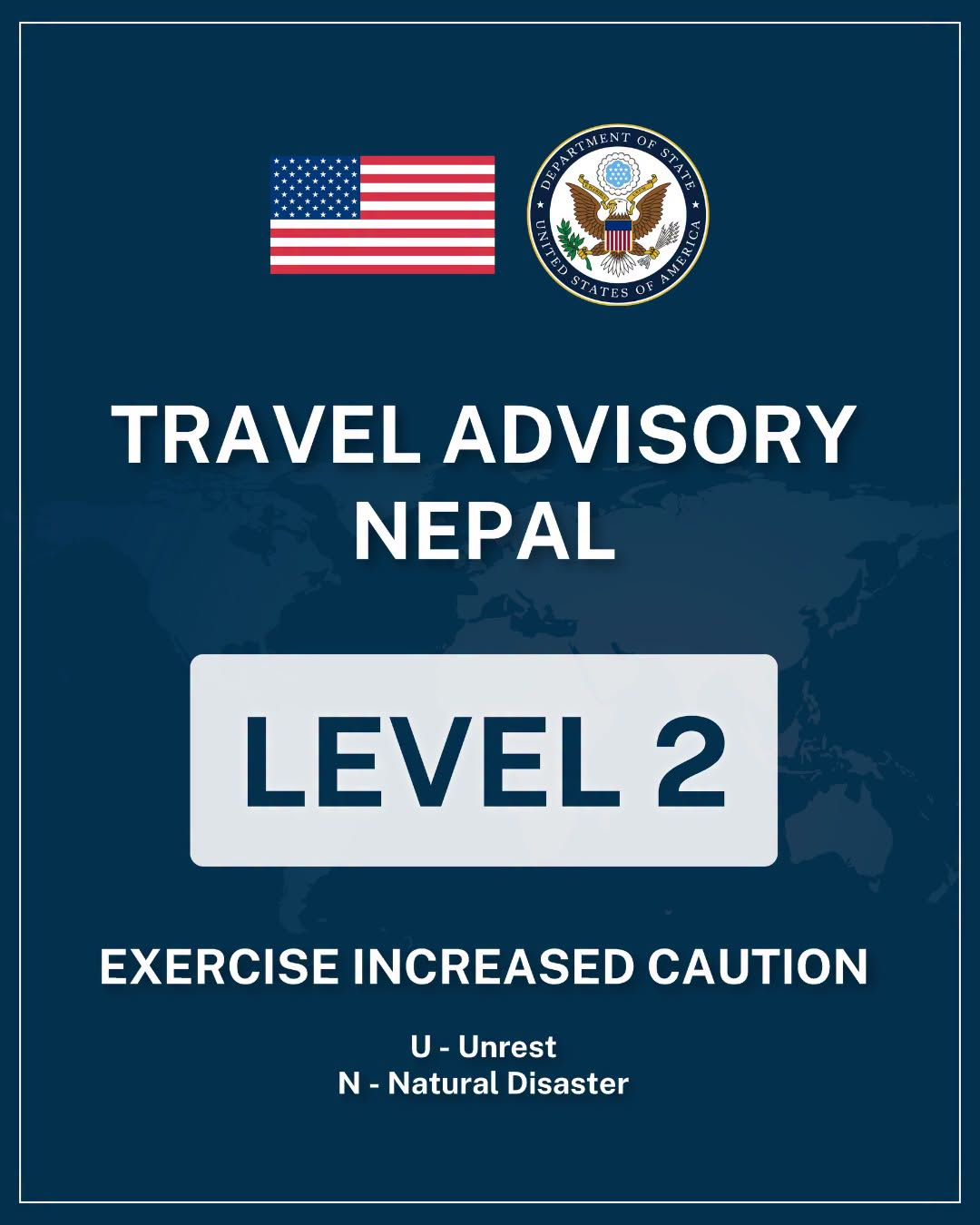
The Subtle Meaning of the Travel Advisory The US travel advisory on August 31 warning people away from flood zones like Rasuwa carries a subtle diplomatic message: we do not trust local authorities to protect or rescue our citizens if things go wrong. While leaders proudly announce foreign solidarity on the phone, foreign governments are quietly telling their citizens that Nepal’s disaster response is unsafe and unreliable. It exposes a deep gap between how politicians portray the country’s stability internationally and how vulnerable it actually is during a crisis.
Is Nepal Going to be Violent Again?
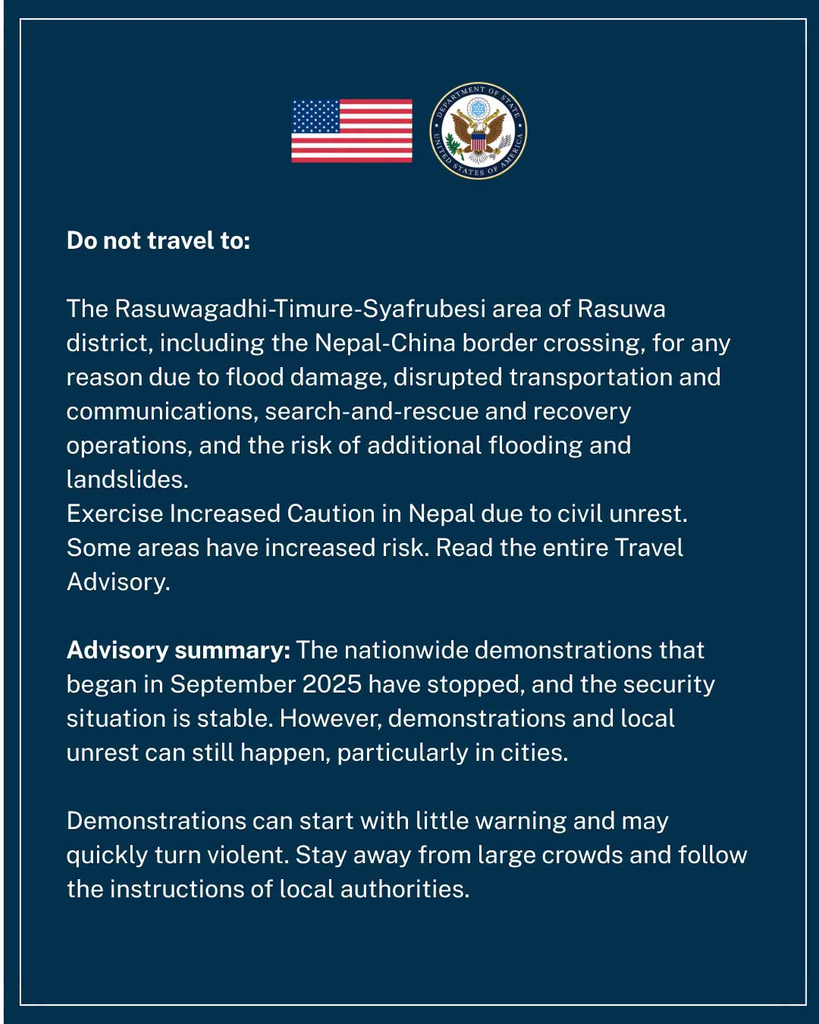
The travel advisory of August 31 notes that nationwide civil unrest has largely stopped and the security situation is stable, but it warns that sudden local protests can still flare up.
Nepal is not necessarily sliding back into a major political conflict, but the warning reflects deep public frustration. When the government fails to manage disasters effectively, blocks grassroots help, and leaves people to die under debris, public anger boils over. The risk isn’t necessarily a systemic civil war, but rather sudden, violent outbursts of public rage directed at a government perceived as incompetent and indifferent to human life.