
युवा कलाकार सीता मल्ल
KATHMANDU, Sept 30
In the contemporary Nepalese art scene, the presence of female artists and the themes they address continue to reflect the deep realities of society.
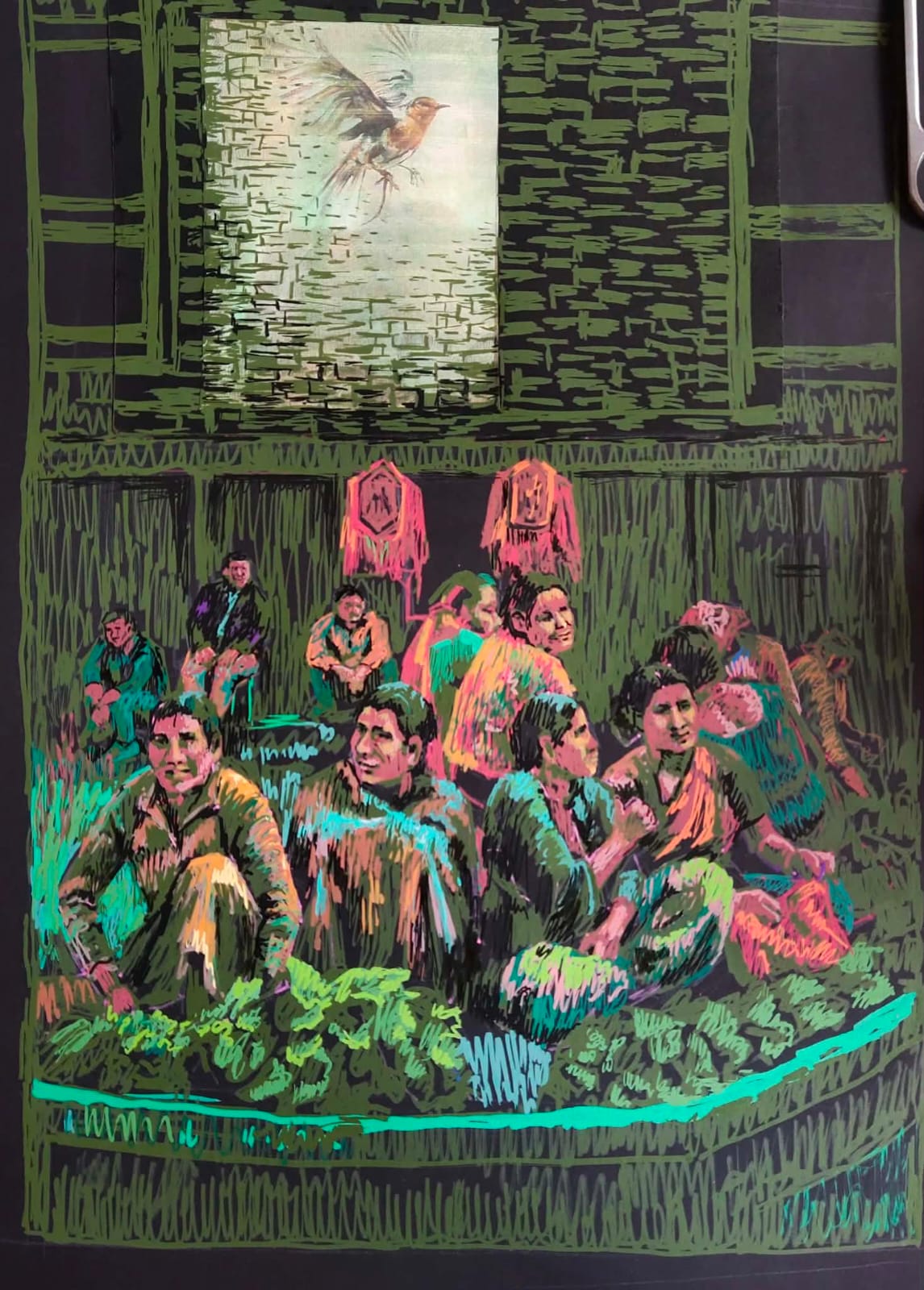
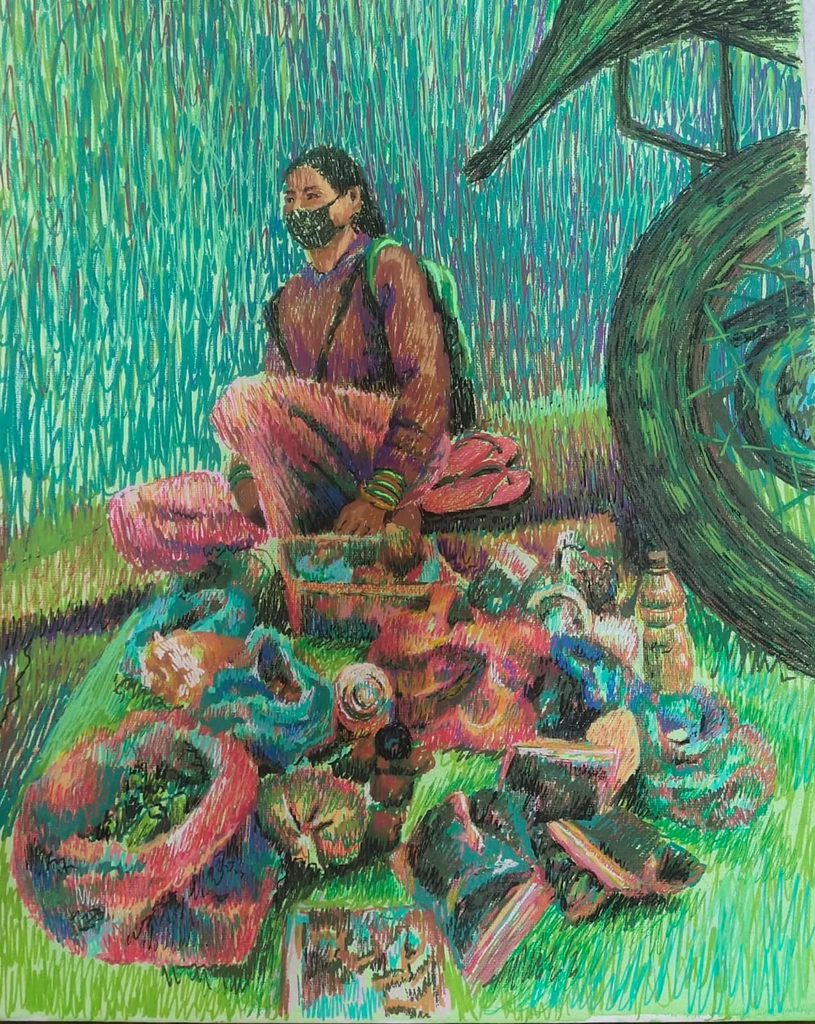
In this context, young talented artist Sita Malla, a recent fine arts graduate from Srijana College of Fine Arts, is hosting her solo painting exhibition titled “A Life She Carries” at Srijana and Chitra Nepal, Lazimpat. The exhibition portrays a vivid and poignant view of working-class Nepalese women, motherhood, and their daily struggles through a novel technique using acrylic markers on canvas and traditional leaf plates (Tapari).
Running from September 23 to October 7, 2026, the exhibition is showcased under the Space A Young Artist Fellowship 2026. Malla’s artworks extend beyond a mere combination of colors and canvas, offering a profound visual narrative on Nepalese socio-economic structure, gender roles, and the visible and invisible burdens women carry physically and mentally throughout their lives.
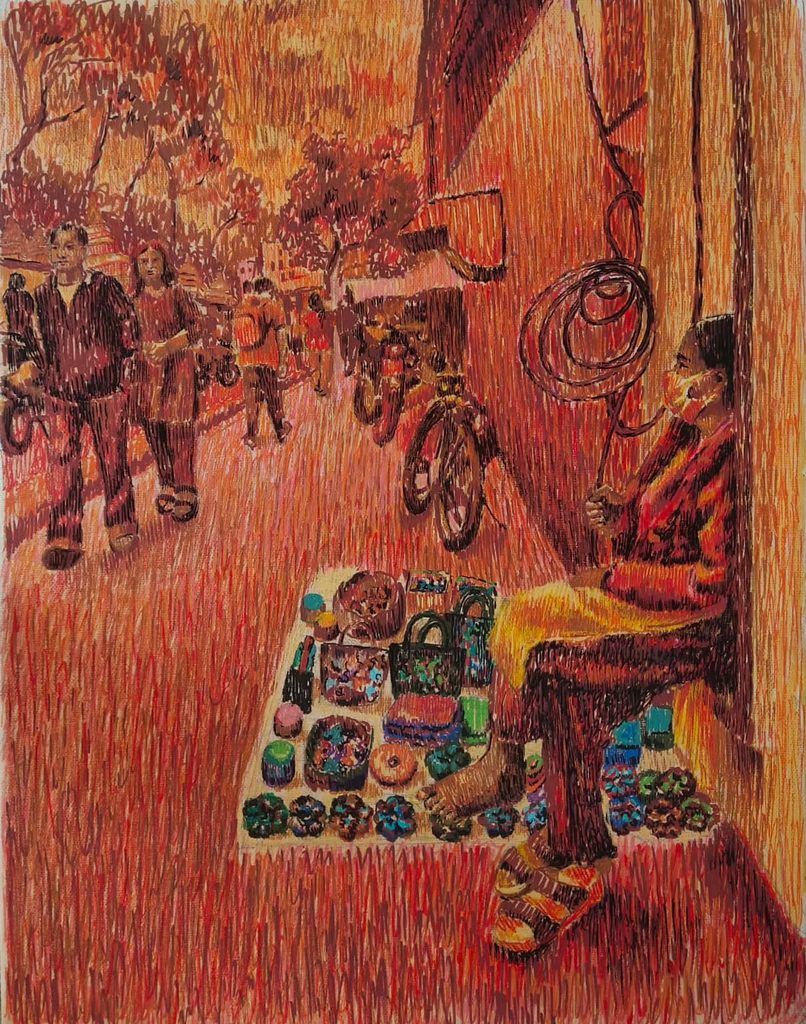
Through her debut solo painting exhibition, Malla brings to light the daily struggles, isolation, hopes, dreams, and invincible courage of grassroots women. The most distinctive and powerful aspect of her artwork lies in her innovative technical approach and choice of medium. Instead of traditional blending, she employs countless fine colored lines resembling hatching and cross-hatching.
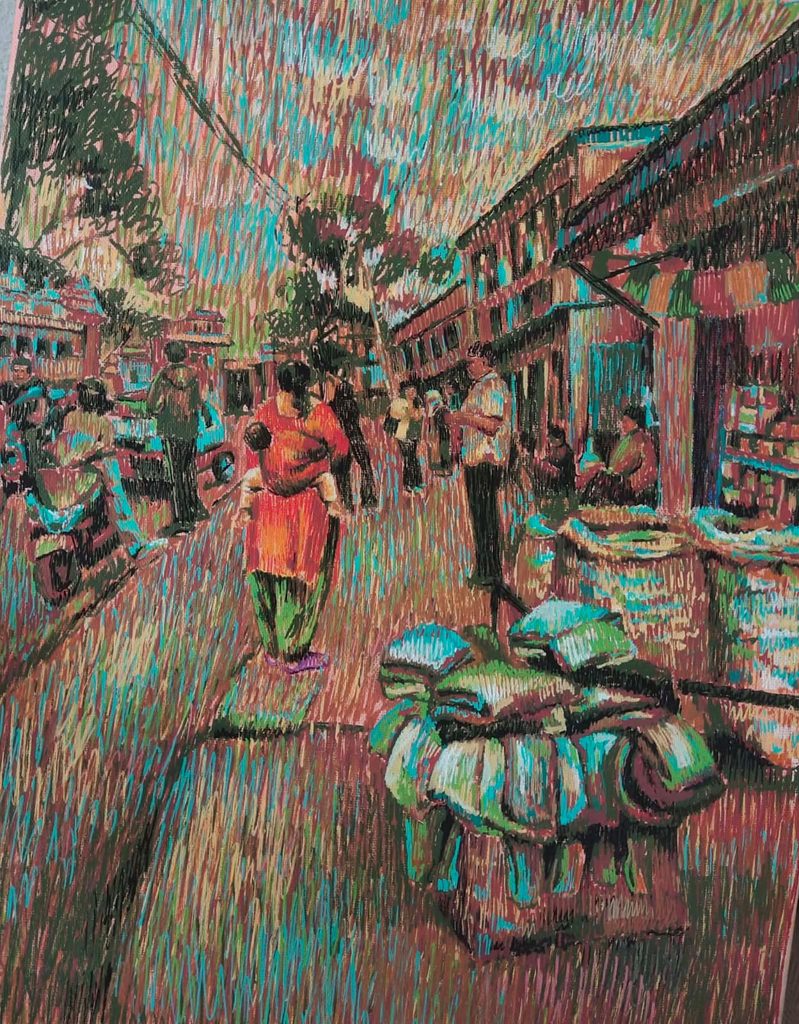
This technique creates a visual effect similar to intricate weaving or colorful threads bound in fabric. Overlapping one another, these lines create extraordinary texture and depth on the canvas, signaling the complexities and endless fluctuations in the lives of her subjects. Created over the span of nearly a month, all the artworks skillfully utilize acrylic markers and mixed media.
Some works are executed on paper, while others are created inside traditional Sal-leaf plates (Duna-Tapari), highlighting the artist’s original, indigenous, and class-conscious artistic perspective. When asked about her choice of medium, Malla noted that leaf plates are traditionally associated with women’s skills and labor, which she sought to represent directly through her art.
Malla’s choice of color is contrasting yet balanced. On a single canvas, she blends bright green, blue, pink, and yellow alongside dark or solemn brown and black backgrounds. These colors reflect the subtle hope, celebration, and vitality hidden amidst the grief and scarcity in working-class women’s lives.
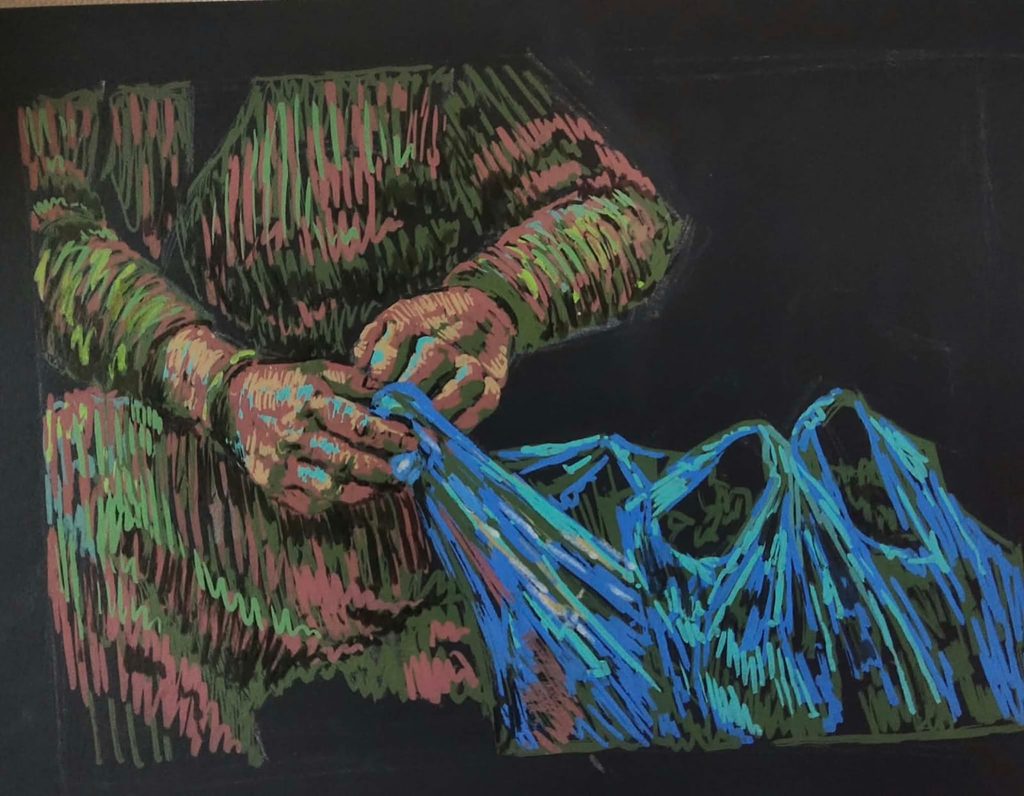
To depict a consumerist society, her artworks feature compelling scenes that draw the viewer’s attention: a mother and child looking at clothes and bags outside a shop, the struggle of women street vendors selling vegetables and fruits, a woman sitting on a temple steps selling wick lights for a living, and women’s tired hands displaying skill and creativity while stitching leaf plates.
When asked if her work is feminist art, Malla counter-questioned whether painting women automatically makes art feminist. She explained that while women in Nepalese society were traditionally focused on domestic chores, today they face the compulsion to manage both household duties—such as caring for and raising children—and external work in shops and trade, a reality she observed meticulously when selecting her subject matter.
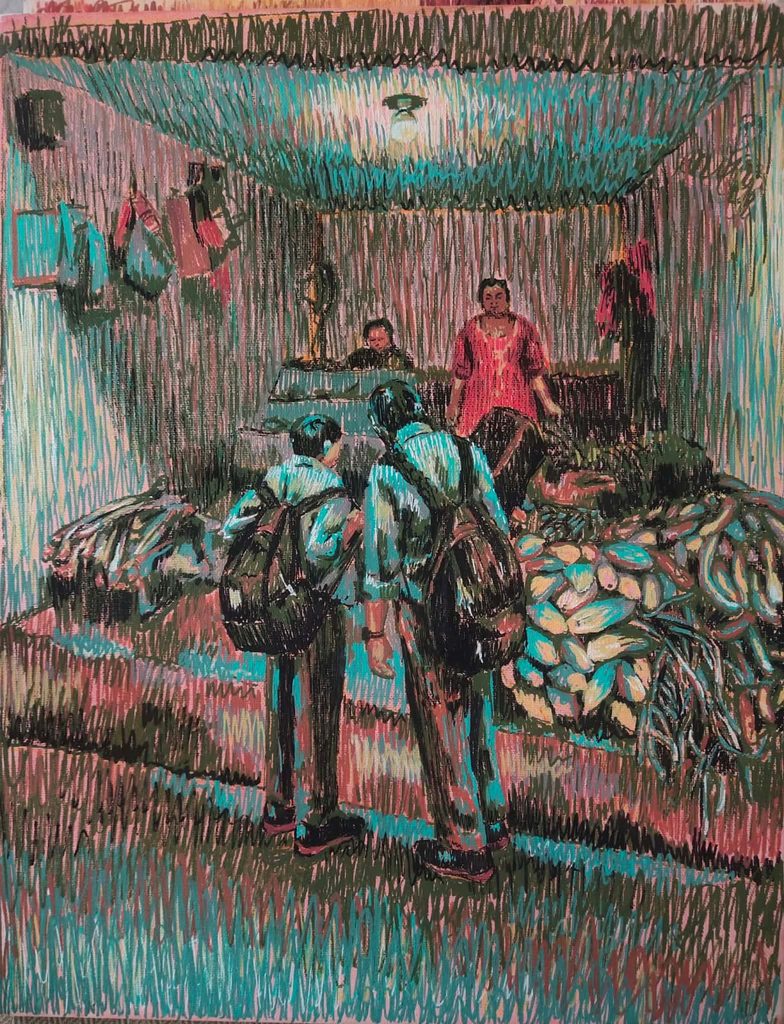
Artist Sita Malla does not confine her works strictly to artistic theory; instead, she fosters social and gender discourse. Male figures are minimally present in the paintings, appearing merely as consumers or onlookers. The central figures are consistently women—selling vegetables, selling wick lights, running shops, and carrying children.
This represents the reality of economic downturn in Nepalese society and the struggles of single women who manage both home and street while men go abroad for employment. The artworks rendered on Tapari bring women’s unquantifiable labor into the center of the debate. Through her paintings, she sheds light on how women sustain themselves and their families in a city characterized by expensive markets and cheap human life.
At a time when new mediums and styles are being explored in Nepalese art, Sita Malla’s “A Life She Carries” exhibition stands as a significant milestone. Her use of linear patterns and local mediums like Tapari adds a new dimension to contemporary Nepalese art.
Her artworks offer viewers more than aesthetic pleasure; they possess the power to compel serious reflection and sensitivity toward marginalized sections of society. Her paintings serve as a strong, vibrant document of Nepalese womanhood, labor, and existence, securing a distinct place in the history of Nepalese art.
(Unified Nepal)