
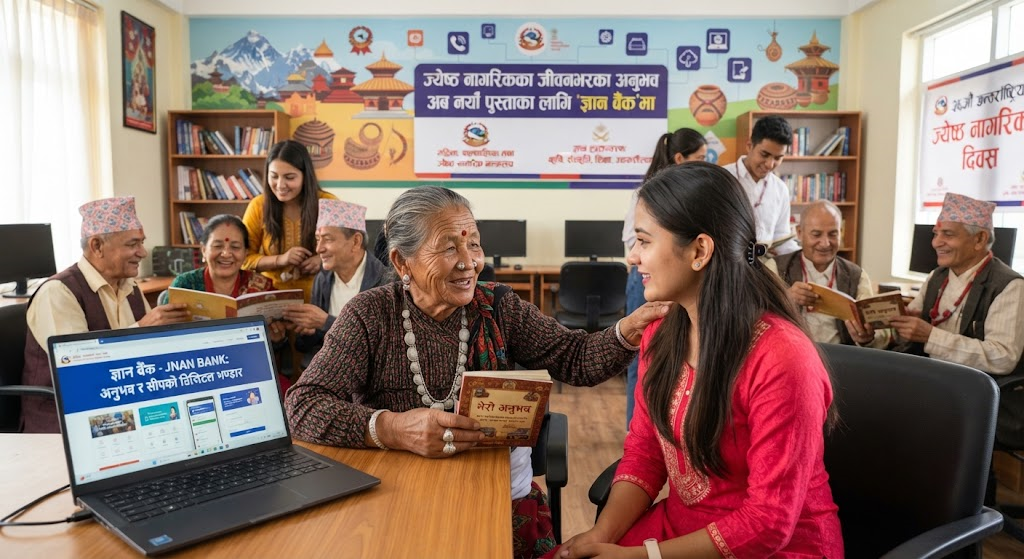
Kathmandu, Oct. 1: Decades of knowledge, skills and life experience accumulated by senior citizens could soon be preserved and passed on to younger generations through a proposed ‘Senior Citizen Experience Bank.’
The Ministry of Women, Children, Gender and Sexual Minorities and Social Security has begun the process of developing the initiative to digitally document and preserve the knowledge and practical experiences of senior citizens and make them accessible to future generations.
The concept was unveiled on the occasion of the 36th International Day of Older Persons, with the ministry seeking to redefine senior citizens not merely as recipients of social security, healthcare and protection, but also as valuable sources of knowledge and experienced contributors to society.
Minister for Women, Children, Gender and Sexual Minorities and Social Security Sita Badi said the knowledge, skills, experiences and life lessons accumulated by senior citizens over decades represent valuable intellectual and social assets.
“A process has been forwarded to develop a ‘Senior Citizen Experience Bank’ using digital technology to institutionalize the preservation, archiving and transfer of their experiences to the new generation,” she said.
Under the proposed system, experiences from areas including agriculture, entrepreneurship, professions, education, administration, arts and culture, traditional knowledge and social life would be systematically documented.
The ministry plans to gradually develop the platform so that students, young people and others can learn from the experiences and practical knowledge of senior citizens and seek their guidance.
The initiative is based on the idea of intergenerational knowledge transfer, ensuring that valuable knowledge acquired through decades of work and life does not disappear with one generation.
Minister Badi said genuine respect for senior citizens means creating an environment where their experiences are heard, their knowledge is used respectfully and they are given meaningful opportunities to participate in social and decision-making processes.
She also noted that changing family structures, migration, urbanization and changing lifestyles have created new challenges concerning the health, social security, care, loneliness and social participation of older people.
Making the lives of senior citizens safe, dignified and meaningful is a shared responsibility of families, communities, society and the state, she said.
The proposed experience bank would therefore seek to turn the accumulated wisdom of one generation into a resource for the next, while giving senior citizens a more active and meaningful role in society.