
बोडेको जिब्रो छेड्ने जात्रा
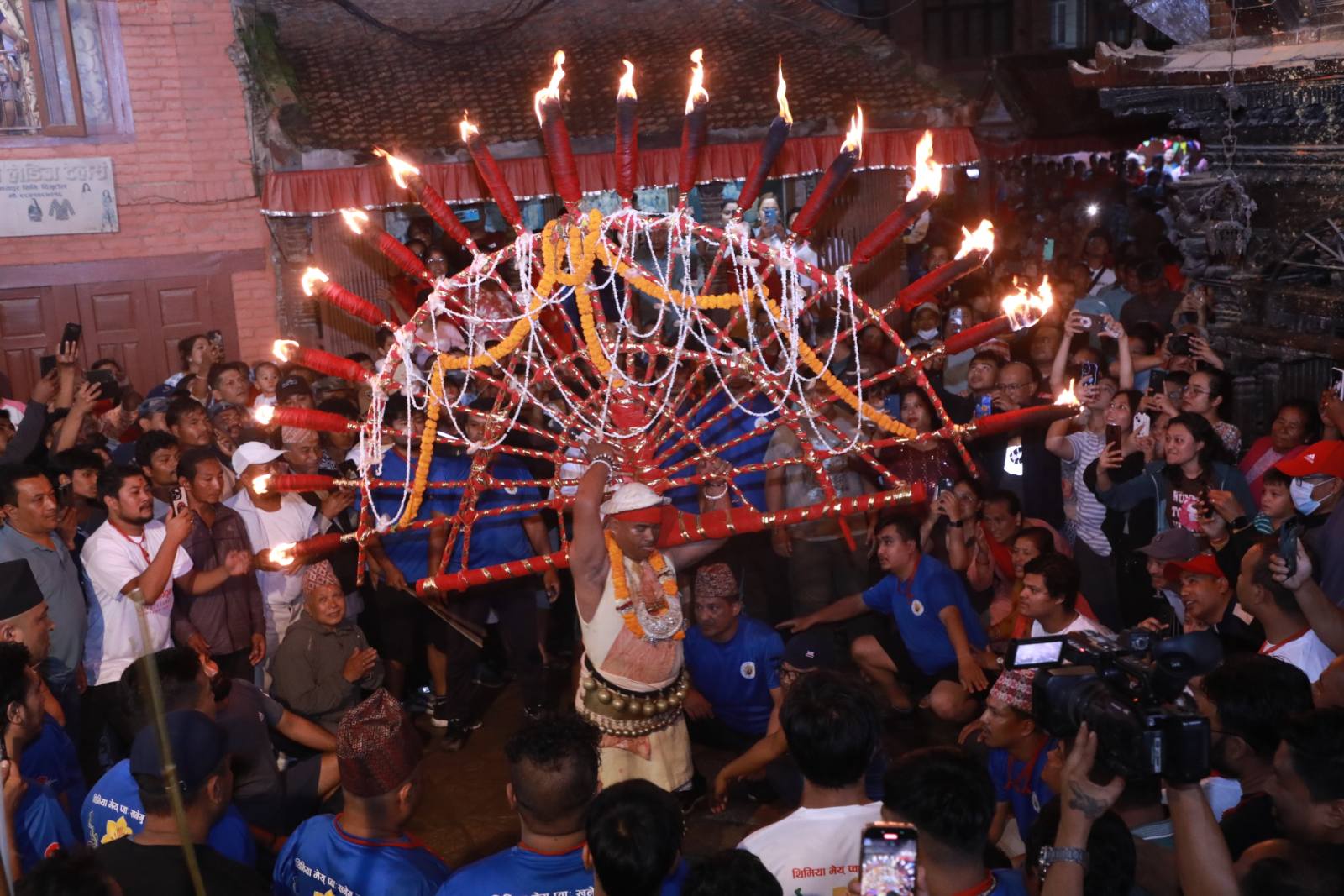
Bhaktapur, Sept. 18: A centuries-old tongue-piercing ritual in Bode, Madhyapur Thimi, is set to continue this year, with 39-year-old Birendra Bhakta Gaju Shrestha preparing to pierce his tongue for the fifth time.
Shrestha, a resident of Balkumari in Madhyapur Thimi Municipality-4, will undergo the ritual on September 26, coinciding with Yenya Punhi, the full-moon festival associated with Indra Jatra. He says he is taking the ritual forward to help preserve a tradition that has been gradually fading.
The Bode tongue-piercing festival had not been held regularly in the past. In 2017, Shrestha took the lead in reviving the tradition. Since then, he has pierced his tongue in 2022, 2024 and 2025, and is preparing to do so again this year.
The tradition has survived through the efforts of a small number of individuals. Balkaram Shrestha performed the ritual once in 2018, while the festival was later interrupted during the COVID-19 pandemic. Birendra Bhakta Shrestha revived it in 2022. Before that, Krishna Nanicha Shrestha of Madhyapur Thimi had performed the ritual in 1995, 2000 and 2006.
A costly tradition
The festival has struggled to survive partly because of its financial burden. Organisers say it costs more than Rs. 600,000 to conduct the event, with the person undergoing the ritual and local residents often contributing more than the municipality.
The ritual begins at the ceremonial platform of the Digu Bhairav Temple, where thousands of spectators gather. After the tongue is pierced, the participant traditionally travels through the town and, depending on his wishes, may continue the journey to the Pashupatinath Temple before returning to the Balkumari Temple.
At the heart of the ritual is a roughly one-foot-long iron needle. On the evening of the full moon of Bhadra Shukla Paksha, the needle is immersed in oil and ritually worshipped at the Digu Bhairav Temple before being used for the piercing.
Legend behind the ritual
Local legend traces the origin of the tradition to a time when evil spirits and demons were believed to have terrorised Thimi, killing people indiscriminately. According to the legend, one person was selected to have his tongue pierced and was taken around the settlement. The spirits are said to have fled afterward, bringing peace to the community.
The tradition has therefore come to be associated not only with religious devotion but also with the protection and wellbeing of the town. Local belief holds that performing the festival helps protect the community from disease, famine and natural disasters.
For Shrestha and the residents of Bode, however, the ritual represents something more than an annual religious ceremony. Its continuation depends increasingly on individuals willing to endure the physically demanding ritual and communities willing to bear its rising costs.
As modern life transforms the ancient settlements of the Kathmandu Valley, the Bode tongue-piercing festival remains an unusual example of a tradition surviving through personal commitment, collective belief and community participation.