
Kathmandu, Sept. 15: Ganesh Chaturthi and Rishi Panchami are being observed across Nepal with religious rituals, worship and cultural activities.
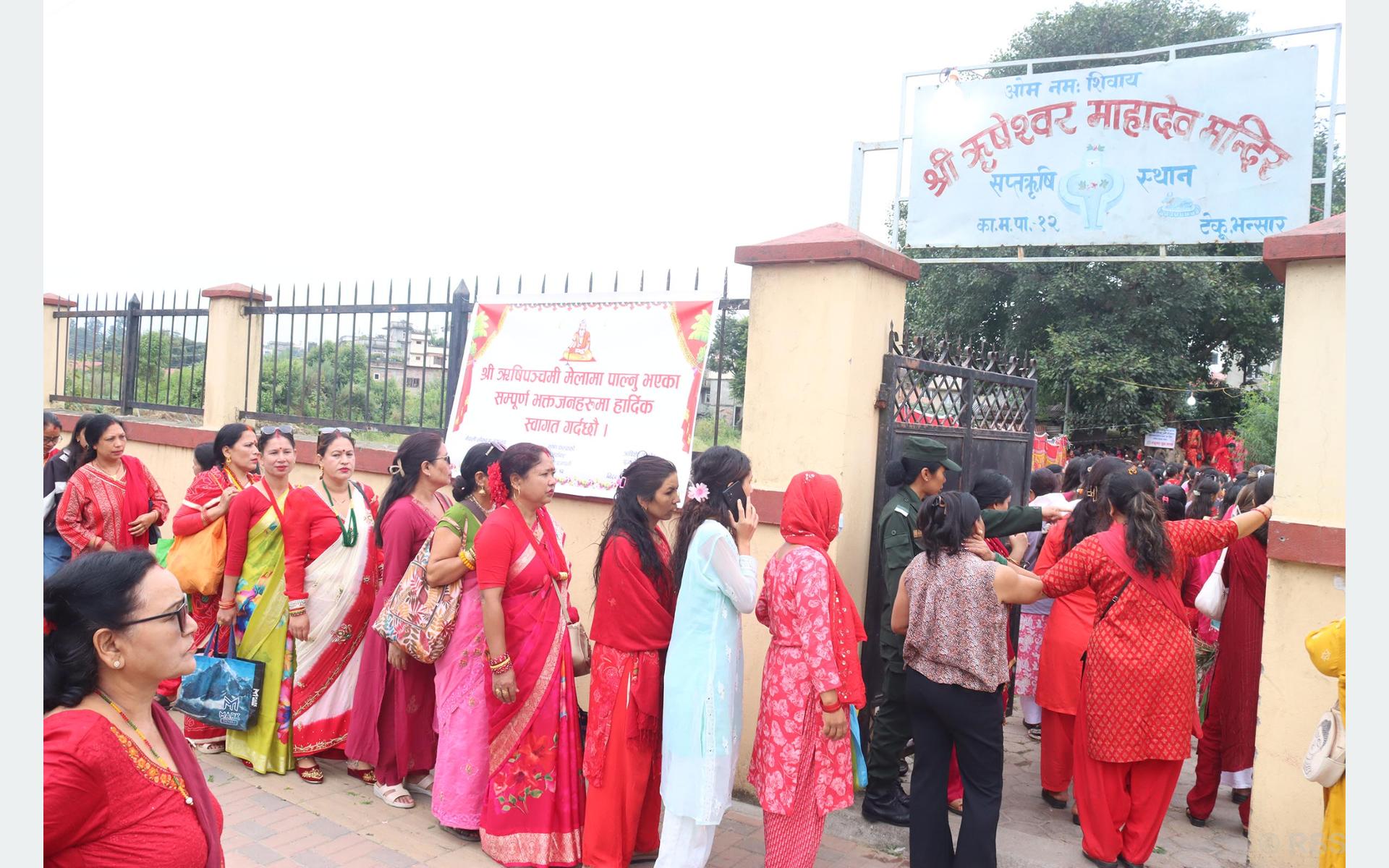
A large number of women devotees gathered at the Risheshwar Mahadev Temple in Teku, Kathmandu Metropolitan City-12, from early Tuesday morning to perform prayers and rituals on the occasion of Rishi Panchami.
A fair is held at the temple every year on Rishi Panchami. Nepal Police and Kathmandu Metropolitan City personnel have been deployed to maintain security and manage the crowd.
The local ward office has cleaned and painted the temple and nearby heritage sites and improved street lighting in preparation for the festival. It has also coordinated with representatives of around 50 religious and social organisations to facilitate devotees.
In coordination with the Nepal Red Cross Society, Nepal Scouts and the Metropolitan City’s Health Department, a health camp has also been set up at the site.
Ward Chairperson Bal Krishna Maharjan said free medical services and an ambulance have been arranged for devotees who may require immediate treatment. The temple was opened early in the morning to facilitate worshippers, while security personnel and volunteers have been deployed to manage the festival.
Authorities have also made special traffic arrangements in Teku, Kuleshwor and Sanepa areas because of the expected crowds and have urged commuters to use alternative routes.
Meanwhile, the Newar community in the Kathmandu Valley observed the traditional Chatha festival on Monday. Although the Panchanga Decision Committee’s calendar places the fourth day of the bright half of Bhadra on Tuesday, the Chaturthi lunar date began on Monday evening, prompting the Newar community to observe Chatha a day earlier.
Chatha is an important traditional and cultural festival of the Newar community, during which Lord Ganesh is worshipped through special rituals. Families clean their courtyards, rooftops or designated prayer areas and gather together to perform the rituals.
A variety of fruits, vegetables, grains and pulses are offered during the worship. Traditional offerings include ginger plants, apples, oranges, guavas, cucumbers, radishes, maize, soybeans, chickpeas, wheat, peas, beans, peach seeds, pumpkin seeds and other agricultural products available in the household.
The agricultural produce used in the ritual is believed to represent the close relationship between agriculture, nature and human life.
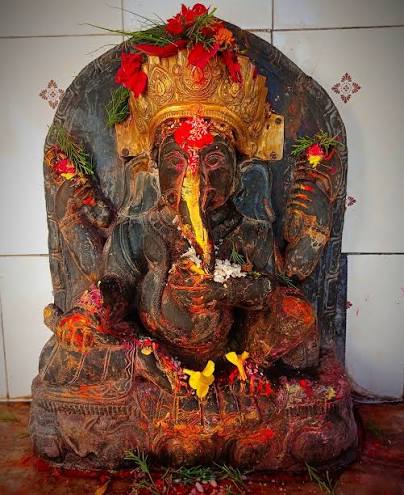
Shiv Prasad Jangam, a priest at Indreshwar Mahadev Temple, said the Chatha ritual is also a way of expressing respect and gratitude for new agricultural and natural produce received throughout the year.
The festival is also associated with beliefs concerning the moon. Devotees traditionally avoid looking at the moon during Chatha, as it is believed that seeing it could lead to false accusations or allegations.
On the occasion of Ganesh Chaturthi, 308 young boys were worshipped as Kumar at the Gupteshwar Temple premises in Panauti Municipality-7, Kavrepalanchok, on Tuesday.
The event was organised by the Panauti Bolbam Pariwar Sangh, where boys from Kavre, Lalitpur, Bhaktapur and Kathmandu were worshipped as manifestations of the deity Kumar.
The tradition of worshipping Kumar alongside Lord Ganesh on Bhadra Shukla Chaturthi is observed as part of the religious and cultural practices associated with the festival.
The Kumar Puja is traditionally associated with prayers for children’s happiness, health, peace and longevity, as well as wishes for prosperity and peace in society. A significant number of women gathered at the temple to participate in the ritual.
According to Sangh Chairperson Mahesh Dhaju, the organisation has been conducting Kumar Puja annually on Bhadra Shukla Chaturthi since 2068 BS. Boys between one and five years of age are selected for the ritual.
“Kumar Puja is not limited to the worship of individual boys. It is also connected with collective prayers for the welfare of society,” Dhaju said. “Inviting children from different places and worshipping them together is intended to pray for happiness, peace and prosperity in society while preserving religious and cultural traditions.”