

Kathmandu, Sept. 12: Nepal’s political upheaval and the rise of its new generation of leaders have come under a fresh and explosive spotlight after investigative outlet The Grayzone reported that leaked documents allegedly reveal a US-government-funded network had been cultivating and training several figures who later emerged as key leaders of Nepal’s new political establishment.
In a report published under the headline “As criticism grows over landslide inaction, leaks show Nepal’s new leaders groomed by US regime change outfit,” investigative journalists Kit Klarenberg and Wyatt Reed claim that leaked documents reviewed by The Grayzone show that the Consortium for Elections and Political Process Strengthening (CEPPS) worked to identify, train and support potential future political leaders in Nepal.
The report links CEPPS to the National Endowment for Democracy (NED), a US-government-funded organisation. The Grayzone describes NED as an organisation that performs openly what the CIA historically carried out covertly, while acknowledging that this characterization is based on sources it cites.
‘Next generation leaders’ identified
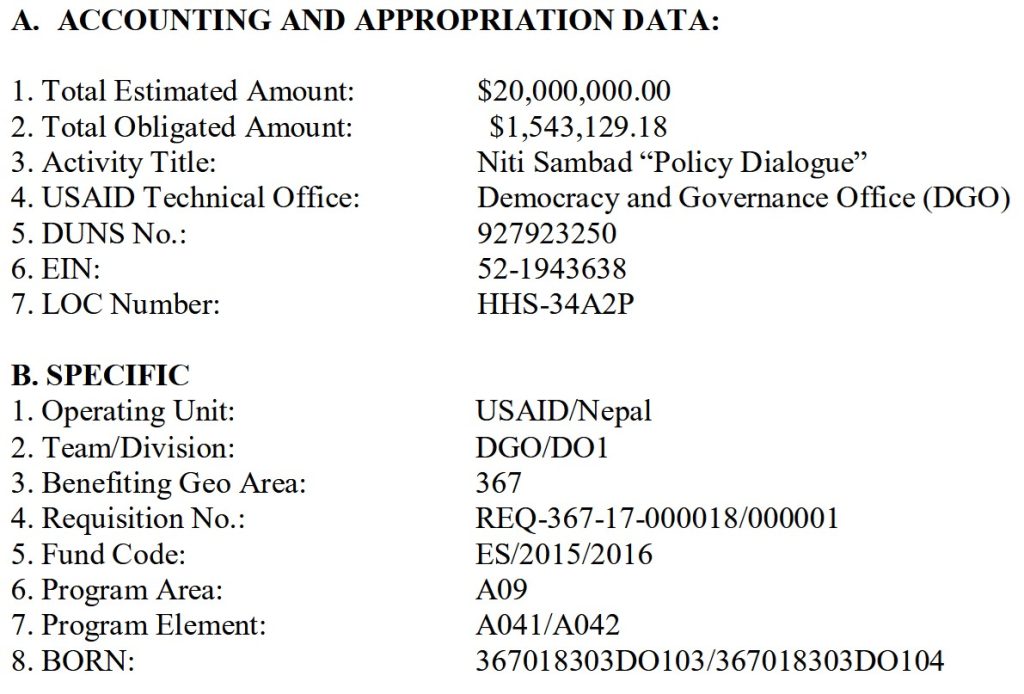
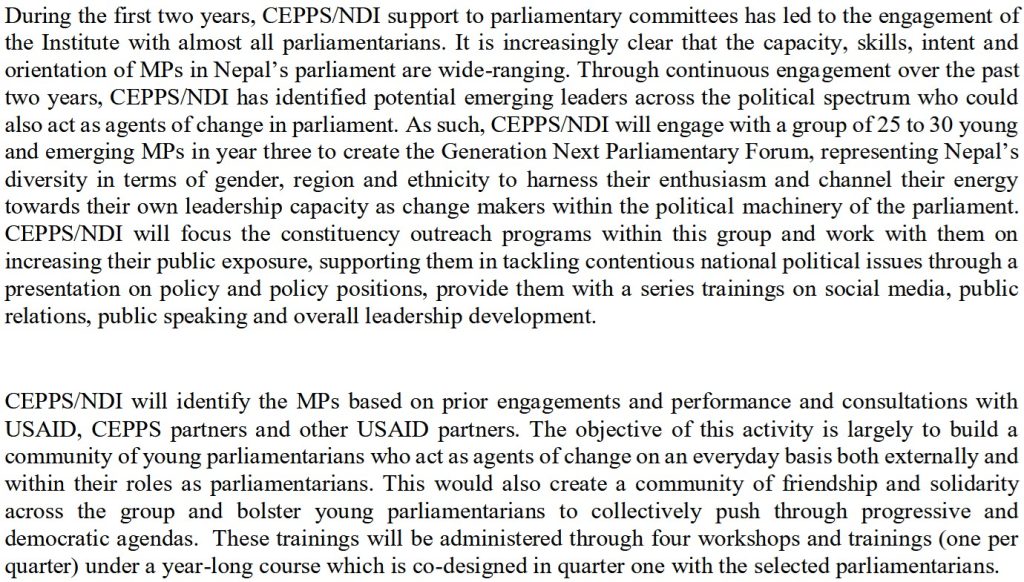
According to the leaked CEPPS documents cited by The Grayzone, the US-backed programme sought to “Create, Support, and Build the Capacity of the Next Generation Leaders in Parliament.”
The documents reportedly stated that CEPPS and the National Democratic Institute had identified “potential emerging leaders” who could act as “agents of change” inside Nepal’s Parliament.
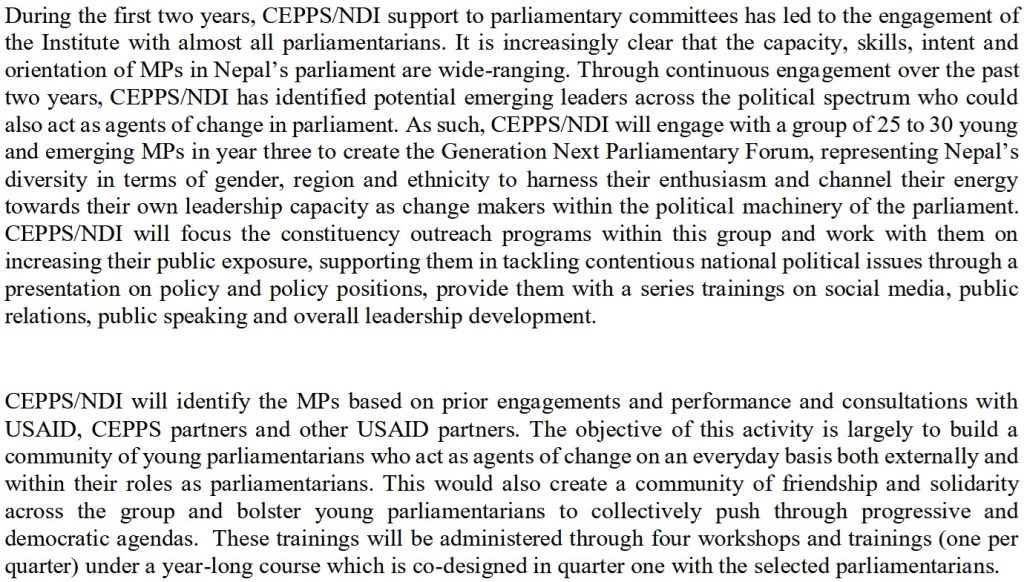
The Grayzone claims that the list of so-called “catalytic civil leaders” included Prime Minister Balen Shah, Rastriya Swatantra Party chair Rabi Lamichhane, MP Sagar Dhakal and Home Minister Sudan Gurung.
The report further claims that CEPPS planned to engage between 25 and 30 young and emerging parliamentarians through a proposed “Generation Next Parliamentary Forum.”
The programme allegedly included training in social media, public relations, public speaking and leadership development, with the stated objective of building a network of young politicians capable of acting as “agents of change” within Parliament.
$20 million US-funded Nepal programme
Perhaps the most striking claim concerns the scale of US funding.
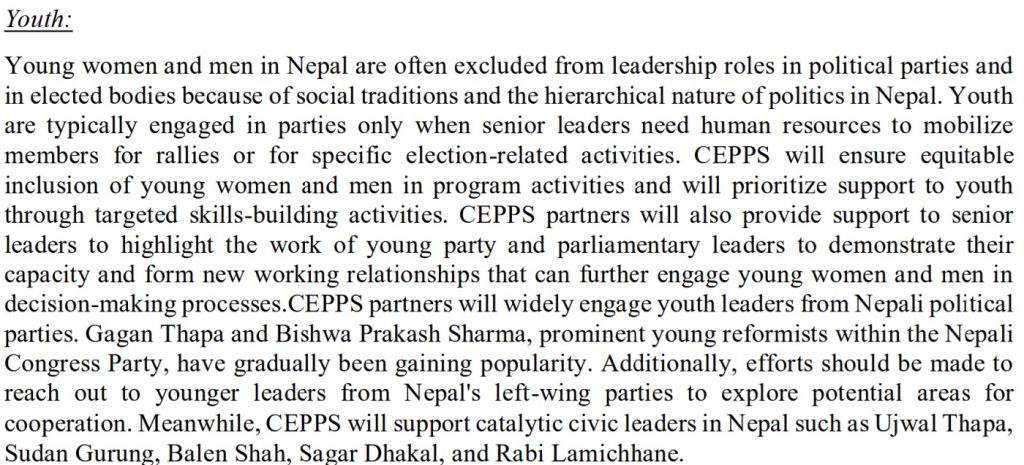
The Grayzone says leaked CEPPS documents show that the US government provided $20 million to the International Republican Institute (IRI), together with the International Foundation for Electoral Systems and National Democratic Institute, for a Nepal project known as “Niti Sambad” or “Policy Dialogue.”
According to the report, the programme operated from July 2017 to July 2022.
The Grayzone argues that the programme went beyond conventional democratic assistance and included efforts to cultivate young political leaders and teach them how to use political protest, public messaging and electoral campaigns to generate political change.
Balen Shah named years before becoming prime minister
The report makes its most politically explosive connection by pointing to Balen Shah.
According to The Grayzone, Shah was named in CEPPS documents as one of the “catalytic civil leaders” to be supported by the programme.
The report notes that Shah became nationally prominent as Kathmandu’s mayor in 2022 and subsequently joined the RSP after the political upheaval of September 2025. He was then elected to Parliament and became prime minister in March 2026.
The Grayzone therefore raises the question of whether the emergence of Nepal’s new political leadership was entirely an organic domestic political development, or whether years of foreign-funded political networking and leadership development also played a role.
Rabi Lamichhane, Sudan Gurung and Sagar Dhakal also named
The Grayzone’s report claims that Rabi Lamichhane, Sudan Gurung and Sagar Dhakal were also among the figures identified in the documents.
Gurung founded Hami Nepal, an organisation that later became prominent during the September 2025 unrest. Dhakal subsequently entered Parliament, while Lamichhane became the leader of the RSP and a central figure in Nepal’s new political establishment.
The report argues that the coincidence between the US-backed leadership programmes and the subsequent political rise of these figures deserves public scrutiny.

Foreign-funded politics and Nepal’s ‘Gen Z’ uprising
The allegations become even more explosive because they are linked by The Grayzone to the September 2025 uprising that brought down the previous government.
The report claims that NED-funded organisations had already been working with young Nepalis on political activism and leadership development before the protests erupted.
It challenges the widely promoted narrative that the uprising was simply a spontaneous and entirely organic “Gen Z” movement, arguing that foreign-funded organisations had already been cultivating networks of young activists and potential political leaders.
The Grayzone further claims that leaked documents show programmes designed to teach young leaders how to drive political change through protest and develop political organisations and electoral campaigns.
‘Washington-approved’ political messaging?
Another claim in the report may prove particularly uncomfortable for Nepal’s new political establishment.
The leaked documents reportedly show that CEPPS conducted national public-opinion surveys and focus-group research to understand what Nepalis thought, how they behaved and what messages would resonate with different groups.
The Grayzone argues that such research enabled political actors supported by the programme to tailor their political messaging to particular audiences.
That raises a fundamental question for Nepal: were some of the country’s new political leaders merely beneficiaries of foreign-funded democratic training, or were they being strategically cultivated as a future political class?
The leaked documents, as presented by The Grayzone, do not by themselves establish that any individual politician was secretly controlled by the US government or the CIA. But they do raise questions about the scale, purpose and political consequences of foreign-funded leadership programmes in Nepal.
China factor adds another layer
The Grayzone report also points to an alleged anti-China component in the CEPPS programme.
According to the leaked material cited by the outlet, CEPPS planned a “coordinated and integrated network-wide initiative” examining what it described as the negative impacts of Chinese influence in governance, business, human rights, technology, infrastructure and hydropower.
The report says the programme specifically examined China’s Belt and Road Initiative and even advocated the possibility of a “BRI tribunal.”
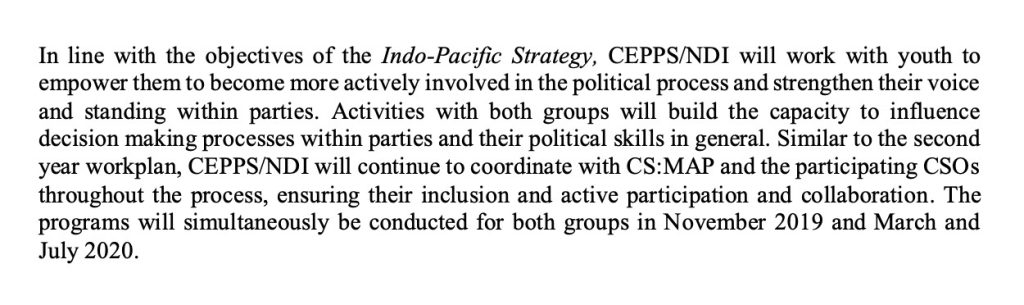
A 2019 CEPPS report, according to The Grayzone, stated that its Nepal activities were being conducted in line with the objectives of Washington’s Indo-Pacific Strategy.
Disaster response brings old questions back
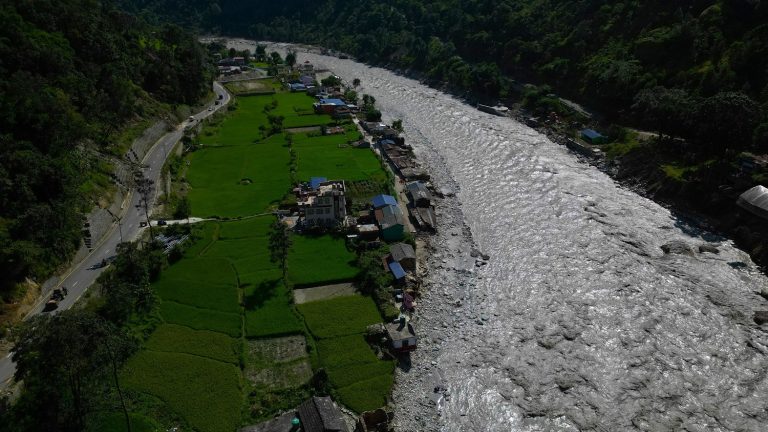
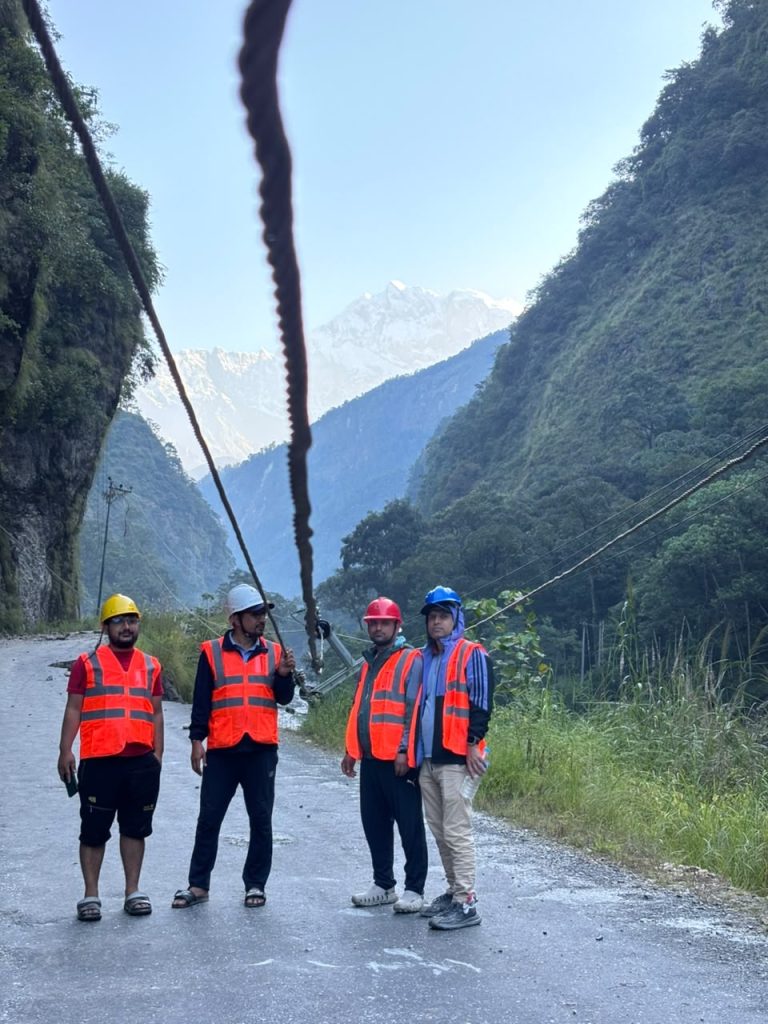
The Grayzone published its revelations as the Balen Shah government faces intense criticism over its handling of the devastating Trishuli Valley disaster.
The outlet links the political controversy surrounding the government’s disaster response with the larger question of how Nepal’s current leadership came to power.
It cites criticism over the government’s handling of foreign rescue assistance, including concerns raised by officials and experts about delays in bringing international rescue expertise into the disaster zone.
The report also highlights the involvement of Home Minister Sudan Gurung and MP Sagar Dhakal in disaster-related activities, while questioning whether political leaders trained and promoted as a new generation of reformers have been able to deliver the governance they promised.
A question Nepal can no longer avoid
The Grayzone investigation and its leaked-document claims raise a much bigger question that Nepal’s political establishment cannot simply dismiss:
How much influence did foreign-funded organisations have in identifying, training, promoting and connecting the generation of politicians who ultimately came to power after the 2025 political upheaval?
If the documents are authentic and accurately interpreted, Nepal’s political transformation may have involved far more than spontaneous youth anger and domestic political dissatisfaction.
It could also point to a long-running ecosystem of foreign-funded political training, civil-society networking, opinion research and leadership development that helped prepare a new political class for power.
For a country situated between two major powers, the implications are enormous.
The issue is therefore not simply whether the CIA “funded Balen” or “funded Rabi.” The more consequential question is whether foreign money helped build the political ecosystem from which Nepal’s present leadership emerged.
That is a question that demands independent verification, documentary scrutiny and public answers from the organisations and politicians named in the leaked files.
Source and credit: The Grayzone, “As criticism grows over landslide inaction, leaks show Nepal’s new leaders groomed by US regime change outfit,” by Kit Klarenberg and Wyatt Reed, published September 9, 2026.