
flood
RASUWA DISTRICT, NEPAL — A catastrophic flash flood triggered by a massive glacier collapse and ice avalanche has devastated northern Rasuwa, leaving 903 people confirmed dead and nearly 4,000 others missing.
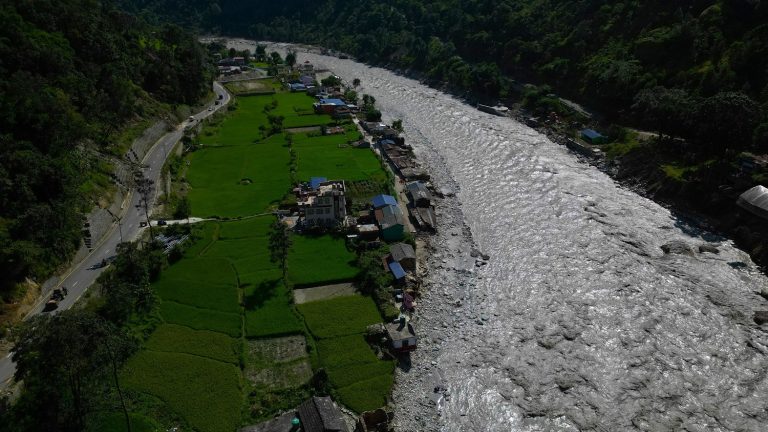
The disaster unfolded on the morning of August 26, 2026, when a sudden ice collapse on the Tibetan side of the border sent millions of tons of water, mud, and boulders roaring down the Lhende Khola. The resulting surge tore through the Bhote Koshi and Trishuli river corridors, obliterating everything in its path and catching communities completely off guard.
🛑 Destruction at the Epicenter
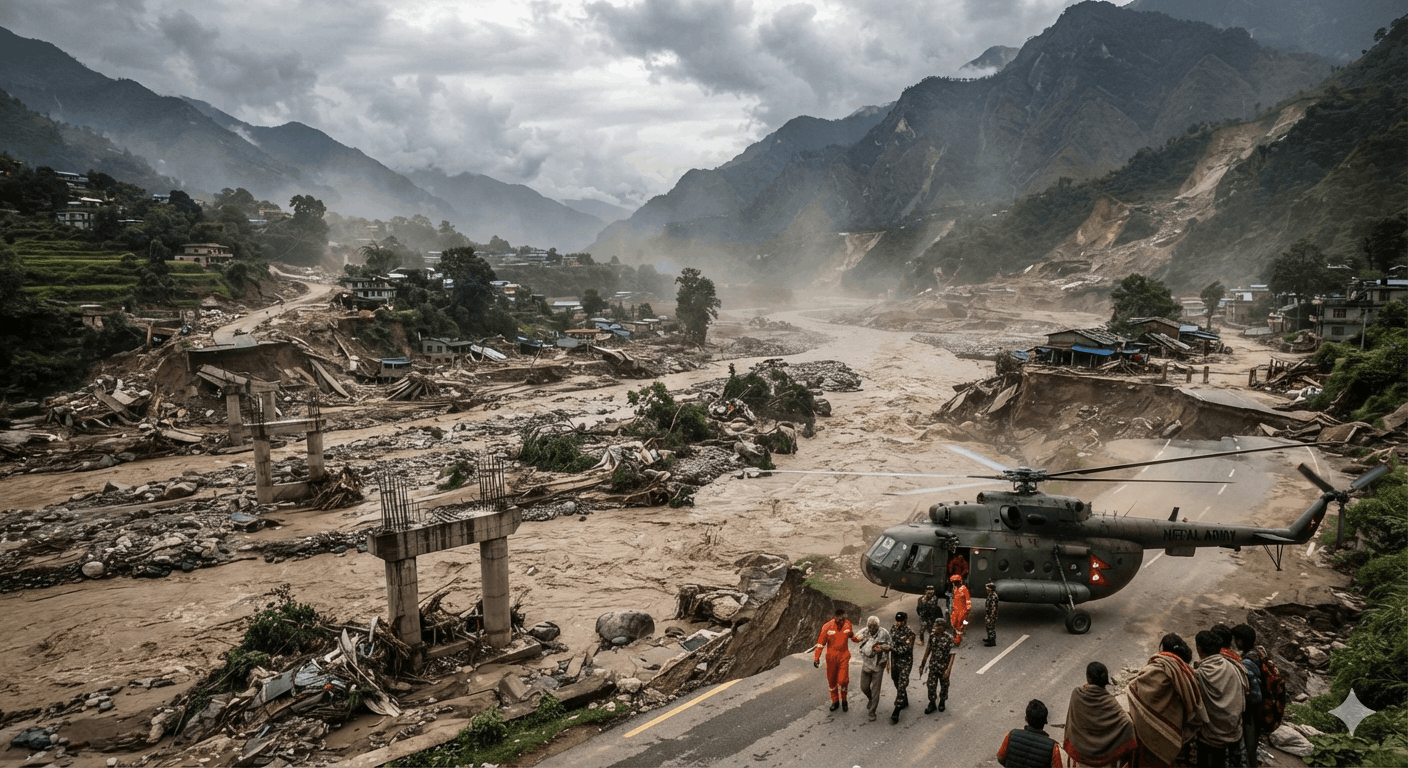
The scale of the destruction is unprecedented. The flood completely washed away the iconic Friendship Bridge at Rasuwagadhi, entirely severing Nepal’s primary northern border link with China.
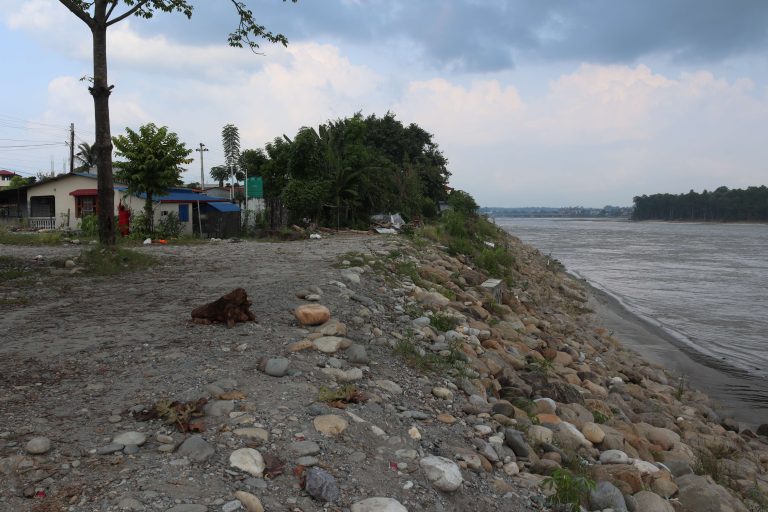
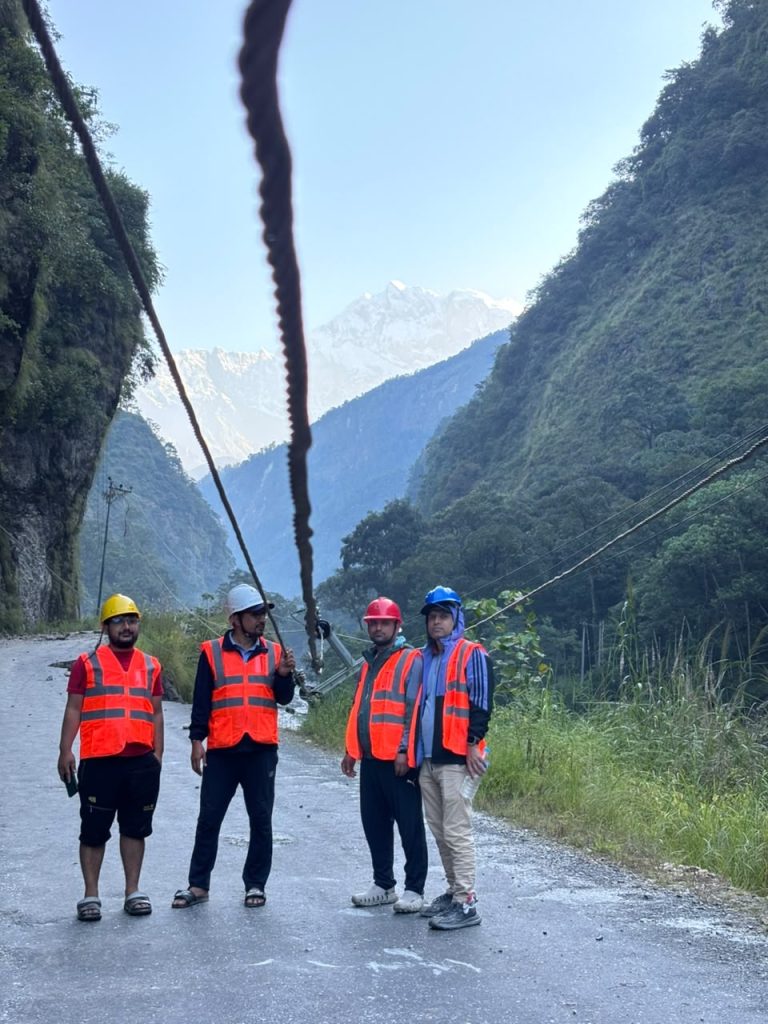
Entire border settlements, markets in Timure and Syabrubesi, and crucial highway networks have vanished under layers of mud and debris. The surge also heavily battered the region’s energy infrastructure, severely damaging or destroying at least 11 hydropower projects. Downstream districts—including Nuwakot, Dhading, Gorkha, and Chitwan—are also reeling from the impact of the flood wave.
🚁 Desperate Search and Rescue Operations
A massive humanitarian operation is underway, pulling together over 20,800 security personnel from the Nepali Army, Nepal Police, and Armed Police Force, alongside specialized international rescue teams.
- Air Vacuations: Rescuers have executed more than 411 helicopter flights to bypass washed-out roads, successfully evacuating 10,451 survivors from isolated zones.
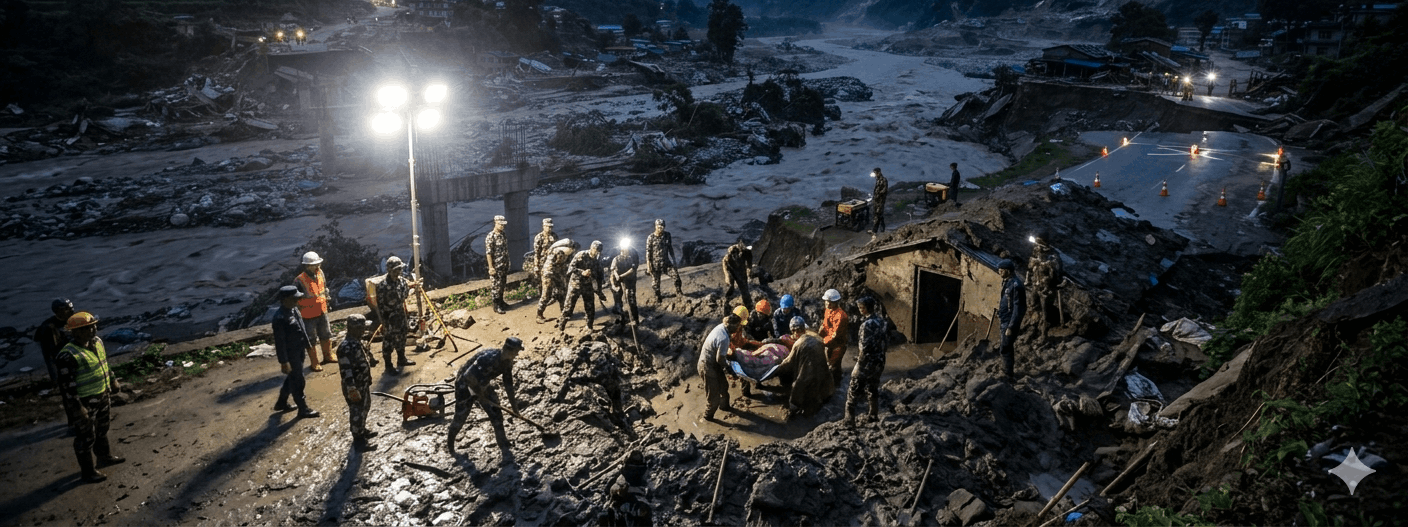
- Tunnel Breakthroughs: Technical teams are working frantically to dig through thick sludge and blocked entrances at various hydropower sites, where hundreds of laborers remain trapped underground.
- Miracle Survival: In a rare moment of hope amid the devastation, rescue workers successfully pulled a young girl alive from beneath collapsed debris where she had been trapped for days.
💼 Emergency Government Response
The Government of Nepal has declared 15 local municipalities as disaster crisis zones. A dedicated national relief fund has been mobilized, dispatching immediate emergency food, medical supplies, and tent cities to the displaced. The government has also released an initial Rs 1 crore each in emergency cash aid to the hardest-hit districts, including Rasuwa and Nuwakot, to expedite local relief efforts.
⚠️ Ongoing Danger and Evacuations
The disaster is far from over. The Nepal Department of Hydrology and Meteorology has issued a strict, continuous alert for all riverbank settlements.
With heavy monsoon rains persisting, fresh landslides are frequently blocking roads and grounding rescue flights. River levels continue to fluctuate unpredictably. Authorities are pleading with downstream residents to remain highly vigilant, monitor official emergency channels, and immediately evacuate to higher ground at the first sign of rising waters.