
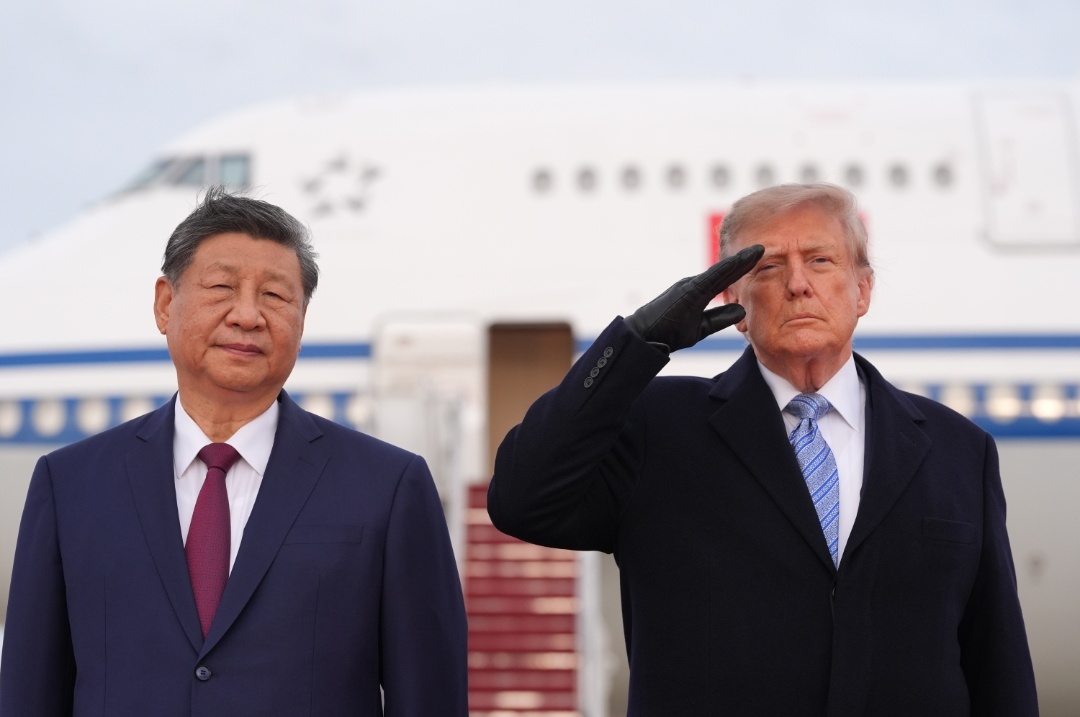
Washington, September 25: US President Donald Trump treated Chinese leader Xi Jinping to pomp and pageantry on Thursday, as the leaders of the world’s two superpowers met in Washington DC for talks.
Here are the key takeaways from the keenly-watched meetings between the two leaders: – Pomp over substance – Trump hailed his “great friendship” with Xi and pulled out all the stops to woo the Chinese leader, greeting him on the runway on his arrival, offering him a rare tour of the presidential helicopter, and gifting him a bald eagle statue.
The pomp, however, masked the lack of diplomatic breakthroughs. “The pageantry was the point,” according to Ryan Hass at the Brookings Institution. “When the troop reviews and opening ceremony are taken out of the schedule, the two leaders had less than two hours of direct meetings with each other,” he added.
Those meetings yielded “many new consensuses”, according to Xi — but the only concrete deals announced were a promise to invite 100,000 young Americans to China for exchanges, and lending two pandas to a zoo in Atlanta. Instead, the meetings were meant to show that the two leaders could “effectively manage US-China relations within tolerable bounds of competition”, Hass said.
Xi once again urged the two sides to avoid the “Thucydides Trap” — the theory that a rising power will come into conflict with an established one — but there was little sign of progress on thorny issues like Taiwan or artificial intelligence. – AI tensions – Trump and Xi hinted at big differences on their approach to the regulation of Artificial Intelligence – or “super intelligence”, as Trump referred to it.
While Trump has dismissed calls from tech leaders for regulations to “pace the frontier” of the technology, Xi said AI should “always be under human control”. “There is some broad general agreement on the risks presented by AI, but they diverge on how to manage this”, according to Dylan Loh of Singapore’s Nanyang Technological University.
“Deep suspicions and intensifying competition” on AI mean breakthroughs on governing the technology are unlikely, Loh said. – Trade truce – One significant deal was the extension by two months of the countries’ fragile trade truce — due to expire in November.
The detente paused a bruising trade war last year by reducing US tariffs on Chinese goods and removing Beijing’s export controls on rare earths vital to manufacturing. “I think the Chinese would have hoped for a longer extension, but they are also realistic”, said Loh. The truce would provide “some calm on the trade front”, he said.
AFP