
राजी समुदायको दिनचर्या
Kailali, October 2
“In the past, we had to go to the jungle to work before we could get food to eat. Now, the government provides a social security allowance, making it easier to afford food, clothing, and livelihood,” recalls 70-year-old Jhina Raji, reflecting on her past.
Jhina, who spent a major part of her life deeply connected to the forest, is now witnessing the transformation within her community with her own eyes. There was a time when entering the jungle was necessary just to run the household. Today, she explains, life has become much more comfortable after receiving state benefits such as social security allowances, housing, education, and healthcare services.
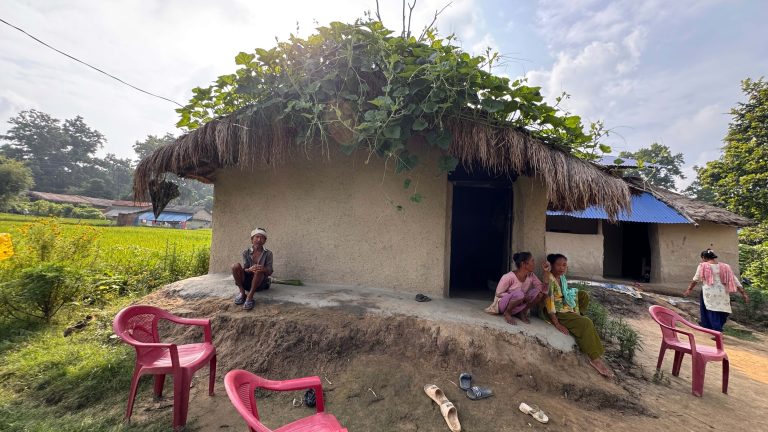
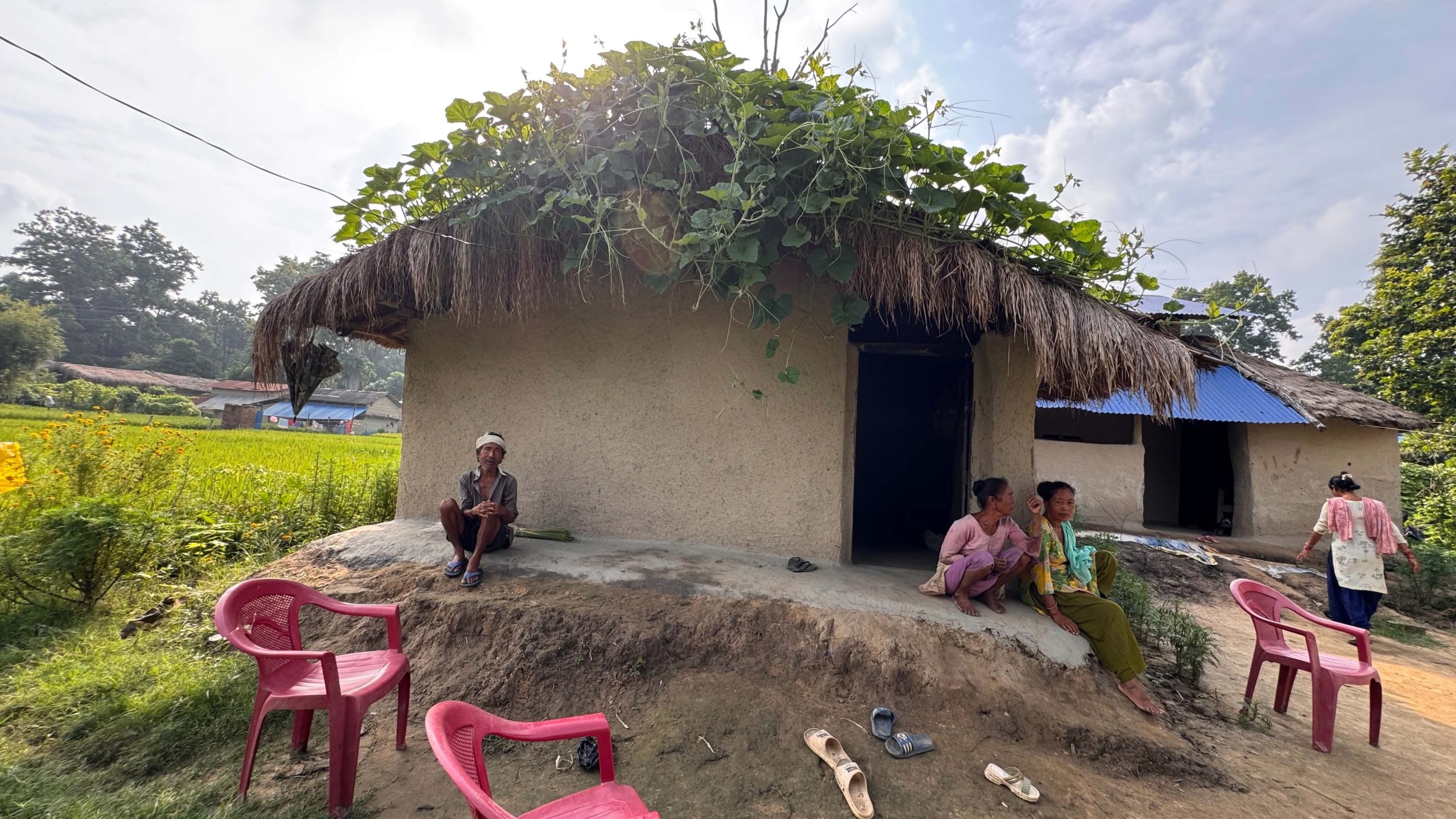
While Jhina Raji’s generation lived a life bound to the forest, the younger generation of the same community is moving forward through schooling, technical education, employment, and social leadership. One generation sustained family life by depending on resources gathered from the forest, whereas the next generation has achieved education and entered government service. The Raji community resides in areas such as Bhajani, Tikapur, Gauriganga, and Ghodaghodi in Kailali district. This shift within the community is not limited to changing livelihood styles; awareness regarding education, employment, social security, women’s participation, local-level representation, and rights is also expanding.
The Government of Nepal has categorized 10 indigenous groups as endangered species/communities, with the Raji community being one of them. The Constitution of Nepal establishes social justice, equality, and inclusion as fundamental rights, specifying that special provisions can be made for the protection, empowerment, and development of socially and culturally backward, minority, and endangered communities.
Article 42 of the Constitution ensures special opportunities and protection rights in education, health, housing, employment, and food for endangered communities. Similarly, Article 51 puts forward state policies to make special arrangements for the preservation and development of the identity, language, script, culture, and history of endangered groups. Article 261 provides for the Indigenous Nationalities Commission to protect, promote, and empower the rights and interests of indigenous peoples.
In line with these constitutional provisions, the government has been implementing targeted programs for the Raji community, including social security, scholarships, education, and housing. Local governments have also introduced programs tailored to the community’s needs. Kebal Chaudhary, Mayor of Bhajani Municipality, states that the municipality provides free education to children of the Raji community alongside other targeted initiatives.
Moving from Forest Life to Education
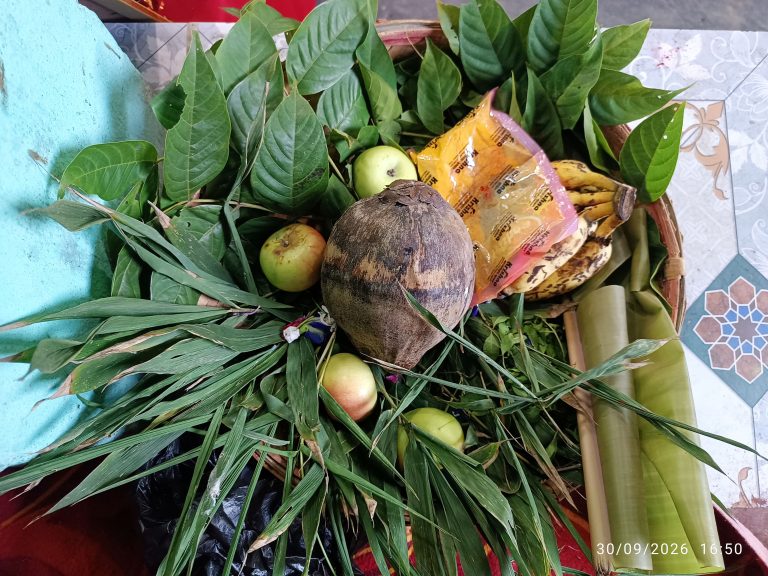
The traditional livelihood of the Raji community was deeply intertwined with forest gathering, farming, and fishing. Collecting honey, herbs, wild roots, asparagus, and fish from the forest for household use and selling the remainder was their way of meeting household expenses. Gathering forest produce often meant spending both day and night inside the jungle.
For 35-year-old Harsh Bahadur Raji from Bhajani Municipality–9, Bhuruwa, those memories remain vivid. According to him, all family members were previously connected to the forest in one way or another. “Earlier, our main livelihood depended on agriculture and the forest. When I was young, I used to go into the forest with my father. We gathered honey, herbs, and other forest products for food, and sold the rest to contractors to run the household,” he recalled.
With limited income, even meeting daily family needs was difficult. At that time, education was not a priority for most families. Due to financial hardship, children had to assist with household chores rather than attend school. Harsh Bahadur was also unable to continue his studies. Following his father’s passing and his elder brother living separately, family responsibilities fell on his shoulders. However, he ensured that his brother did not face the same deprivation. Driven by the belief that his younger brothers must be educated, he provided all the support he could.
Harsh Bahadur’s 31-year-old brother, Arman, currently works as a Sub-Engineer in Ghodaghodi Municipality. Arman’s childhood did not begin with a keen interest in studies. During school age, he preferred grazing cattle over attending class. “When I was in school, I used to attend only once a week. There was no thought that I needed to study; I preferred grazing cattle,” he shared. Due to that initial indifference, his educational journey was not smooth, and he failed the SLC (School Leaving Certificate) once. However, he did not give up. With family support and his own determination, he completed secondary education.
After secondary school, his interest shifted toward technical education. After passing the entrance exam of the Council for Technical Education and Vocational Training (CTEVT), he secured a scholarship to study Diploma in Civil/Sub-Engineering in Chitwan. “Initially, I didn’t know much about what technical education was or how diploma studies worked. Once enrolled, the path opened up,” he said.
Upon completing his technical education, Arman passed the Public Service Commission (Lok Sewa Aayog) examination and has been working as a Sub-Engineer at Ghodaghodi Municipality since 2019 (2076 BS). His transition from a family that relied on forest resources to obtaining an education and entering government service serves as a prime example of generational shift in the Raji community. While Harsh Bahadur’s childhood was spent in the forest without continuing his education, his brother Arman overcame difficulties to gain technical qualifications and secure a government job. Harsh Bahadur’s other brother has also completed Electrical Engineering and is currently preparing for public service exams.
Arman views his success not merely as a personal milestone. He observes a growing interest in education among Raji children and youth. With increased awareness about schools, scholarships, and technical education opportunities, the new generation is choosing diverse career paths. “There is a vast change compared to before. The new generation has received opportunities to learn and move forward, and now we must utilize them to progress further,” he noted. The story of Harsh Bahadur and Arman’s family reflects this generational evolution—shifting from a life dependent on the forest to one shaped by education, skill, and formal employment.
Social Security and Education Transforming Mindsets
Alongside educational shifts, social security and housing programs have eased the daily lives of impoverished Raji families. The government provides a monthly social security allowance of NPR 4,000 per individual for the Raji community. According to Harsh Bahadur, this allowance was instrumental in supporting his brothers’ education amidst limited family income.
He shares that the allowance initially backed the studies of both younger brothers. Once one brother became an engineer, managing expenses for the other brother’s education became much easier. “Without the social security allowance, educating my brothers would have been very difficult. Initially, that allowance helped fund their studies,” he said.
In addition to allowances, the government built integrated model housing for the Raji community. Six members of Maitu Raji’s family receive social security allowances alongside housing facilities. Maitu states that government housing assistance resolved their shelter issues. “We faced many hardships earlier. The government provided social security allowances and also constructed our home, which brought great relief,” he said, adding that the allowance directly contributes to children’s education.
While poverty previously kept education low on the priority list, state assistance and changing mindsets have led to increased school enrollment. This indicates a growing understanding among Raji families that education is a foundation for building the future rather than just an immediate need.
According to Tulsi Raji, poverty previously made it hard to send children to school. Children were forced to work at a young age to sustain daily living, and young girls were often married off early. Today, state facilities and increased awareness about the value of education have altered family priorities. “We now have far more facilities than before, and we are coming to understand our rights,” she expressed.
Older generations echo this evolving perspective. Parbati Raji could not continue her schooling due to family circumstances, including her mother’s ill health, leading to her marriage at age 15. Having studied only up to Class 5, she is now determined about her children’s education. “I couldn’t study, but I want my children to be educated,” she shared.
Maitu Raji shares a similar outlook. Though he lacked the opportunity to attend school, his children now go to school. His past experiences of hardship and lack of education made him more mindful of his children’s learning. Across the Raji community, a shift in mindset regarding education and standard of living is evident. While daily survival was once the primary focus, sending children to school, completing their education, and seeking skills and employment are now viewed as the bedrock of a secure future.
From Female Participation to Community Leadership
The transformation in the Raji community extends beyond education and employment. Women are progressively taking part in social services, income-generating activities, and community affairs. Tulsi Raji serves her community as a Female Community Health Volunteer (FCHV). Through her health services and advocacy, she notices rising awareness regarding education, health, social security, and rights.
Women are also seeking financial independence. In Bhajani, while Parbati Raji’s husband operates a mill, Parbati drives an auto-rickshaw to earn her own income, showcasing a growing desire for self-reliance among Raji women.
Furthermore, Raji community members are stepping into local leadership. Harsh Bahadur currently serves as the Chairman of the Sonpal Community Forest User Group in Bhajani Municipality–9 and is an active Ward Committee member for the CPN (UML).
The community also holds representation in local government executive bodies, allowing members to express their needs in planning and decision-making processes. Harsh Bahadur notes that a community once hesitant to speak up is now vocal about its rights. “Previously, people were afraid to express their problems. Now, we sit in leadership positions ourselves to raise issues and speak for our rights,” he remarked.
Today, progress for the Raji community signifies more than moving away from forest dependence. It is reflected in their ability to send children to school, confidence to choose employment pathways, awareness of state rights, and representation in local government.
One generation sustained family life through forest resources; the next generation pursued education and entered public service. This gradual journey of the Raji community—from forest living to the light of education—has been shaped by overcoming generational hardship, expanding state reach, and the changing mindsets of the youth, placing them on a path toward employment, self-reliance, leadership, and cultural preservation.