
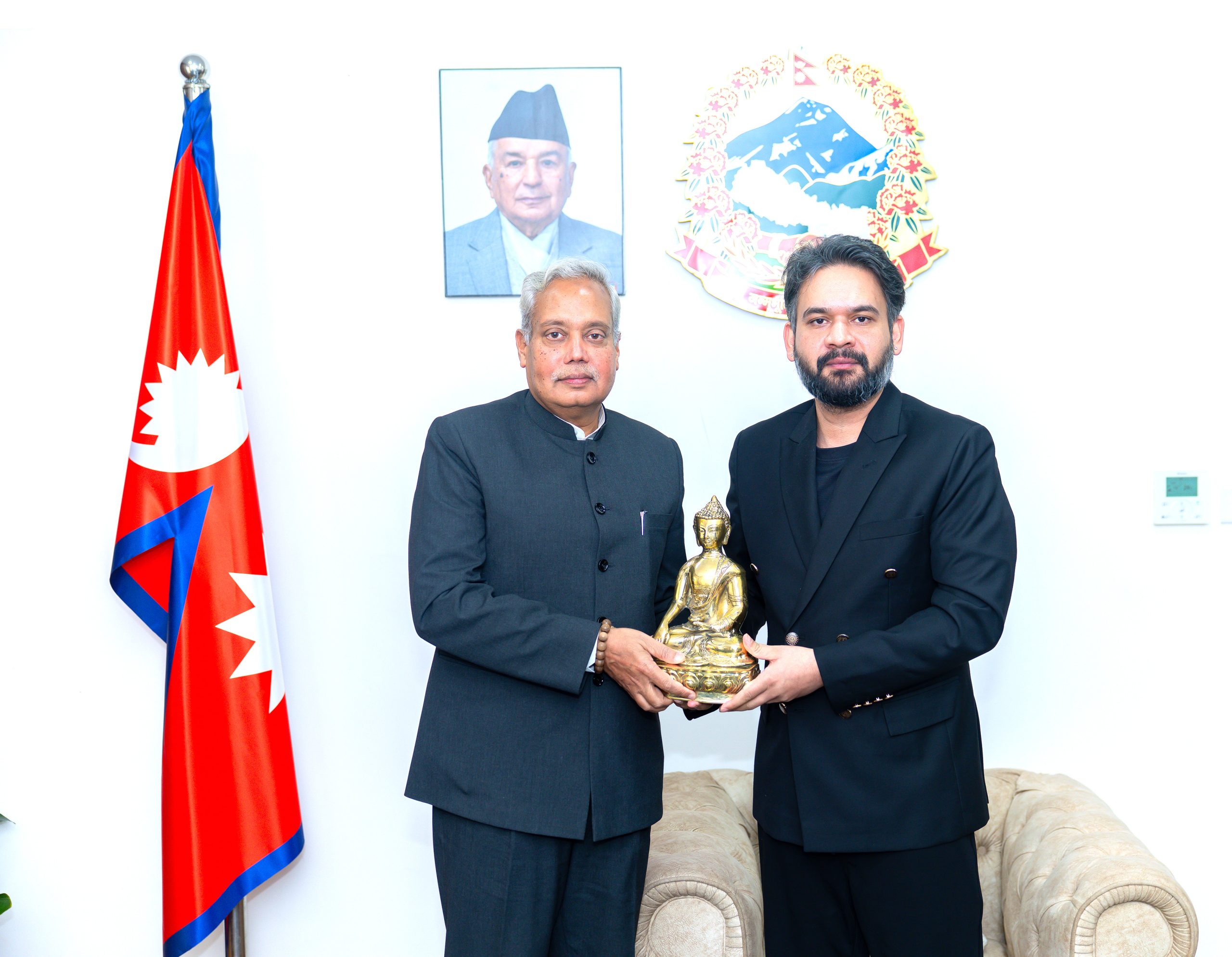
प्रधानमन्त्री शाहसँग भारतीय राजदूत श्रीवास्तवको बिदाइ भेट काठमाडौँ, १३ असोजः प्रधानमन्त्री वालेन्द्र शाहसँग सिंहदरबारस्थित प्रधानमन्त्री तथा मन्त्रिपरिषद्को कार्यालयमा आज बिदाइ भेट गर्नुहुँदै नेपालका लागि भारतीय राजदूत नवीन श्रीवास्तव । नेपालका लागि आफ्नो राजदूतको कार्यकाल सकेर फर्किन लाग्नुभएका श्रीवास्तवले प्रधानमन्त्री तथा मन्त्रिपरिषद्को कार्यालयमा पुगेर प्रधानमन्त्री शाहसँग बिदाइ भेट गर्नुभएको उहाँको सचिवालयले जनाएको छ । तस्बिर सौजन्यः प्रधानमन्त्रीको सचिवालय/रासस
Kathmandu, September 29: Indian Ambassador to Nepal Naveen Srivastava paid farewell calls on President Ramchandra Paudel, Vice-President Ram Sahay Prasad Yadav and Prime Minister Balendra Shah on Tuesday as he prepares to return to India following the completion of his diplomatic tenure.
During his meeting with President Paudel at Sheetal Niwas, the two sides discussed various aspects of Nepal-India bilateral relations, including matters of mutual interest and concern, according to President’s Office Spokesperson Krishna Bahadur Shahi.
President Paudel congratulated Srivastava on successfully completing his tenure in Nepal.
Similarly, during his meeting with Vice-President Yadav at the Vice-President’s Office in Lainchaur, the Vice-President appreciated the ambassador’s contribution to strengthening the historic, cultural and friendly relations between Nepal and India.
Yadav also expressed gratitude to the Government of India for providing humanitarian assistance and disaster relief support to Nepal following the recent devastating floods, according to the Vice-President’s Secretariat.
In response, Srivastava said he had made every possible effort to further deepen Nepal-India relations during his tenure. He added that he would cherish his memories of Nepal and its people.
During his farewell meeting with Prime Minister Shah at Singha Durbar, the Prime Minister reiterated that Nepal and India have long maintained cordial and deep-rooted relations.
Shah thanked India for its assistance in search, rescue and relief operations following recent floods, landslides and other disasters. He also congratulated Srivastava on completing his tenure and extended best wishes for his future endeavours.
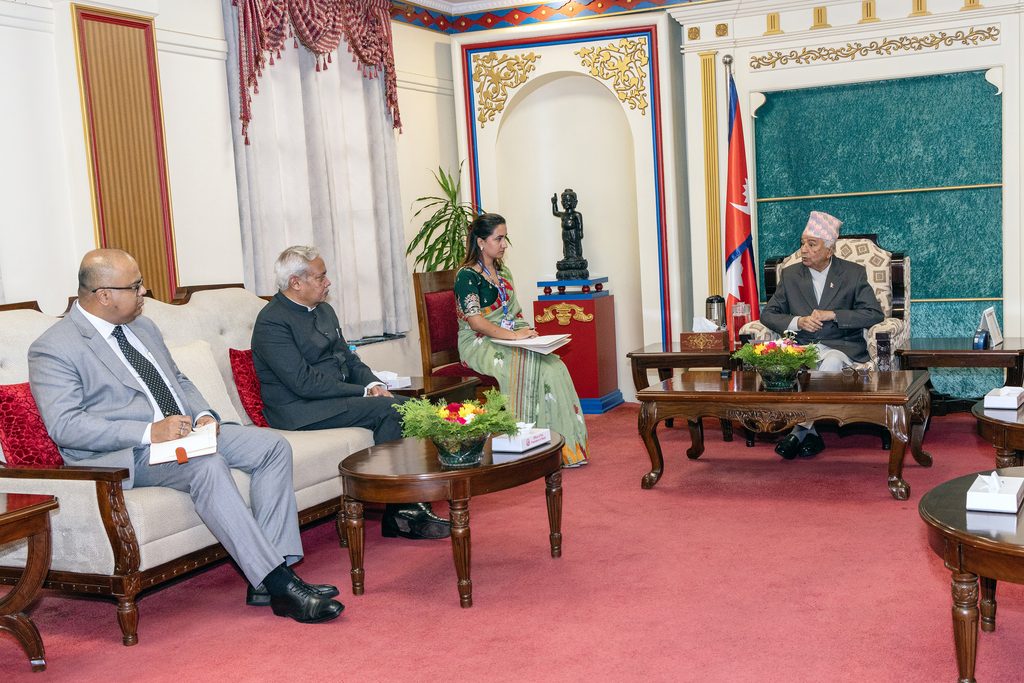
According to the Prime Minister’s Press and Research Expert Dipa Dahal, Srivastava highlighted the completion of several development projects during his tenure and expressed appreciation to the Government of Nepal and the Nepali people for their cooperation and support.
Srivastava assumed office as India’s ambassador to Nepal on June 25, 2022. He is returning to India upon completion of his tenure.
A successful diplomatic tenure, but has India’s influence in Nepal changed?
The completion of Naveen Srivastava’s tenure raises a broader question about the changing character of Nepal-India relations. While the two countries continue to share an open border, deep-rooted cultural connections and extensive economic interdependence, their political relationship has increasingly become intertwined with questions of sovereignty, national identity and public trust.
Srivastava’s tenure, spanning June 2022 to September 2026, provides an opportunity to examine whether India’s traditional influence in Nepal has translated into stronger bilateral relations or whether the relationship is undergoing a gradual transformation.
Was Srivastava’s tenure successful?
His tenure can be examined through three dimensions: diplomatic engagement, development cooperation and the broader political relationship.
Development cooperation and infrastructure
Several development projects were inaugurated or advanced during his tenure.
- In August 2022, Srivastava inaugurated school infrastructure projects in Sunsari worth approximately Rs. 48.9 million in Indian grant assistance.
- In September 2023, he inaugurated the reconstructed Shree Napichandra Mahavihar in Lalitpur, supported by an Indian grant of approximately Rs. 3.5 crore.
- In February 2024, he inaugurated education infrastructure projects in Rupandehi worth Rs. 50.8 million.
- In July 2026, he participated in the inauguration of the restored Gusthal Mahavihar and Agam of Prathamshree Mahavihar in Patan, reconstructed with approximately Rs. 12 crore in Indian assistance.
These projects demonstrate continued engagement in education, community infrastructure and cultural heritage conservation.
Energy and economic cooperation
Energy cooperation has been another significant area of bilateral engagement.
The long-term power trade agreement signed in 2024 envisages Nepal exporting up to 10,000 megawatts of electricity to India over the following decade. Cross-border transmission infrastructure and hydropower development have also remained central to bilateral cooperation.
These developments indicate that the relationship has continued to expand beyond traditional diplomatic exchanges.
However, projects completed during an ambassador’s tenure are not necessarily his individual achievements. They are outcomes of agreements, institutions and negotiations involving successive governments and officials from both countries.
Has India lost its cultural influence in Nepal?
The question requires distinguishing between cultural connections and political influence.
India and Nepal continue to share extensive religious, linguistic, familial and social connections. The open border facilitates everyday interaction, trade, travel, pilgrimage and cross-border family relationships. Both governments officially recognise these people-to-people connections as a defining feature of their relationship.
There is therefore insufficient evidence to conclude that India has lost its cultural connections with Nepal.
Nevertheless, cultural proximity does not automatically translate into political acceptance.
A person may maintain religious, familial and cultural connections with India while simultaneously supporting a more independent Nepali foreign policy or expressing disagreement with particular Indian government policies.
This distinction is important because cultural familiarity and political trust are different dimensions of bilateral relations.
The discussion suggested that some cross-border marriages have declined, although it did not establish a comprehensive nationwide trend.
Thus, the open border remains a foundation of the relationship, but its continued existence alone cannot establish the strength of contemporary public sentiment.
Political front: From traditional proximity to more explicit negotiation
Political relations have experienced recurring disagreements over sovereignty, territorial claims and the conduct of bilateral diplomacy.
The Kalapani-Lipulekh-Limpiyadhura dispute remains a significant example. In June 2026, Prime Minister Balendra Shah called for both countries to examine historical evidence and resolve territorial disagreements through dialogue. India reiterated the existence of bilateral mechanisms for addressing such issues.
The disagreement illustrates how historical and territorial questions continue to shape the political relationship despite extensive cooperation in other sectors.
Nepal’s political relationship with India has also been affected by domestic debates over sovereignty and the influence of larger neighbouring powers. The new government had adopted a more assertive diplomatic approach, including measures affecting border commerce and diplomatic engagement.
These developments should not automatically be interpreted as Nepal abandoning its relationship with India. They indicate that bilateral engagement is increasingly accompanied by explicit negotiation over national interests and policy differences.