
ray of hope in tunnel
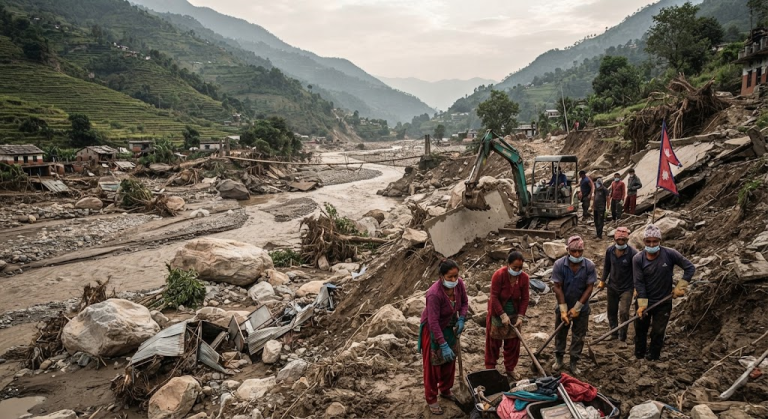
An army officer leading the rescue in Rasuwa said it plainly today. It may take three or four months to reach the engineers trapped inside the Trishuli 3A and 3B tunnels. Three or four months. Say those words slowly. Somewhere under that mud, a man is waiting to hear his daughter’s voice again. He does not have three or four months. He has however many hours his body can hold out in the dark.
And what did the Prime Minister offer the nation in exchange for that timeline? A parliamentary floor speech, delivered in the calm, procedural tone of a man reading out attendance figures.
Balendra Shah told the House that no country has the expertise to rescue people from tunnels sealed by mud and flood. He said Nepal has no technology to do this quickly, and neither does anyone else. He said the weather has not cooperated. He said the mud has not dried. He said an excavator can only do so much in a confined space, and only one or two can work at a time. Each sentence was true in isolation. Strung together, they formed something else. They formed an alibi.
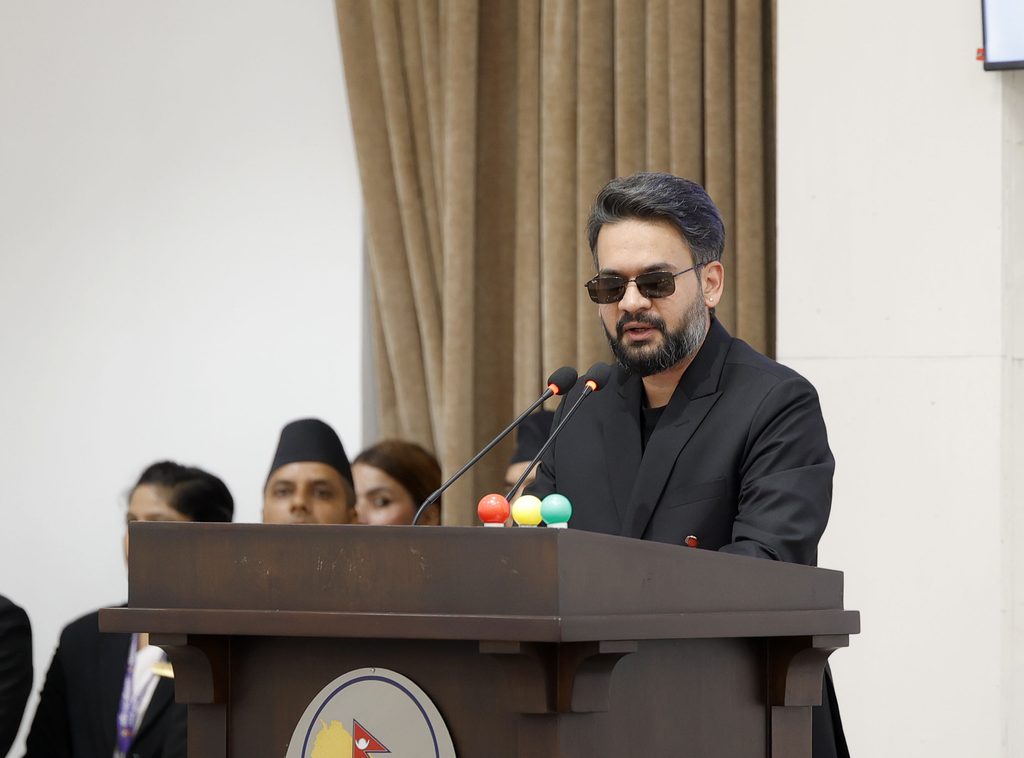
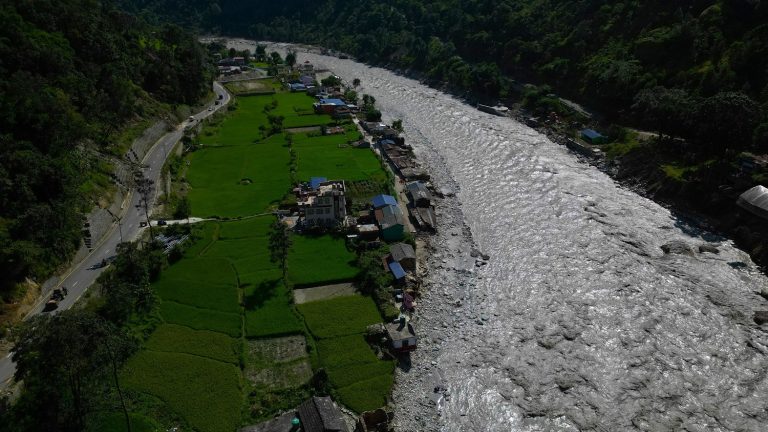
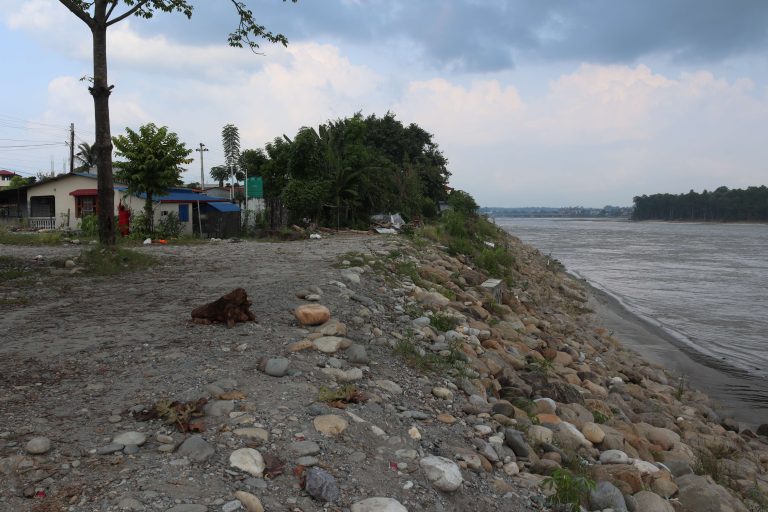
Nobody asked the Prime Minister to personally dig through the mud. What was asked, gently and then less gently, was why the state’s response looked so unprepared for a country that lives with rivers, floods and landslides every single monsoon. Nepal did not discover its geography yesterday. It has known for decades that its hydropower tunnels sit beside unstable rivers fed by a warming, retreating cryosphere. Preparedness is not a foreign invention. It is a choice a government makes before disaster strikes, not a speech it gives after.
The Defence That Answered Nothing
Read the Prime Minister’s remarks again and notice what they share. Every single one is a defence of the government’s own conduct, not an account of the missing.
Asked why international help was not accepted, he said help had in fact been arriving since day one. Asked why information was not shared with the public in time, he said 1.1 million SMS messages had gone out, and that the disaster was simply beyond anyone’s prediction. Asked about the handling of unidentified bodies, he explained that DNA samples had been collected and burials done on a scientific and legal basis, and he urged citizens not to be misled. Asked whether the provinces and local governments had been left out of the response, he said he remains in constant dialogue with them.
Notice what is missing from all of this. Not one line was about the men still breathing under the debris of Trishuli 3A and 3B. Not one line offered a plan, a date or a promise. The Prime Minister answered every question about the government’s image. He did not answer the one question that actually matters, which is when these men are coming home.
Calling a flash flood of this scale unpredictable is also, frankly, a strange thing for a government to say about its own country. Nepal’s disaster management authorities publish flood and landslide forecasts every monsoon. Hydropower companies operating in landslide corridors are required to have early warning and evacuation protocols. If the flood was truly beyond prediction, that is itself an admission that the systems meant to predict it failed. If it was not beyond prediction, then somebody chose not to listen to the warning. Either way, the sentence was meant to close the question, not answer it.
What Was Their Crime
Let us return to the line already written by others grieving this same disaster. Nearly eight hundred bodies recovered. Thousands still unaccounted for. What was their crime?
The engineers and workers trapped in those tunnels were not gamblers who chose a dangerous hobby. They were employees of hydropower projects that Nepal itself markets to the world as the backbone of its clean energy future. They went underground to build the very infrastructure that gives this country nearly all of its electricity, infrastructure this same government proudly cites in every climate conference speech about Nepal’s contribution to the world’s clean energy transition. Their labour built the numbers that ministers repeat abroad. Their absence now barely earns a plan in Kathmandu.
Nepal did not cause the climate crisis pressing down on its glaciers and rivers. That case has been made well already and it remains true. But a nation can hold two truths at once. Nepal is a victim of a crisis it did not create, and its own government can still fail the citizens caught inside that crisis. Blaming the atmosphere does not excuse a slow ambulance. Blaming global emissions does not explain why a rescue plan that should have existed on paper before the flood is instead being improvised weeks after it.
Coordination on Paper, Confusion on the Ground
The Prime Minister says he speaks constantly with provincial and local governments. Families of the missing in Rasuwa describe something different. They describe conflicting numbers of the trapped, shifting timelines from officials, and days spent simply trying to find out who is actually in charge of the search. A phone call between officials in Kathmandu is not coordination if it never reaches the family standing at the edge of a collapsed tunnel asking for news.
The DNA and burial protocol may well be scientifically sound. Forensic identification of mass casualties is a real and difficult discipline, and doing it properly takes time. But process without communication feels like erasure to a grieving family. Telling people not to be misled is not the same as telling them what is happening to their relative’s remains, in language they can understand, at a pace that respects their grief.
A Welfare State in Name Only
Nepal’s constitution calls this a welfare state. A welfare state is judged in exactly the moment now unfolding in Rasuwa. It is not judged by speeches at climate summits or by percentages of electricity generated from hydropower, however impressive those numbers are. It is judged by whether the man who dug the tunnel is remembered once the tunnel gives way.
Three or four months is not a rescue plan. It is a quiet way of asking families to accept that recovery has already replaced rescue in everything but name. If the government believes that timeline, it owes citizens the honesty of saying so directly, instead of surrounding it with statistics about text messages sent and international assistance received.
The families waiting outside those tunnels are not asking for sympathy speeches. They are asking a simpler question. When is my brother coming out. Nepal deserves a government that can answer that question without first defending its own record.