
लमजुङका चलचित्र हल
Lamjung, October 2
At one time, movie theaters in Lamjung were not just places to watch films; they were primary hubs for people from villages and towns to meet, discuss new releases, and enjoy entertainment. As news of a new movie release spread, crowds would gather to buy tickets. Audience members would wait in line for hours to catch a show, and occasionally, theaters even had to run extra screenings to manage the demand. Theaters operating in areas like Besisahar, Sundarbazar, Bhorletar, and Bhoteodar’s Phulbari sustained Lamjung’s entertainment culture for a long time. However, with technological advancements and the rise of television, mobile phones, the internet, and digital media, film-viewing habits began to shift—directly impacting local movie halls.
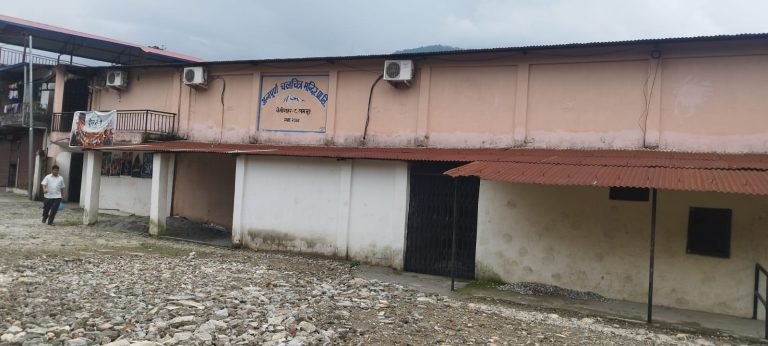
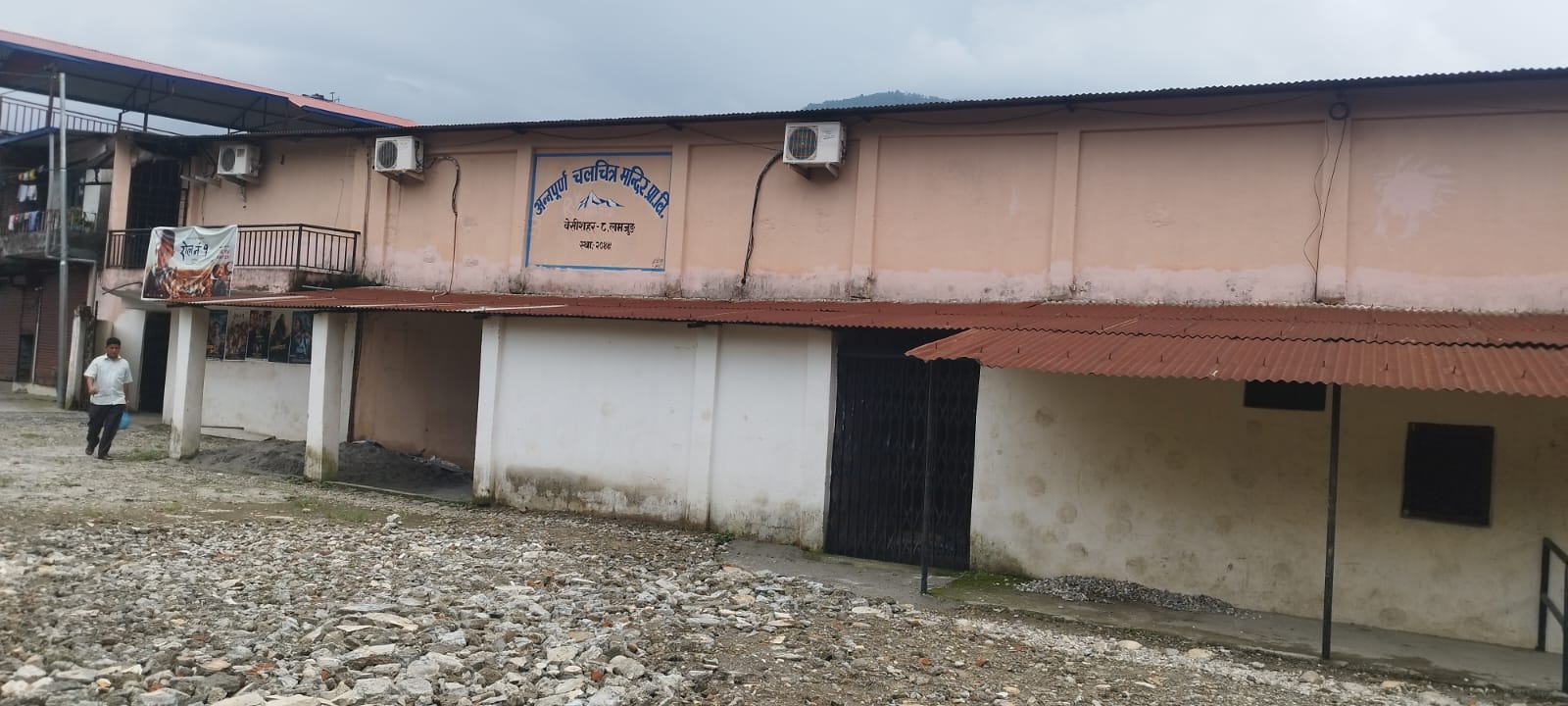
Most movie theaters in Lamjung that were once packed with audiences have now shut down. Among the district’s old movie halls, only Annapurna Chitra Mandir, located in Besisahar Municipality-8 (Sera), continues to preserve its existence. Shanti Chitra Mandir in Sundarbazar Municipality-7 was once a major entertainment destination in Lamjung. According to its former operator, Nabin Shrestha, the hall was established around 1992 (2049 BS). At that time, people would walk for hours from distant places just to watch a movie, with many staying overnight to catch the morning show before returning home.
“People used to walk five to seven hours to watch a movie. Some would stay overnight and head back after the morning screening,” Shrestha recalls. He notes that Shanti Chitra Mandir experienced massive turnout during those days, running three to four shows daily, and sometimes even midnight shows from 9:00 PM to 12:00 AM. Crowds peaked during major festivals like Teej and Janai Purnima. “Back then, movie halls were the main source of entertainment. People came from Bhorletar, Nayagaun, Gaunda, Shrimanjyang, and even villages above Baisjagar in Tanahun. The hall was not just for entertainment, but also a medium for social gatherings and news exchange,” says Shrestha.
Shanti Chitra Mandir also generated local employment, directly employing 10 to 12 people during its operation, and helped put the Sundarbazar area on the map. However, operational challenges mounted over time. Around 2003 (2060 BS), the armed conflict in the country reduced long-distance visitors, leading to financial difficulties and forcing a temporary one-year closure. “Due to the conflict, people stopped coming from afar. Even after reopening, attendance gradually declined,” he remembers.
Shrestha attributes the decline further to technological progress, mobile phones, television, and the internet. With home entertainment options expanding, theater attendance plummeted. Additionally, movies failing to match audience preferences played a role. “Earlier, you had to visit a hall to watch a movie. Once entertainment became easily accessible via mobile phones and TV, viewership dropped. The failure of halls to modernize with technology was another reason,” he explains. When attendance dwindled to 10–15 people, or sometimes just five, sustaining operational costs became impossible. Ultimately, Shanti Chitra Mandir closed its doors permanently on March 2, 2015 (Falgun 18, 2071 BS).
Among Lamjung’s historic halls, only Annapurna Chitra Mandir continues its journey. Located in Besisahar Municipality-8, it was also established in 1992 (2049 BS). Prakash Danai, the operator of Annapurna Chitra Mandir, states that audience turnouts are nowhere near what they used to be. “Until recently, around 50 to 60 people would attend. Now, during the monsoon season, attendance drops to 10–15, and sometimes just five to seven people,” Danai says, adding that screenings are occasionally canceled due to low turnout.
Procuring films has also become a challenge. While movies were previously purchased outright, they are now exhibited on a revenue-percentage basis. “With movies becoming rapidly available via mobile phones and the internet, bringing audiences to the hall has become difficult,” Danai explains. However, he believes keeping at least one hall operational is crucial for the district. “A movie hall is not just a business; it represents the identity of the district. A theater is necessary for entertainment and for preserving the big-screen cinema culture,” Danai emphasizes. Having invested heavily and sharing a deep history with the venue, he intends to keep Annapurna Chitra Mandir running. “If we can upgrade the hall with modern amenities and manage it well, we can attract audiences again in the future. That is why I plan to preserve and move it forward,” he adds.
Buddhiman Shrestha (75–80) of Dordi Rural Municipality-3 (Shrimanjyang) has also lived through Lamjung’s rich cinema culture. Although his daily routine now revolves around household chores, cattle care, and village work due to advancing age, he still visits Besisahar to watch movies whenever time permits. For him, the theater is not just a place for entertainment, but a nostalgic reminder of past social gatherings and joyful times. The excitement of walking from the village, the bustling crowds at the hall, and the shared experiences with friends remain vivid in his memory.
Once major hubs for collective entertainment, Lamjung’s movie theaters now face severe challenges due to technology and changing lifestyles. Yet, through nostalgic moviegoers and the persistent efforts of Annapurna Chitra Mandir, Lamjung’s cinema culture continues to survive.