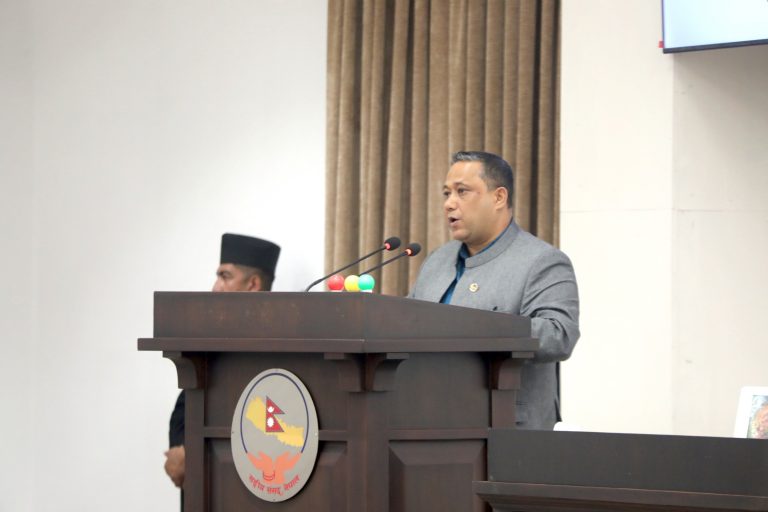

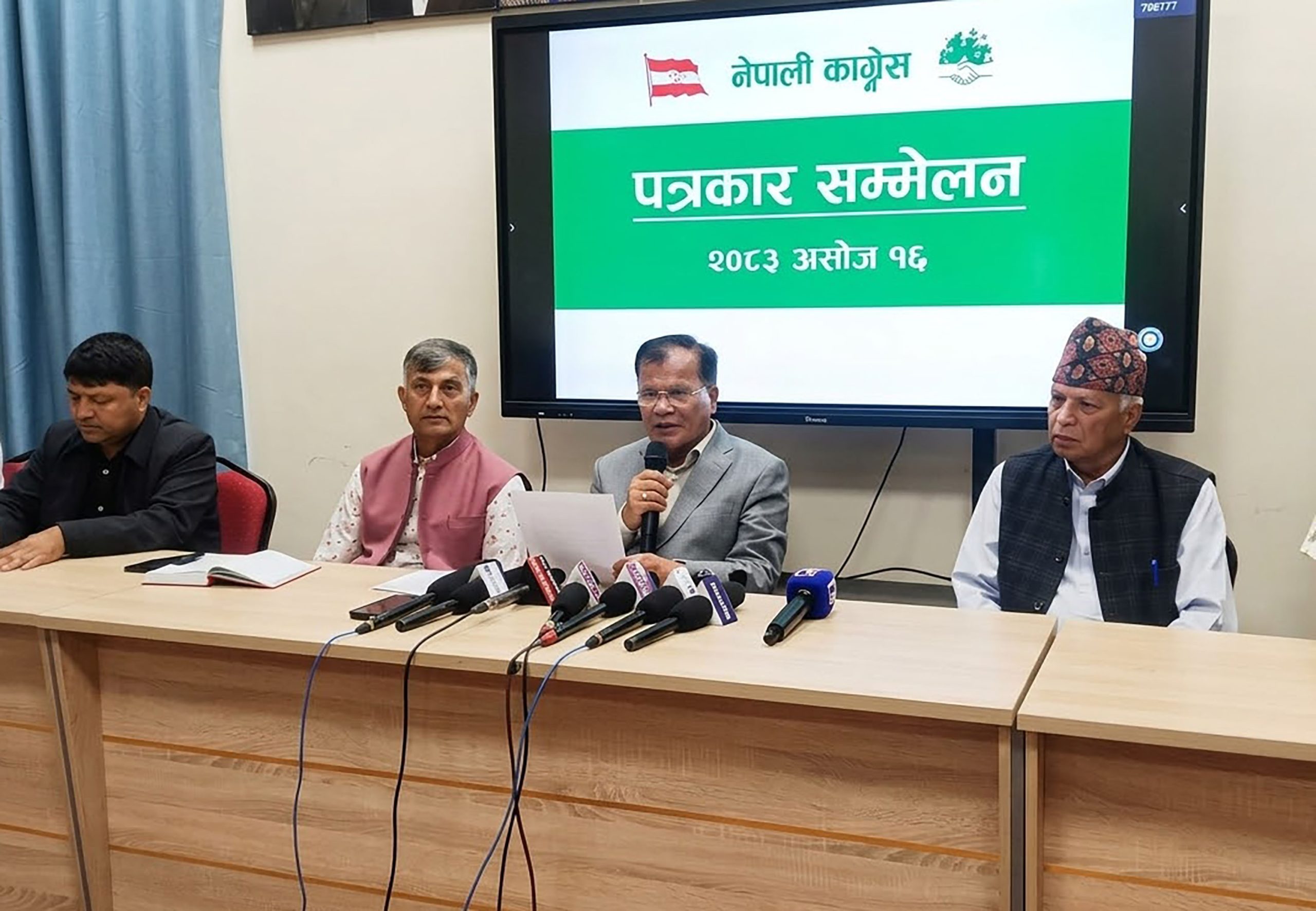
ललितपुर, १६ असोज : नेपाली कांग्रेसको १५ ओैँ महाधिवेशनका बारेमा जानकारी दिन पार्टीको केन्द्रीय कार्यालय सानेपामा शुक्रबार आयोजित पत्रकार सम्मेलनमा मन्तव्य राख्नुहुँदै प्रवक्ता देवराज चालिसे । तस्बिर : माधवप्रसाद घिमिरे/रासस
As preparations intensify for its 15th general convention, Nepal’s oldest democratic party confronts a generational divide over leadership, legacy and the direction of its politics
Kathmandu, Oct. 2: The Nepali Congress, a party that helped bring an end to the 104-year Rana regime and usher in democratic politics in Nepal, is preparing for its 15th national general convention at a time when its own political future is increasingly becoming a subject of debate.
With preparations underway for the October 18 convention at Kathmandu’s Khulamanch, the party faces a challenge that goes beyond electing its next leadership. The gathering is also expected to test how the Congress reconciles its historical legacy with the aspirations of a younger generation seeking a greater role in shaping the party’s future.
The contrast is striking. The political organisation that once mobilised against hereditary rule now faces questions about leadership renewal, internal democracy, generational representation and its ability to remain relevant to changing public expectations.
Khulamanch prepares for a historic gathering
Preparations for the convention have intensified under the coordination of the venue management committee led by Kathmandu District President Sabuj Krishna Baniya.
Three separate halls, each accommodating approximately 2,500 delegates, are being prepared for the closed-door sessions, while arrangements for the inaugural ceremony are underway at Khulamanch.
Congress Vice-President Bishwaprakash Sharma, Treasurer Umesh Shrestha, spokesperson Devaraj Chalise and other senior leaders inspected the preparations.
Sharma said the convention would be inaugurated at 2 pm on October 18, with more than 7,000 delegates expected to participate from across Nepal and abroad. Leaders of various political parties and representatives of Socialist International have also been invited.
The closed-door sessions will begin on October 19. Party President Gagan Kumar Thapa is scheduled to present the political document, while the vice-president, general secretary and treasurer will present policy, organisational and financial reports.
Delegate registration has begun at the party’s central office in Sanepa. Food arrangements have been made at Bhrikutimandap, while accommodation will be provided at minimum charges. A media centre will operate near the main stage, with the party spokesperson scheduled to brief journalists twice daily.
From ending hereditary rule to confronting generational questions
The Congress’s historical significance is closely tied to the democratic movement of 1950–51. Following its formation through the merger of the Nepali National Congress and Nepal Democratic Congress in 1950, the party organised an armed movement against Rana rule. Its Liberation Army participated in the uprising, which, alongside the involvement of King Tribhuvan, popular mobilisation and political negotiations, culminated in the formal end of the Rana regime in February 1951.
That legacy remains central to the party’s identity. But historical contributions alone cannot settle the questions confronting a contemporary political organisation.
The upcoming convention comes amid a broader debate over how much influence established leaders should retain and how much space should be opened for younger political figures. The generational question is not simply about age. It concerns leadership culture, decision-making authority, political accountability and whether the party’s organisational structures can accommodate changing expectations.
The presence of younger leaders in senior positions, including President Gagan Kumar Thapa and Vice-President Bishwaprakash Sharma, makes the convention particularly significant as an opportunity to examine the relationship between leadership renewal and the party’s established political traditions.
The central question is whether generational change will translate into changes in the party’s internal practices, policy priorities and relationship with voters, or remain primarily a change in personnel.
A party at a crossroads of legacy and relevance
The Congress’s challenge is not merely to organise a successful convention or select office-bearers. It must also demonstrate how its historical commitment to democratic participation can be reflected in its own internal functioning.
For a party whose founding generation challenged hereditary political authority, questions about internal democracy and leadership succession carry particular historical resonance.
The convention will provide an institutional platform for delegates to debate the party’s political direction, organisational structure, policy commitments and leadership.
Whether the gathering produces a broader generational reconciliation or exposes continuing differences will become clearer through the proceedings and decisions of the convention.
As Khulamanch prepares to welcome thousands of delegates, the Congress faces a question that reaches beyond its next leadership team: how can a party that helped transform Nepal’s political system renew itself for a generation whose expectations of politics are different from those of its founders?
The answer may shape not only the party’s organisational future but also the place it seeks to occupy in Nepal’s changing democratic landscape.