
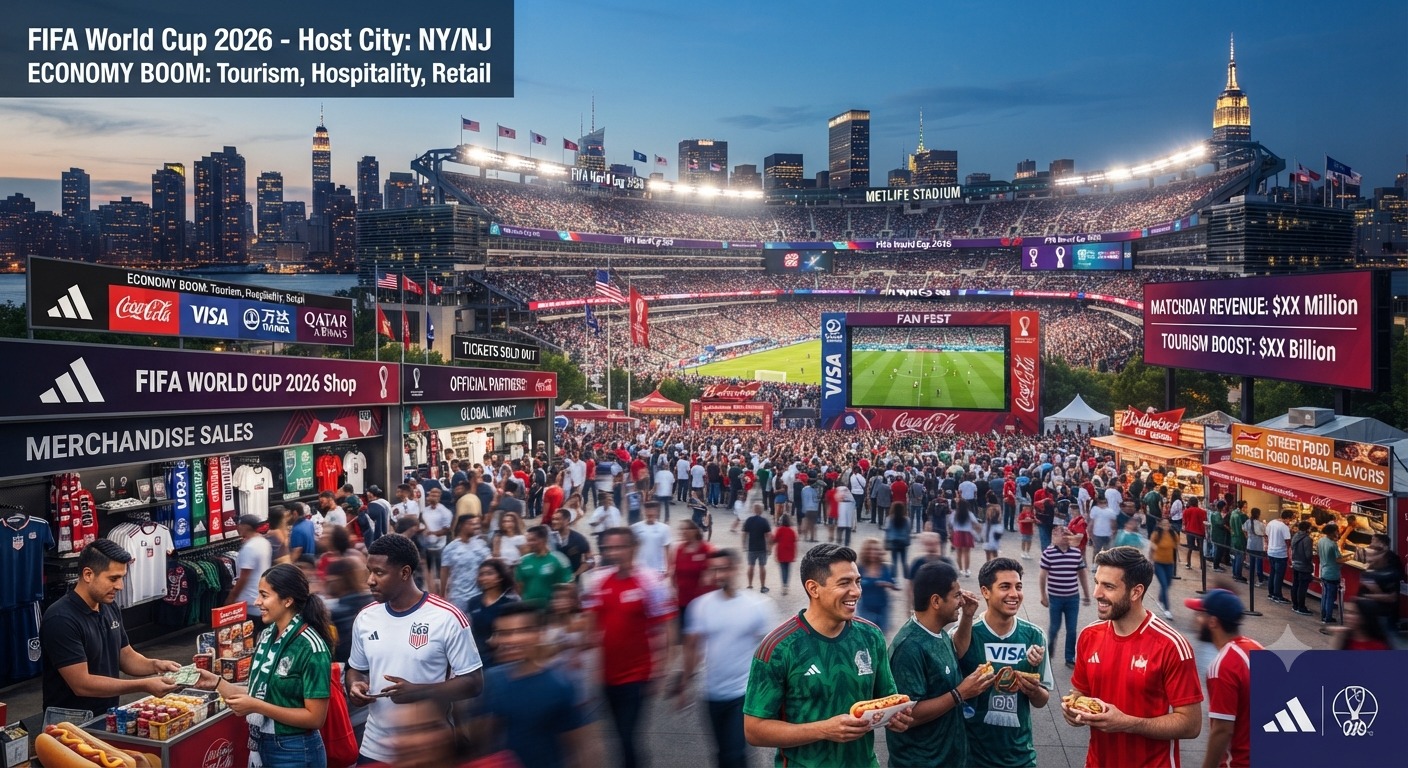
New York | July 7 — While the FIFA World Cup 2026 continues to captivate football fans around the globe, economists and market analysts say the tournament has evolved into one of the world’s largest economic events, generating billions of dollars in business activity across tourism, hospitality, broadcasting, retail, transportation and global advertising.
Hosted jointly by the United States, Canada and Mexico, the expanded 48-team tournament has significantly increased commercial opportunities compared to previous editions. Hotels, airlines, restaurants, entertainment venues and local businesses across host cities have reported strong demand as millions of supporters travel to attend matches and related events. Consumer spending has also surged in sectors ranging from food services to merchandise and transportation.
Industry estimates suggest the tournament could contribute tens of billions of dollars to the economies of the three host nations through tourism receipts, employment, infrastructure investment and business activity. At the same time, FIFA is expected to generate record revenues from global broadcasting rights, sponsorship agreements, licensing and ticket sales, making the 2026 edition the most commercially successful World Cup in the tournament’s history.
The commercial impact extends well beyond the host countries. Global brands have intensified marketing campaigns around the tournament, while streaming platforms, sportswear manufacturers, travel companies and digital payment providers have launched special promotions targeting football audiences worldwide. Analysts note that the World Cup has become an increasingly powerful platform for international trade, consumer engagement and brand visibility.
Host cities have also experienced a sharp rise in visitor arrivals, with fan festivals, cultural events and entertainment activities generating additional revenue for local businesses. However, economists caution that the long-term financial return for host governments depends on infrastructure costs, public spending and the sustained economic use of facilities after the tournament concludes.
As football’s biggest tournament grows in scale, its influence now extends far beyond the pitch. The FIFA World Cup has become not only a global sporting spectacle but also a major driver of international commerce, investment and tourism, underscoring the increasing convergence of sports and the world economy.