


Langtang (Rasuwa), Nov 25 :
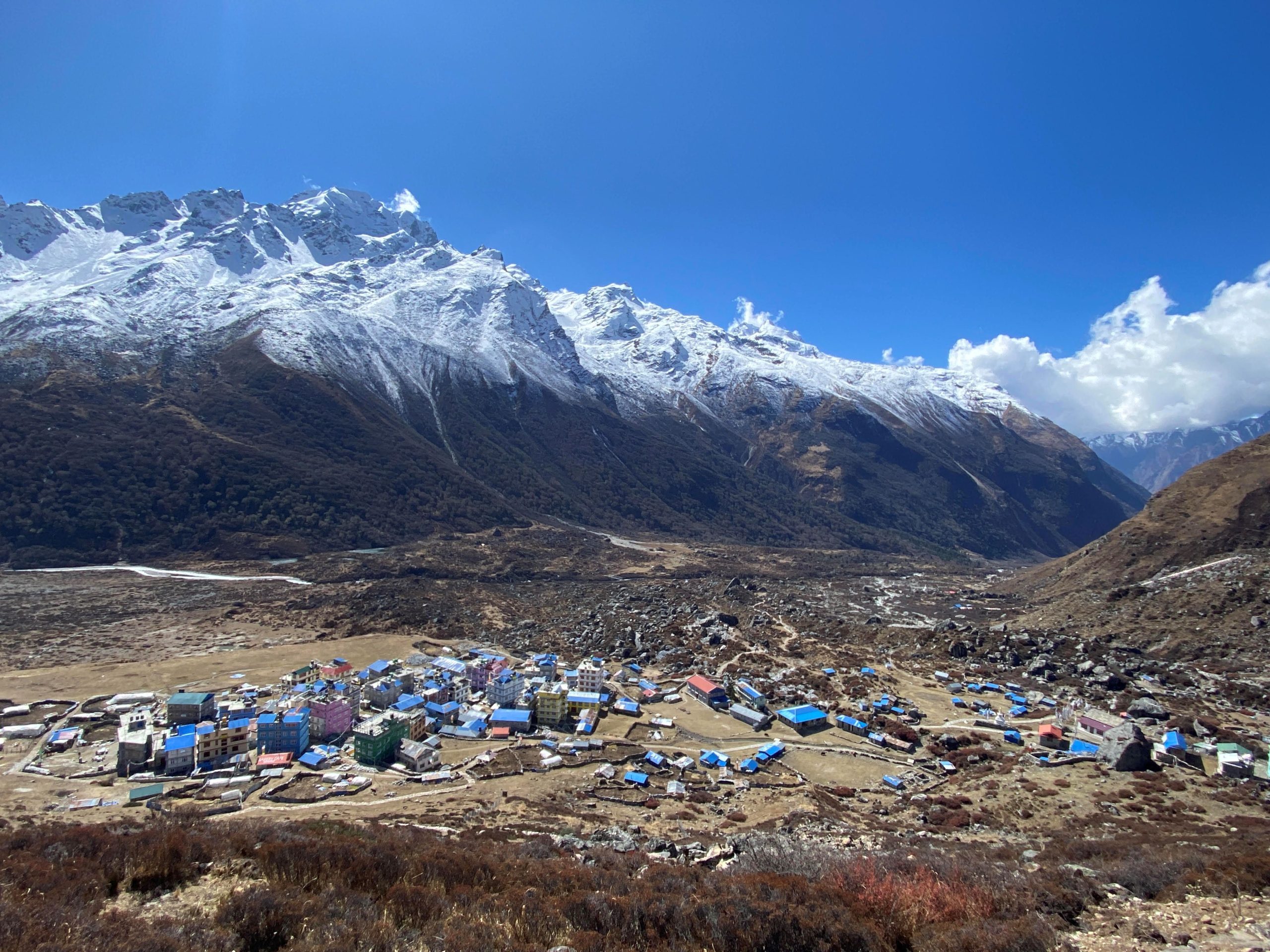
Surrounded by snow-capped mountain ranges, towering rocky cliffs, and a small, scenic valley nestled in between, seeing Langtang Valley resting in the lap of the Himalayas brings to mind singer Tara Devi’s song:
Nestled in the lap of the Himalayas is my small village,
I am a daughter of the mountains, Parvati is my name…
Langtang Valley, flourishing in the lap of the Himalayas, is beautiful. Even more beautiful is the daily life of its mountain people, whose hearts are as pure and innocent as snow. On one hand, the residents smile with a snow-like warmth; on the other, they willingly endure life’s many struggles with the resilience of rock. Fifty-year-old Phurpu Sherpa of Langtang Valley says, “When we mountain people are happy, we laugh like the Himalayas; when hardship strikes, we can fight like rock. Sherpas do not need many big things to be happy.”
She feels glad seeing tourists come to visit the mountain village. Especially when young trekkers around the age of her own children arrive, she treats them like her own offspring. Calling out to trekkers, she says, “How far are you heading? Come, let’s have tea.” From a business perspective, this may seem like a routine way of inviting customers, yet for Phurpu, it also carries an emotional bond tied to warmth toward visitors and memories of her children.
Having lost family members in the earthquake, she has been carrying the responsibilities of life alone. A mother of four children, she is now on her own. The 2015 earthquake (2072 BS) brought devastating tragedy, taking her eldest son, a daughter, and her husband. Of her two surviving daughters, one is studying in Canada while the other is studying in Kathmandu.
She shared that when she urges her daughter to visit the village, the daughter replies, “Send a helicopter; I won’t come by walking.” Recalling her daughter’s response, Phurpu smiles briefly—yet behind that smile lies the longing to see her children and a quiet worry that they might forget her. “What is life really worth?” she vents her grief in a short sentence.
The lives of 72-year-old Tenjen Lama and his 70-year-old wife Yangjen Jangdumpa in Langtang are not as easy as they appear either. Every person living here has their own story, among which the Lama couple’s story is compelling. They have one son and three daughters; two daughters and their son and daughter-in-law live in the United States. Even with their children abroad, their hearts remain tied to their own village and mountains.
Langtang still lacks easy road access. Even everyday essentials must be transported with difficulty. Locals say that rice costing NPR 2,500 in the market reaches up to NPR 5,000 in the village once transport costs are added. Residents are forced to pay steep prices for everything from food to construction materials. Compounding this, because the area lies inside Langtang National Park, locals complain of bearing the burden of various fees and regulations.
An entry fee of NPR 3,000 per person is charged to foreign tourists and NPR 100 per person to domestic tourists. Locals complain that despite collecting fees from tourists, commensurate work has not been done on trails, waste management, and local infrastructure improvement. Amid the beauty generously bestowed by nature, daily life for Langtang’s residents is far from easy. Earning their livelihood from the arrival of tourists, locals are struggling with shortages of trails, healthcare, food transport, and tourism management.
Located in Ward No. 4 of Gosainkunda Rural Municipality, Langtang Valley is one of Nepal’s popular trekking destinations. Ranked after Everest and Annapurna, Langtang draws domestic and foreign tourists every year to see its mountain scenery and the culture and traditional lifestyle of the local Tamang and Sherpa communities—yet the trails leading to this alluring destination and its basic services remain poorly organized.
According to Karma Lama, operator of Namaste Hotel in Thulo Syabru, there is an interesting legend rooted in local belief behind the name Langtang. He said that long ago, an animal from Tibet had wandered in along with a herder. When it refused to return despite the herder’s efforts, it was tied with a peg; later, after breaking free and causing much trouble, the herder struck and killed it with a weapon, according to local accounts—giving rise to the name Langtang. Such legends and local culture are added attractions for tourists in Langtang. Nevertheless, alongside promoting and conserving natural and cultural heritage, sufficient attention has not been paid to making life easier for the residents.
Relying on Helicopters When Falling Ill
Another major challenge of mountain life is healthcare. While locals manage somehow under normal circumstances, the fear of not receiving medical treatment when falling ill weighs heavily on them. “Other times we get by somehow, but the fear of not getting treatment when sick haunts us,” says Phurpu Sherpa. “If you fall sick, you cannot reach a hospital without a helicopter. To arrange a helicopter, you must have NPR 300,000 to NPR 500,000 deposited in your bank account.” Helicopters becoming virtually the sole option in emergencies reflects the weak access to healthcare here.
Raising such sums is even harder for economically disadvantaged families. In a place known as an attractive tourism destination, locals face major financial risk even for basic medical care.
Tourist Footfall Drops After Flood
Langtang, which had been devastated by the 2015 earthquake (2072 BS), was gradually rising again. Local entrepreneurs say tourism activity suffered a further blow after a Bhote Koshi River flood damaged the Syabrubesi area. According to Raju Gurung, operator of Original Lama Hotel, trekking via Syabrubesi was affected after the flood, leading to a decline in tourists visiting Langtang. “Earlier, it used to be a center of attraction for domestic tourism as well. Now the number of tourists has dropped significantly,” he said.
He noted that because using the old trail became difficult due to the flood, tourists now have to begin their journey via Thulo Syabru. This change in trekking route has created added travel difficulties for visitors, affecting the income of locals who depend on hotels, restaurants, and other tourism businesses. Sonam Sherpa, who operates a hotel business in Langtang, says the national park charges NPR 400,000 annually.
He complains that although locals trying to earn a living from tourism must pay high fees, no improvement is visible in trail conditions and management. Similarly, 27-year-old Pemba Tamang of Kyanjing Gumba states that there are around 30 households in that area, and locals have been providing necessary services to tourists through their own efforts.
Local representative Lakpa Tenjing Tamang of Gosainkunda Rural Municipality–4 says that although Langtang Valley is full of tourism potential, governments at all three tiers have failed to prioritize it. He shared that locals are trying to bring tourists to the village by repairing damaged trails through their own hard work. “If a bear from the park attacks and eats us, we have to accept NPR 500,000 in compensation. If we fight back to save our lives and the bear dies, we face life imprisonment,” he said. “What can we do? Our lives aren’t even worth as much as an animal’s.”
Abundant Potential, Weak Management
Another challenge in Langtang Valley is trail condition and waste management. Along the journey, as trekkers cross the park area to reach Langtang Valley, waste bins are not seen, and major landslides have occurred in several places—forcing tourists to travel along hazardous paths. Prabin Neupane of Syangja, who trekked to Langtang during Tihar, expressed dissatisfaction that despite being an attractive destination, little attention has been given to building safe, well-managed trails. “It is such a beautiful place, and it feels sad that waste management and trails are not well-organized,” he said. Namaste Hotel operator Karma Lama remarks, “If Nepalis keep it clean, the trail won’t be dirty.”
From Kathmandu, trekkers can reach Thulo Syabru after roughly a six- to seven-hour bus ride and begin the Langtang trek. Kyanjin Gumba is a major attraction of the area, from where one can hike up to Tserko Ri, at an elevation of about 4,984 meters, for panoramic views of the surrounding mountain ranges. Together with scenic views of mountains, glaciers, hills, and the valley, the culture, traditions, and lifestyle of the Tamang and Sherpa communities make Langtang a distinct tourist destination. It is a special hub of attraction for visitors seeking to understand local culture, experience mountain life, and enjoy trekking.
In the Nepal Tourism Board’s classification of trekking destinations, Langtang is regarded as a renowned trekking region after Everest and Annapurna. To harness its true potential, investment is needed in upgrading trails, ensuring safe movement, improving healthcare access, easing food transportation, and managing waste.
RSS