



Ram Kumar Rai
Kathmandu, Nov 22:
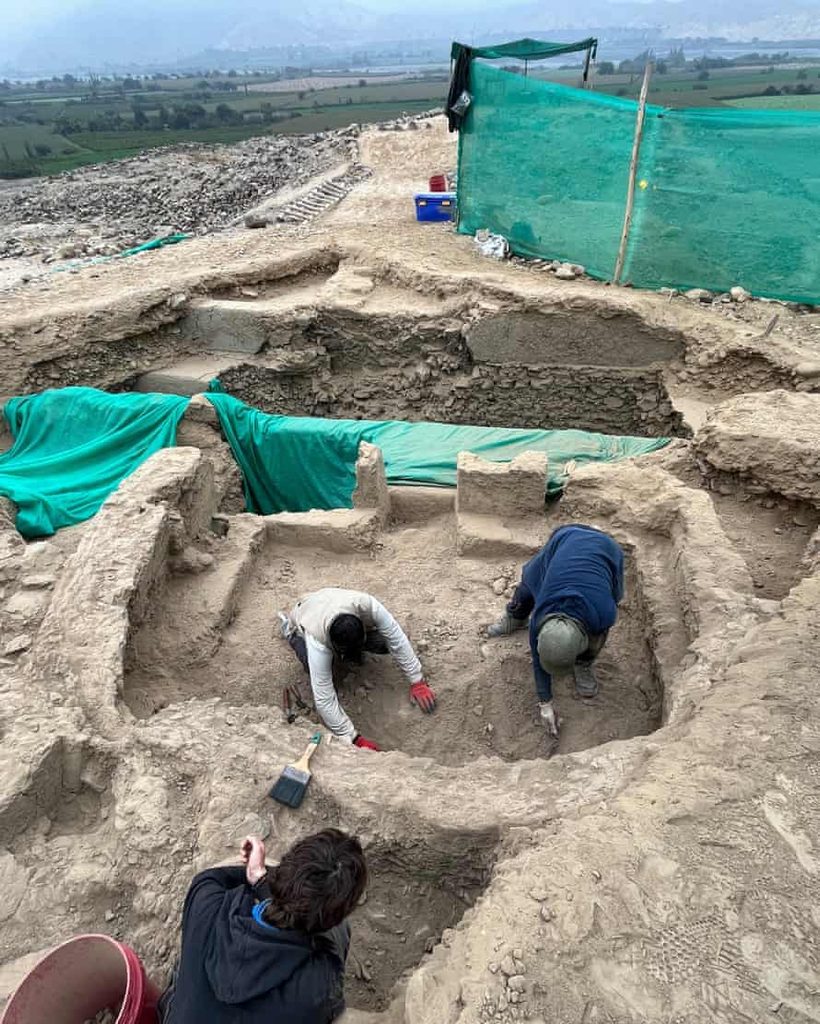
A team of archaeologists led by senior archaeologist and associate professor Dr. Ana Cecilia Mauricio of the Pontifical Catholic University of Peru has excavated a 4,000-year-old mural at Huaca Yolanda in the Zaña/Tanguche Valley of La Libertad, Peru.
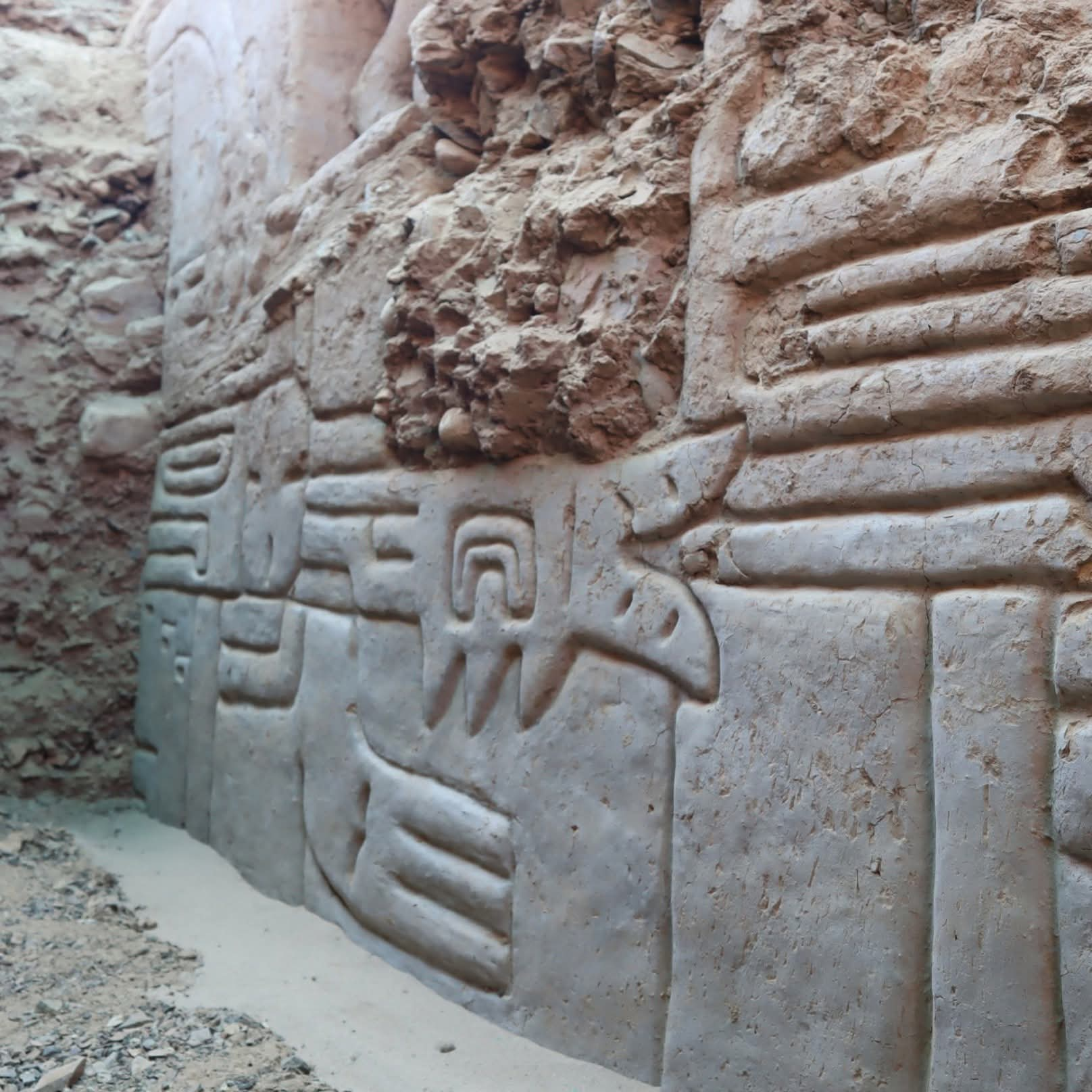
Within weeks of beginning excavation, the ancient mural was discovered well-preserved beneath a mound of earth inside the ruins of an ancient temple. The section of wall uncovered so far measures approximately 4 to 6 meters (13 to 20 feet) long and 1.5 to 2.9 meters (5 to 9.5 feet) high. According to archaeologists, a much larger portion of the temple remains buried underground awaiting excavation.
In prehistoric times, people in Peru customarily buried older temple structures respectfully with sand and soil before building new structures over them. It is precisely because of this traditional practice that the mural has survived in remarkably preserved and vibrant condition for four thousand years.
Among the human civilizations that developed along the Pacific coast and along rivers flowing from the Andes mountains, Las Corrales and Huaca Yolanda are considered archaeologically significant. Archaeological investigations have found that societies based on agriculture and marine resources developed from prehistoric times, particularly across the Supe Valley, Chao Valley, and Zaña/Tanguche Valley areas.
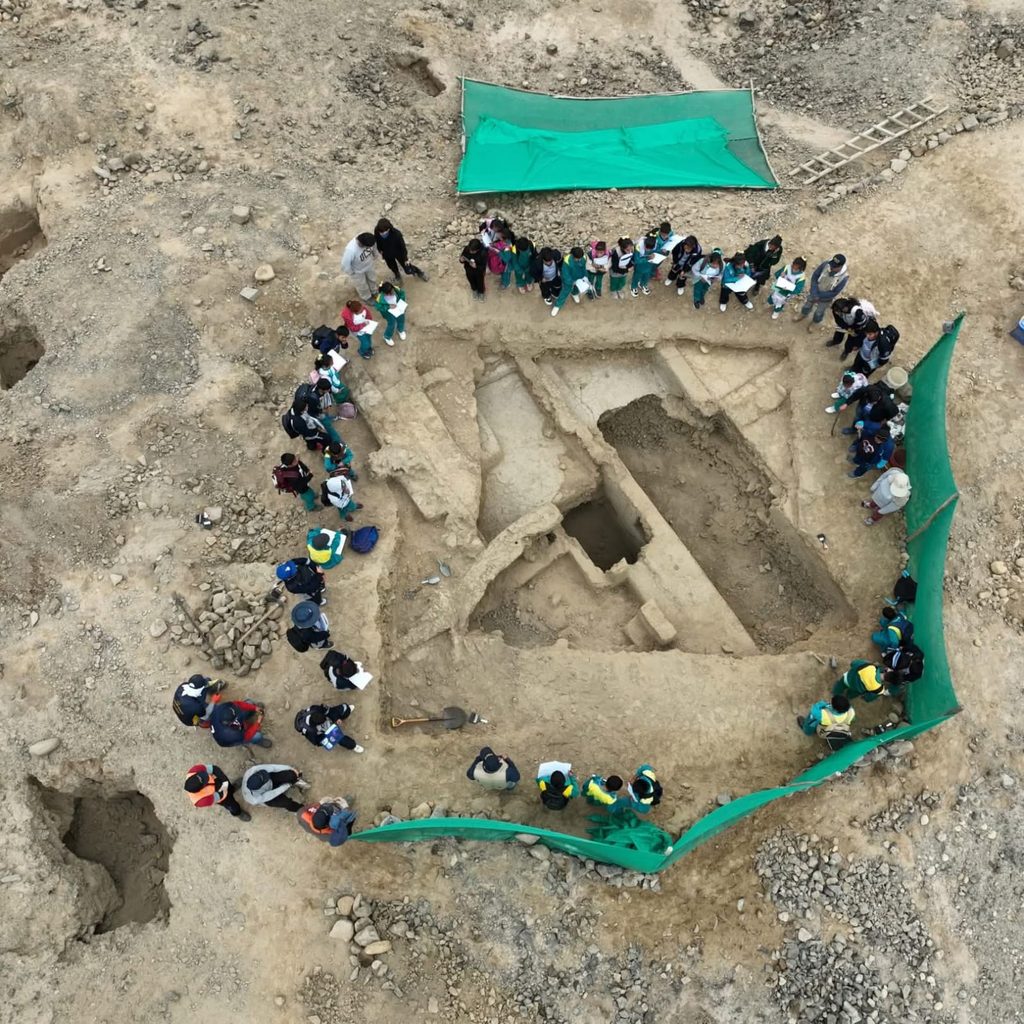
This mural is roughly 1,000 years older than the Chavín civilization (which developed in Peru around 900–150 BCE) and about 3,000 years older than the 15th-century Inca civilization. Discovered on the uppermost level of a subterranean U-shaped temple complex, this mural art reveals insights into early religious beliefs, geography and astronomical thinking, ancient Andean architectural styles, social structure, and artistic craftsmanship of the society at that time.
In ancient Peru, painting directly onto flat walls was common. However, this mural was crafted by carving and raising wet clay using a high- and low-relief technique. As a result, the interplay of light and shadow on the artwork makes the figures appear dynamic and lifelike depending on the time of day.
Both the pigments and techniques used in the mural are remarkable, as the colors remain bright and clear even after 4,000 years. Laboratory analysis and preliminary studies indicate the use of five main types of natural mineral and plant-based pigments: deep blue, yellow, ochre, red, and black.
According to Dr. Mauricio, blue was used by the society of that era to represent a deep spiritual connection with the sea, water, and sky, while yellow—derived from earth and mineral substances—represented the sun, light, and fertile land. Likewise, red—prepared from minerals such as hematite—symbolized life force, blood, and religious sacrifice, while black—made from charcoal or black minerals—was used to outline figures and show depth.
Research also reveals that paint was not applied to this wall just once. Multiple layers of paint have been found on the same wall, proving that religious rituals took place continuously at this temple over hundreds of years during that pre-BCE era, and that the mural was periodically repaired and repainted.
On the southern face of the mural, a massive bird of prey with outstretched wings is depicted alongside a diamond-shaped geometric motif on its head. In ancient Andean culture, soaring raptors such as hawks and eagles were revered as symbols of divine power, visionary sight, and messengers between the heavens and the earth. Carvings of fish of various sizes, marine plants, and fishing nets also appear on this same face. The main economy of Peru’s coastal region still relies on marine fishing and agriculture today—a clear continuity from ancient times.
Stars and celestial bodies are depicted along the upper section of the wall, showing that people 4,000 years ago also studied the movements of stars and planets in depth. Accordingly, they used this knowledge to guide daily life, identify seasons for agriculture, anticipate ocean tides and large swells, and forecast the weather.
Meanwhile, the northern face of the mural features mysterious and spiritual imagery, depicting human-bird figures in the process of transforming from humans into birds. In Peru, shamans would consume psychoactive plants such as the San Pedro cactus during religious rituals and tell ordinary people of their experiences transforming into birds, flying into the sky, and communicating with deities and ancestors. This indicates that shamans or priests held significant power in that society.
This 4,000-year-old three-dimensional mural discovered in Peru’s coastal valley is more than a combination of clay and pigment—it is a living document of the evolution of human consciousness. It demonstrates how ancient humans, in an era without modern technology, understood subtle laws of nature—astronomy, seasons, the ocean, floods, and landslides—while immortalizing their spiritual beliefs through art and architecture.