


Kathmandu, Nov 22:
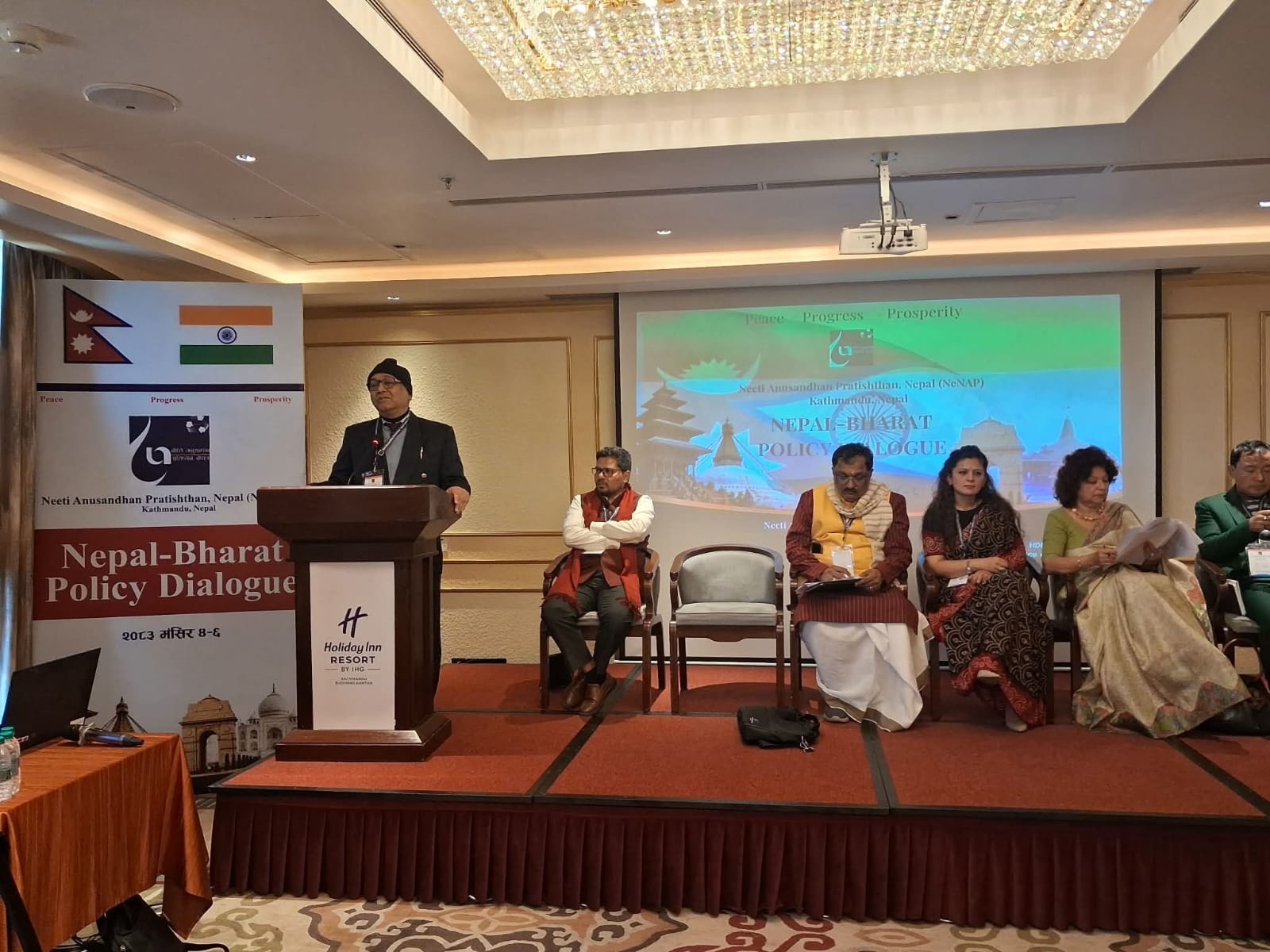
Speakers at a policy discussion have emphasized the need to redefine cultural relations between Nepal and India. During a presentation on Asian cultural heritage held on Sunday as part of the Nepal–India Policy Dialogue, culture-related institutions and stakeholders from both countries underscored this priority.
Rami Niranjan Desai of the India Foundation stated that redefining cultural ties between Nepal and India is essential. Pointing out that new mindsets and aspirations among younger generations are influencing youth in both countries, she stressed the need to update policies accordingly.
Nepali researcher Ashok Rai Pyasi noted that culture is passed down across generations, making it important to inform young people about their own heritage. He added that Nepal and India can work together to help youth become creative and skilled.
Prof. Srinivasa Varakhedi of the Central Sanskrit University in India emphasized preserving the purity of culture that originated in Nepal and India and continues to be practiced and cultivated today, noting that it illuminates all of Asia.
Prof. Madhuri Sukhija of India stressed institutionalizing ties between Nepal and India across areas such as culture, education, and sports, suggesting that both sides move forward with joint academic programs.
Prof. Sukhija, who also serves as ICCR head for Kathmandu University, remarked that ongoing cooperation in education and sports has further strengthened bilateral relations. Amid rapid global technological advancement, she said new policies are needed to reinforce ties among the younger generation in Nepal and India. “In a changing environment, heritage alone is not enough; we must build new policies to strengthen relations,” she said.
Prof. Sarup Prasad Ghosh, Director of the Maulana Abul Kalam Azad Institute of Asian Studies in India, said both countries should focus on youth employment and skills. While noting that India’s current government is focused on skill development, he pointed out rising challenges of brain drain and migration. He stressed moving forward with policies to end negative impacts on the younger generation stemming from social issues.
Anand Kumar Srivastava, Director of the Vidyan Ganga Basin Foundation of Research and Sustainable Policy in India, observed that Nepal and India each have a youth population exceeding 40 percent and must harness that potential effectively. Stating that youth brain drain is a shared challenge for both nations, he said they should address it together.
He also noted that political stability in Nepal has created a favorable environment for collaborative work, adding that both countries can cooperate and India is ready to do so. He suggested that Nepali organic products could find a market in India and recommended engaging youth in that sector.
RSS