


Mustang, Nov 29 :
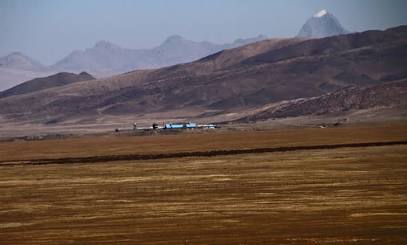
Construction work on physical infrastructure at the northern Nepal-China Korala border point has yet to begin even four years after the Detailed Project Report (DPR) was prepared.
In Falgun 2079 BS, the government conducted a DPR survey in the Korala border area with the objective of constructing structures including customs, immigration, quarantine, a dry port, and an integrated security post. Prior to that, approximately 1,000 ropanis of land on the Nepali side of the border point had already been acquired in the name of the Government of Nepal for building customs and other facilities.
The survey, aimed at expanding the trade route with China, ran for two months and included geological assessments and soil testing at the proposed construction sites. The DPR for building essential structures, including customs facilities, was prepared in accordance with plans by the then Ministry of Industry, Commerce and Supplies and the Nepal Intermodal Transport Development Board.
Sitara Intusip-Fullright JV completed the DPR survey under a contract valued at NPR 10 million (NPR 1 crore). Lopsang Chhomphel Bista, Chairperson of Loghekar Damodarkunda Rural Municipality, remarked that it is regrettable that infrastructure construction has not commenced despite a long time having passed since the report was submitted to the government. He noted that although Korala has become established as an important alternative trade crossing along the border with China, the lack of necessary infrastructure is creating difficulties in managing export and import trade and developing it as a transit point.
It has been three years since the northern Nepal-China Korala border point was opened to residents of Upper Mustang, and two years since it came into operation as an alternative commercial crossing. Last fiscal year, more than NPR 6 billion in revenue was collected through this border point, while revenue collection has already exceeded NPR 12 billion in the first four months of the current fiscal year.
Recently, 60 to 70 containers and around 100 electric vehicles have been entering Nepal daily through the Korala crossing. However, the absence of adequate physical infrastructure has caused challenges in border operations and vehicle management.
With the Tatopani and Rasuwagadhi border crossings completely closed, commercial activity has risen at the Korala crossing connecting Nepal and China. Hundreds of containers and electric vehicles travel daily along the Beni-Jomsom-Korala road corridor. Following full operationalization of the crossing, congestion of containers and electric vehicles has increased at the customs yard in Nechung, Lomanthang-4. Parking containers across up to three lanes of the road has been disrupting traffic movement on the main route leading to Korala.
Dharmabir Mandal, a representative of BYD vehicle importer Cimex Inc., stated that the lack of a dry port forces containers to be parked haphazardly on the road, while even electric vehicles must be left unsafely along riverbanks and cliff edges. He added that the absence of required infrastructure and charging stations at the border point is compounding the difficulties.
Local elected representatives say that while federal and provincial ministers and high-profile dignitaries frequently visit Korala for inspections, no concrete work has moved forward on infrastructure construction beyond assurances. They demand that there be no further delay in building infrastructure at this crossing, which is considered vital for Gandaki Province’s economic activity and trade.
During a visit to the Korala border point this week by a delegation from the House of Representatives Infrastructure Development Committee, local representatives also urged attention not only to revenue collection from the crossing, but also to building essential infrastructure. Speaking to Committee Chairperson Ashish Gajurel, they called for expediting border infrastructure construction and improving access road connectivity as quickly as possible.
In addition to the Korala border area, land had been allocated for government agencies back in 2075 BS in Nechung, Lomanthang-4, where the Mustang Customs Office is located. In the Lomanthang area around Korala, 1,436 ropanis of land was allocated for various government bodies, while 1,271 ropanis was provided to the Nepal Army in Thurlung Phant of Lomanthang.
At Nechung, 109 ropanis was allocated for the customs office, 12 ropanis for the immigration office, 13 ropanis for Nepal Police, and 33 ropanis for the Armed Police Force. Among the allocated plots, the Armed Police Force has already constructed its building, and Nepal Police recently initiated the tender process for building construction. Buildings for the customs and immigration offices, however, have not yet been built, though upgrading work at the customs office is continuing partially in phases.
RSS