
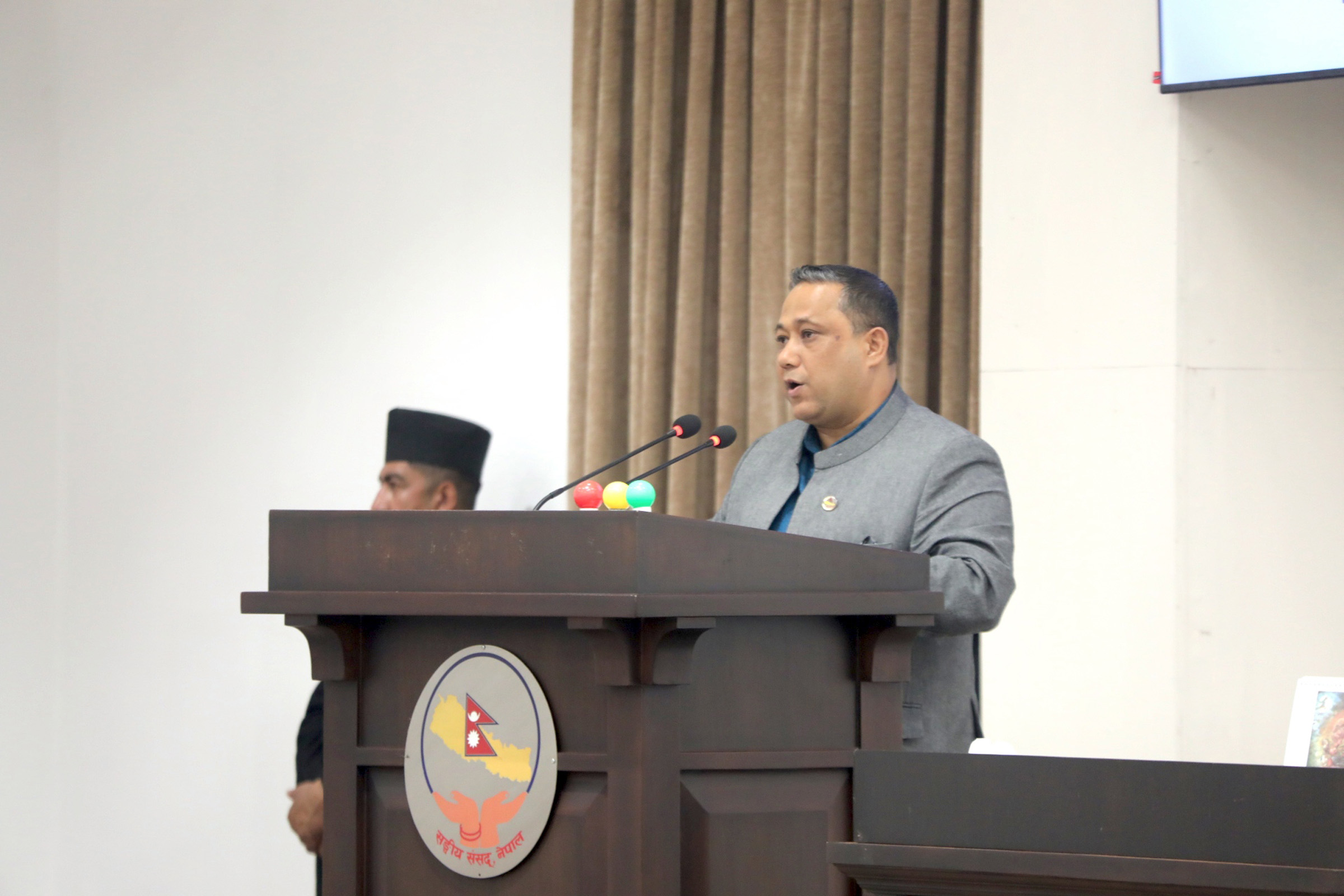
FM Shishir Khanal briefing the parliament about UNGA
Kathmandu, Oct. 2: From accusations of weak governance and parliamentary accountability to farmers’ hardships, road accidents and flood victims’ suffering, the House of Representatives (HoR) on Thursday heard a wide range of concerns, with opposition lawmakers questioning whether the government’s promises have translated into tangible improvements in people’s lives.
CPN (UML) parliamentary party leader Ram Bahadur Thapa ‘Badal’ said the government had failed to deliver concrete achievements affecting daily life, despite its commitments to good governance and transparency. Acknowledging his party’s defeat in the March 5 election, he said the outcome would serve as a learning experience rather than a reason to surrender. He also questioned the grounds for the arrest of former high-ranking officials.
Similarly, Nepali Communist Party (NCP) deputy parliamentary leader Pramesh Kumar Hamal accused the government of disregarding parliamentary voices, failing to follow the Speaker’s directions and avoiding accountability to the House. He called for a review of government announcements, programmes, commitments and budget implementation.
Rastriya Prajatantra Party (RPP) lawmaker Gyan Bahadur Shahi demanded action against individuals found guilty of corruption or criminal offences in connection with the Gen Z movement, while urging the government to create employment opportunities at home and ensure timely relief, compensation and rehabilitation for flood victims.
Beyond the political exchanges, lawmakers brought pressing public concerns to the House. During the urgent hour, Rahbar Ansari raised allegations of excessive fees and fake doctors at a medical college in Birgunj, while other lawmakers highlighted the hardships of buffer-zone residents, the need for treatment and compensation for a child injured by an electric wire in Sarlahi, and rising road accidents.
Farmers’ difficulties dominated several interventions during the zero hour. MPs demanded timely fertiliser and irrigation, fair prices for agricultural produce and the immediate commencement of government procurement of hybrid rice. They also raised concerns over wild elephant attacks on farmers in Jhapa and alleged mistreatment of farmers in Rajbiraj.
Other issues included menstrual health-related school absenteeism among girls, disaster-affected communities, transparent public procurement, animal welfare, administrative vacancies in local governments and the need to expand domestic industries and employment.
Meanwhile, Foreign Minister Shisir Khanal briefed the House on Nepal’s participation in the 81st United Nations General Assembly, saying Prime Minister Balendra Shah’s address had contributed to advancing the cause of climate justice. He also informed lawmakers about meetings with foreign counterparts and senior international officials.
The day’s proceedings reflected a broad parliamentary agenda, but the recurring concerns over governance, livelihoods, service delivery and disaster response placed the government’s commitments under renewed scrutiny.