माटो बेचेर पर्व खर्च
Mahottari, November 3:
With the conclusion of Dashain, festivities for Deepawali and Chhath have begun across settlements in the Madhesh region.
In the Mithila region, including Mahottari, these festivals are celebrated with great enthusiasm, bringing vibrant life to local communities. To manage expenses for Deepawali and Chhath, local residents collect and sell different types of soil.
There is an established tradition in the Mithila region of cleaning and painting houses in various colors ahead of Deepawali and Chhath.
This tradition also creates income-earning opportunities for laborers from impoverished communities. Deepawali is celebrated as a festival of cleanliness, painting, and light in Mithila, while Chhath is regarded as a festival of devotion and spiritual purity.
Since everyone paints and decorates their homes on this occasion, the demand for soil of various colors surges prior to the festivals.
“The festivals are right around the corner; we earned a little during Dashain, and now there is a demand for soil ahead of Deepawali and Chhath,” says Purni Sada of Sakari Basti, Bhangaha-3. “We have to manage our festival expenses through the earnings from selling this soil.”
She mentions that selling soil during these festivals helps cover household expenses and leaves some extra cash savings. It is a long-standing tradition in the settlements to go out searching for soil from Dashain through Tihar and Chhath.
Shanimachari Sada of Musaharitol, Aurahi-8, shared that they manage their festival costs entirely using the money earned from selling soil between Dashain and Chhath. Similarly, Hemni Sada, a resident of the Dalit settlement in Ramnagar, Bhangaha-4, has been earning a good income over the past ten years by collecting different colored soils annually.
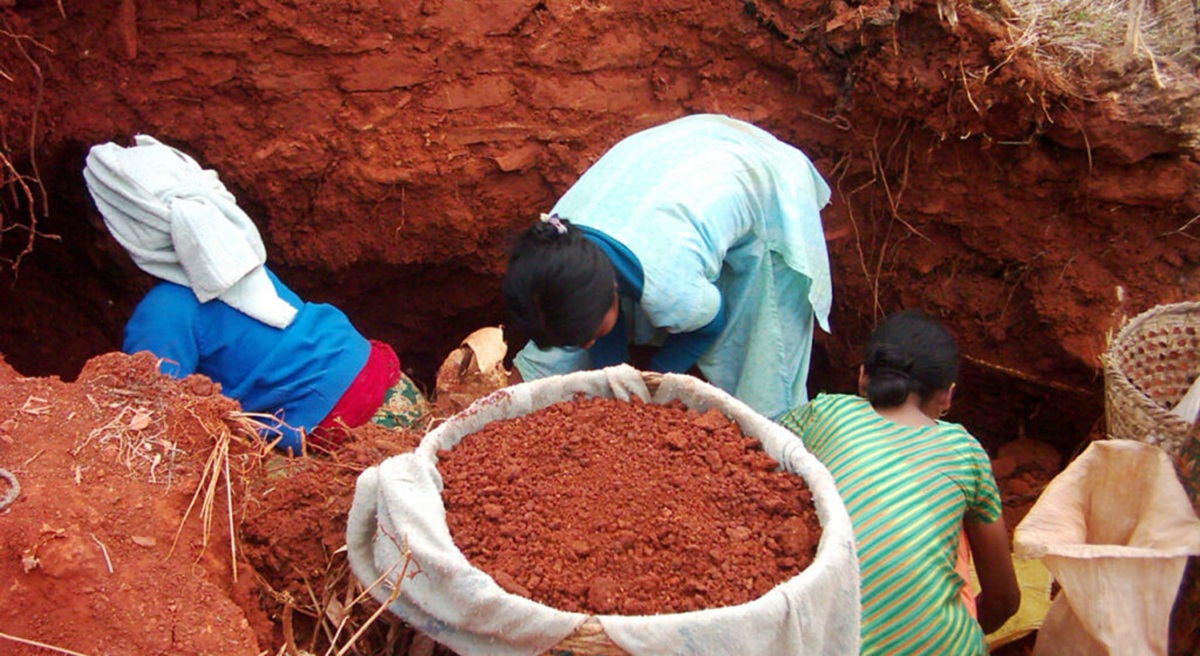
While high-demand white clay (kamero) and yellow soil are gathered from nearby ponds and riverbanks, red soil requires traveling 15 to 16 kilometers to the red soil hillocks in Bardibas, she explained.
“It is hard work, but according to our labor, a little money falls into our pockets,” says Hemni. “These earnings fulfill our children’s wishes and cover festival expenses.”
She added that besides selling soil, house painting and plastering services also fetch good wages during this season.
Musahar communities reside in almost all of the 15 local levels of the district, which include 10 municipalities and 5 rural municipalities.
Young men and women from these settlements get busy transporting soil. Budhani Sada of Rajkhor, Gaushala-4, states that this is a valuable opportunity for earnings.
In Madhesh, people traditionally use red, white, greyish-black, and yellow soils to plaster and paint houses during Dashain, Deepawali, and Chhath.
Since most houses here have walls made of bamboo woven strips (choya), soil is widely used for plastering and decorating them.
This established tradition of Mithila provides a unique earning opportunity for laborers in impoverished communities.
Because this work occurs at a different time than regular farming and daily wage labor, workers in Dalit settlements consider the income earned from it as extra earnings.
According to Mamata Mahato of Ramnagar, Gaushala-1, workers in their settlements manage their festival funds by selling soil during these times. Typically subsisting on farm labor, these workers venture out in search of soil to secure extra cash for the festivals.
Since most Musahars belonging to the Sada community lack the financial capacity to prepare for festivals in advance, festival-specific labor serves as a crucial opportunity for earnings.
Currently, groups searching for different colored soils head towards deep river bends formed by currents, old ponds, and the red soil hillocks in the Chure mountain region.
Local women express that the hard work they put in now helps them paint their homes and manage household expenses for the festivals.
However, as the construction of concrete houses steadily increases day by day, residents in these settlements worry that the tradition of collecting soil might eventually disappear in the coming years.
RSS