AI Photo

\Ram Kumar Rai
Kathmandu, Nov 5 (Kartik 19):
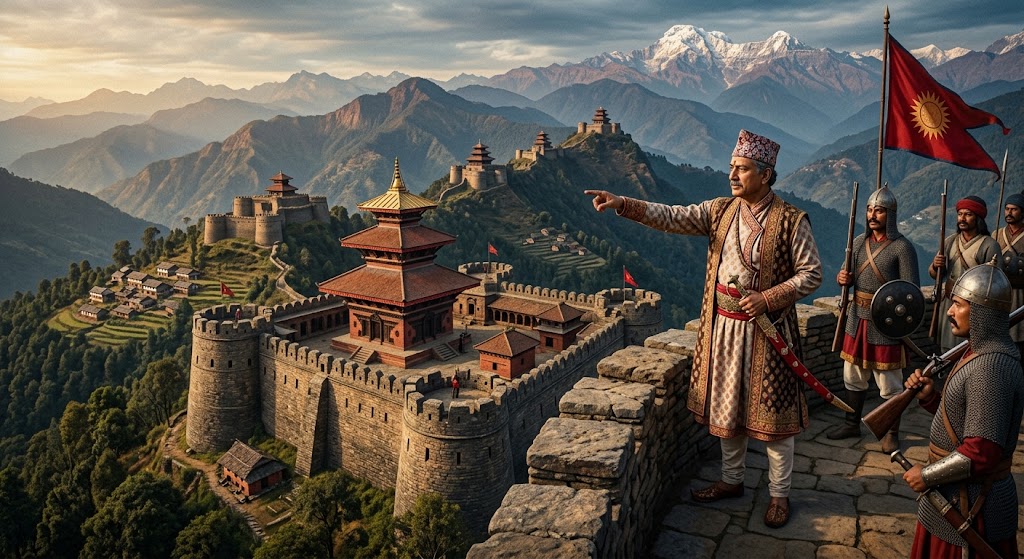
In 1677 BS (1620 AD), King Ram Shah established seven administrative and strategic units known as ‘Thums’ across the Gorkha kingdom to protect the state from external invasions, streamline administrative functions, and preserve its geographical integrity. In those times, a strategic region or administrative unit was referred to as a Thum.
During that period, these Thums served as vital administrative units to ensure direct and accessible central governance in all regions and to maintain local peace and security. Each Thum was equipped with local military contingents, enabling an immediate counter-response in the event of sudden attacks from neighboring states.
This administrative and strategic Thum system established by King Ram Shah laid a strong military, economic, and organizational foundation for his descendants—particularly King Prithvi Narayan Shah of Gorkha—to successfully execute the campaign for the unification of Nepal.
The seven major Thums constructed by King Ram Shah are:
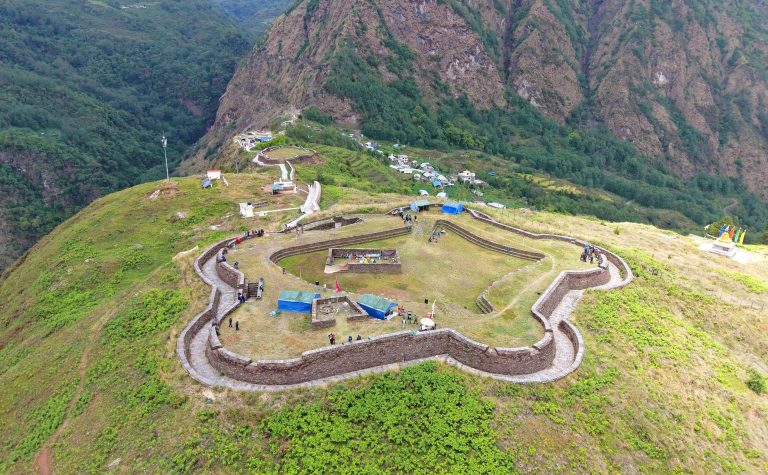
- Ligligkot Thum: This was the most prominent and primary strategic fortress among all seven Thums. It encompassed the present-day Palungtar area along with important surrounding settlements such as Thantipokhari, Malati Gainha, Ghaikhur, and Luitel. Specialized military structures were prepared here for state defense. This Thum featured strong perimeter walls with loopholes for firearms, five watchtowers to monitor enemy activities, and a temple dedicated to Goddess Draupadi for the protection of the state and its army.
- Harmi Thum: This Thum was established for the security and management of the northern and strategically sensitive regions of the Gorkha kingdom.
- Lakang Thum: Created as a crucial unit to exercise administrative control and strengthen the state’s grip at the local level.
- Mirkot Thum: Historically and strategically, this region is also considered highly significant. Deeply tied to the ancestral history of the Shah dynasty, this area was organized systematically from administrative and security perspectives.
- Deurali Thum: Situated at a high geographical elevation, this Thum served as a valuable outpost for keeping a watchful eye on the activities of neighboring states.
- Dhuwakot Thum: This Thum was built for border security and the consolidation of internal administration.
- Chyali Thum: Part of the core chain of the seven Thums, this unit also played a significant role in local administration and security within the Gorkha kingdom.
Thus, these seven Thums established by King Ram Shah were not merely administrative divisions; they stood as the first systematic strategic fortresses for the sovereignty, security, and consolidation of the Gorkha kingdom.