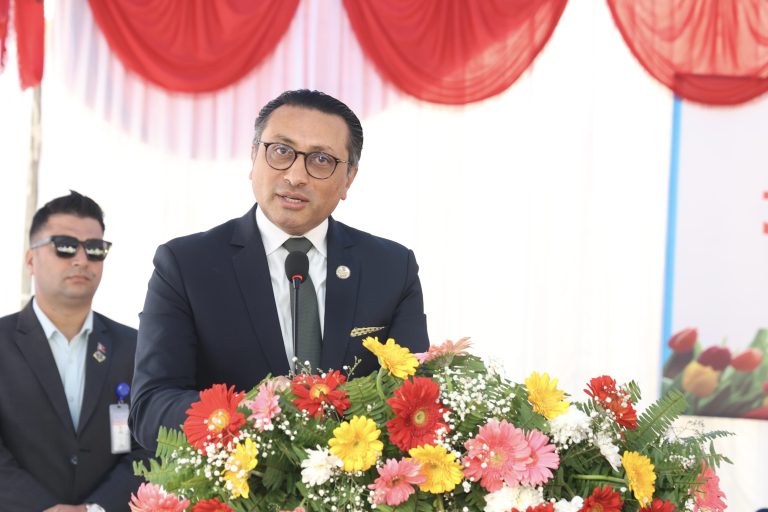
Kathmandu, Nov 15: The government’s decision to appoint former Inspector General of Police (IGP) Dan Bahadur Karki as the Prime Minister’s Special Security Advisor has raised questions over the necessity, transparency and political rationale behind creating a new position for a recently removed police chief.
The Cabinet meeting on November 4 created the position of Special Security Advisor to the Prime Minister and appointed Karki to the post on the same day. The Ministry of Home Affairs has confirmed that Karki received his appointment letter immediately after the decision, although he has yet to formally assume office.
While the government has assigned him the responsibility of providing advice, suggestions and consultations on security matters, it has not publicly explained why a separate advisory position was necessary or what specific institutional gap the new post is intended to address. The creation of another government position also raises questions about administrative expenses, accountability and possible duplication of responsibilities within the existing security apparatus.
Home Ministry spokesperson Ananda Kafle said Karki had not reported to the office because the appointment coincided with extended public holidays during the Tihar and Chhath festivals. His office has already been established within the Office of the Prime Minister and Council of Ministers at Singha Durbar.
The timing of the appointment has also drawn attention, as Karki has approached the Supreme Court challenging the government’s decision to remove him as IGP and replace him with AIGP Dr Manoj Kumar KC.
The government now faces questions over the apparent contradiction of removing Karki from the country’s top police position while simultaneously creating a new advisory post for him within the Prime Minister’s Office. Whether the appointment is driven by a clearly defined security requirement or reflects an attempt to accommodate a former officeholder remains a matter the government needs to clarify.
At a time when public institutions are expected to operate on principles of transparency, institutional accountability and prudent use of public resources, the government cannot simply announce a new position without explaining its necessity, mandate and financial implications.
The government owes the public a clear explanation of why the position was created, what qualifications and selection criteria informed the appointment, and how the new role will serve the national security interest rather than merely expanding the government’s administrative structure.