


Sunsari, Nov 24:
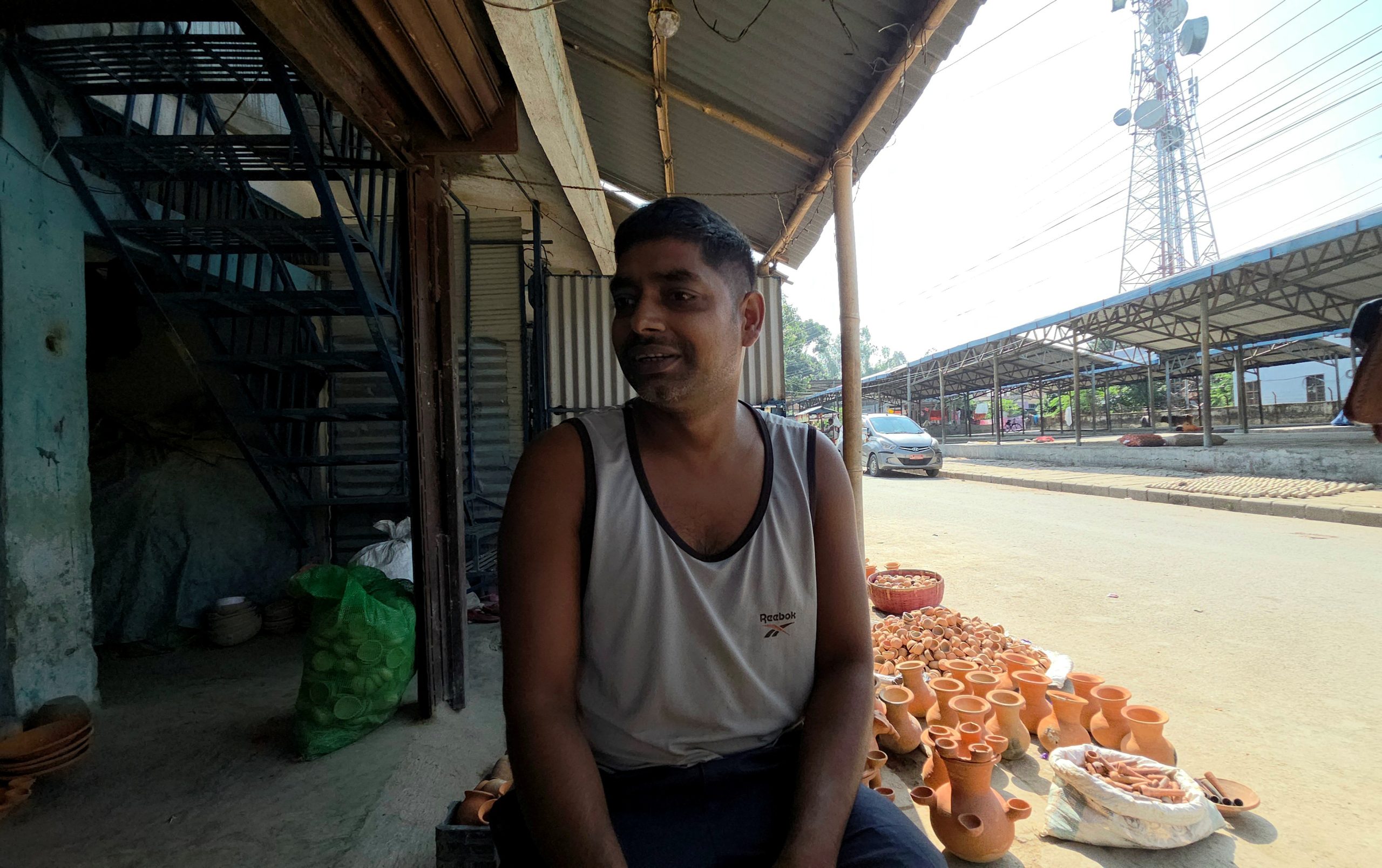
Shriram Pandit of Bihiabare, Inaruwa Municipality-2, has continued his ancestral profession of making clay pottery.
Even as the use of plastic utensils has risen in the market and demand for clay items has declined, he has not abandoned the trade practiced since his forefathers’ time.
Pandit said that although the use of clay vessels has decreased from villages to urban markets amid modernization, he continues it because it is an ancestral profession.
While previously clay had to be kneaded by hand to shape various vessels, he noted that using a machine has made the work easier.
“Earlier, kneading clay by hand and making items took a lot of time and hard work. Now that I have brought a machine, making clay items has become easier, taking less time and effort,” Pandit said.
He produces clay glasses, diyo (oil lamps), pala (small earthen bowls/lamps), elephant figurines, flowerpots, piggy banks, and various items used in religious rituals.
Although regular items sell throughout the year, demand rises during the Tihar and Chhath festivals, leading to higher sales, Pandit said.
“Even though it looks easy on the surface, making clay items requires hard work. First, clay has to be brought in. Then it is mixed with water and kneaded, shaped with the help of a machine, dried in the sun, painted, and fired in a kiln before it is ready for sale,” he explained.
Pandit said that although clay used to be brought from Chimadi in Sunsari, it is no longer available there, forcing him to bring clay from Saptari to make pottery. Transporting clay costs NPR 10,000 to NPR 15,000 by tractor and up to NPR 20,000 by tipper truck. Items worth approximately NPR 150,000 can be made from one truckload of clay, he shared.
He noted that items worth NPR 100,000 to NPR 200,000 are sold during the Tihar and Chhath festivals alone. “This is our ancestral profession. This is also our source of income. We have been supporting our family by running this business throughout the year. We have no other occupation. We do not keep accounts of how much worth of items is sold in a year or how much is saved after deducting expenses. It is enough to feed and clothe the family,” Pandit said.
He stated that because it is his own business, he can work at times convenient for him and stay with his family. Having one’s own business at home removes the compulsion to go abroad for work, he added. Pandit does not have to carry his finished items to market for sale; due to the nearby Bihiabare weekly market (haatbazaar), customers come directly to his home to buy them, so there is no market problem for sales.
Pandit said many people involved in this profession changed their businesses as the use of clay utensils declined, and only a few are now continuing their forefathers’ trade. “Because it is a profession my grandfather and father practiced, I have continued it. I have been covering household expenses through this work. I am happy to be able to preserve my ancestral profession,” Pandit said.
RSS