
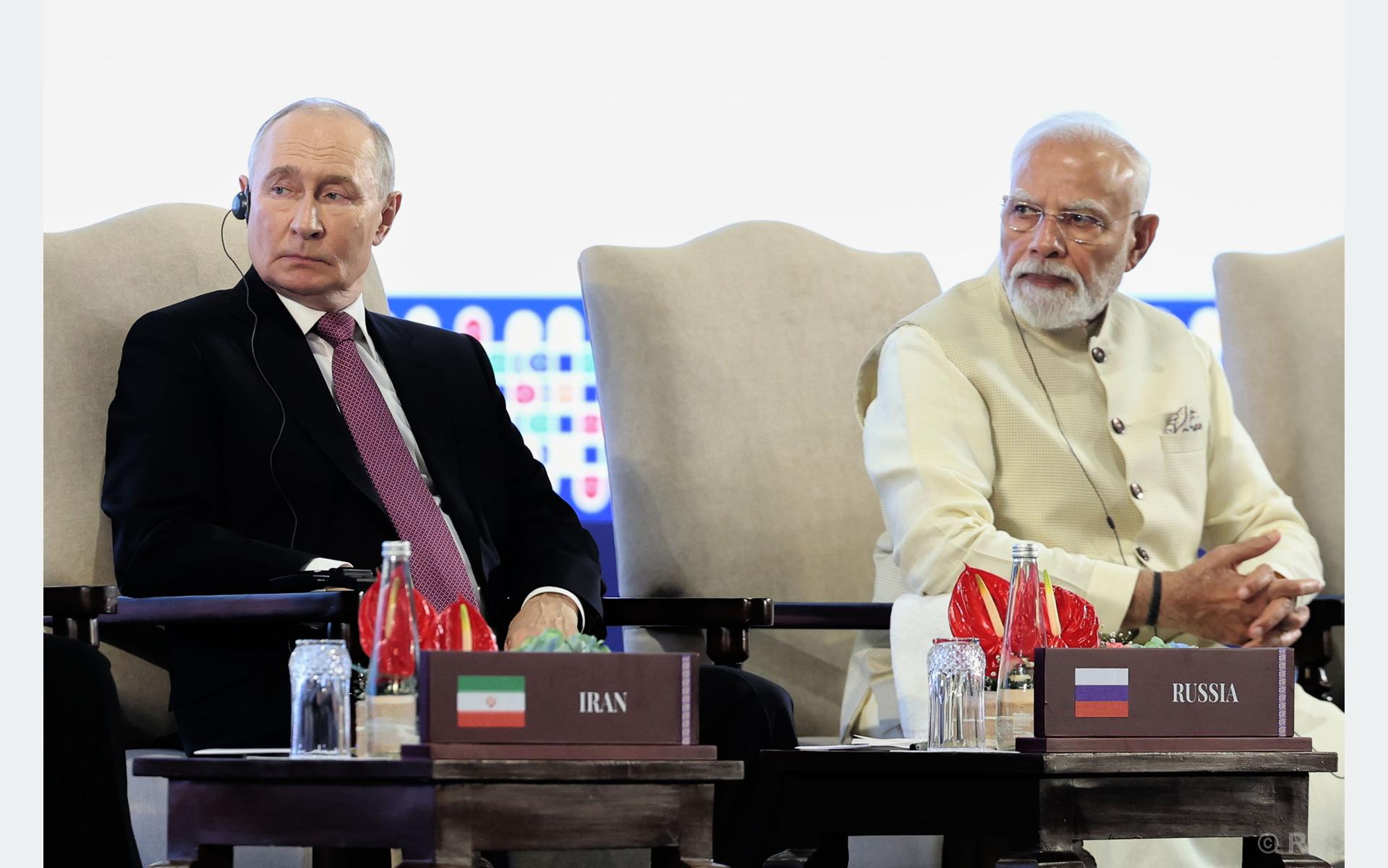
Kathmandu, September 12: The 18th BRICS Summit begins in India today. While leaders from major emerging economies and several invited countries are gathering in New Delhi, Nepal is not part of the event.
Nepal is not a member of BRICS. But that is not the main issue. The question is why Nepal, despite being India’s close neighbour, was not included even in the outreach programme of the summit.
India has invited leaders and representatives from several non-member countries to the BRICS outreach programme. These include Belarus, Kazakhstan, Malaysia, Thailand, Nigeria, Uganda and Uzbekistan. Iran and Indonesia are already BRICS members.
Bangladesh was also invited, but its Prime Minister is not attending amid the strained relationship between India and Bangladesh.
Nepal, however, has not been included in the invitation list.
The irony is that Nepal is only about an hour and 25 minutes away from India by air. Yet, when a major international summit is taking place in its own neighbourhood, Nepal is not even on the outreach list.
This raises an uncomfortable question: Where is Nepal’s diplomacy heading?
Nepal had a different position in 2016. Then Prime Minister Pushpa Kamal Dahal ‘Prachanda’ attended the BRICS-BIMSTEC Outreach Summit in Goa, India. During the visit, Dahal was photographed with Chinese President Xi Jinping and Indian Prime Minister Narendra Modi.
The meeting was largely a coincidence. The three leaders happened to be together, and the picture later became widely discussed in Nepal.
Ten years later, Nepal is missing from a similar gathering in India.
The absence may not be explained only by BRICS membership. The more important issue is Nepal’s diplomatic engagement and the credibility of its government.
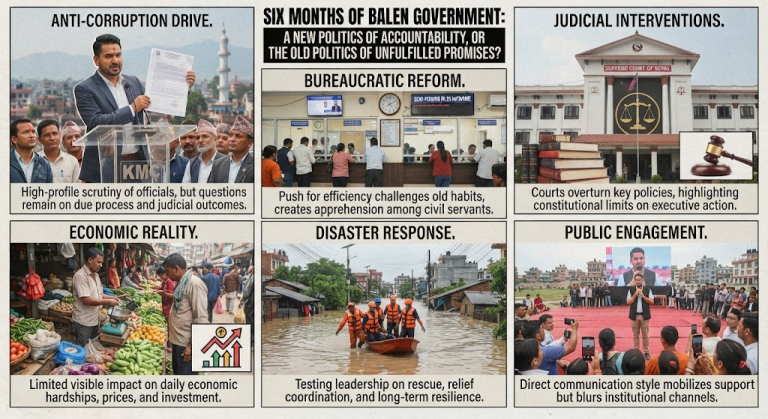
Since Balendra Shah became Prime Minister, questions have been raised about the government’s foreign policy and its approach to neighbouring countries.
His public statements and unpredictable style have also raised concerns about diplomatic maturity and protocol.
Diplomacy cannot be run like a social media campaign.
A country’s foreign policy cannot depend on the personal mood, public image or spontaneous decisions of its Prime Minister. For a country like Nepal, located between India and China, maintaining regular communication with both neighbours is not a luxury. It is a national necessity.
Regional meetings such as BRICS outreach programmes can provide opportunities to meet important leaders, raise national concerns and strengthen relations, even for countries that are not members of the main group.
Nepal had such an opportunity in Goa in 2016.
Why was Nepal not given a similar opportunity this time?
That question deserves a clear answer.
Bangladesh’s situation is different. Its absence is linked to its tense relations with India and its concerns over the way the invitation was made. Nepal, however, has no such publicly stated explanation.
This makes Nepal’s absence even more difficult to ignore.
There is also a broader concern about the Prime Minister’s diplomatic style.
If foreign governments are uncertain whether the Nepali Prime Minister will attend an official programme even after receiving an invitation, that uncertainty itself can damage Nepal’s credibility.
International diplomacy requires patience, consistency and respect for protocol.
A Prime Minister may be popular at home for speaking directly and acting differently from traditional politicians. But foreign policy works by different rules. A careless statement, an unnecessary confrontation or a failure to maintain diplomatic communication can create costs for the entire country.
For Nepal, every regional meeting is an opportunity.
Every meeting with an Indian or Chinese leader can open a channel.
Every international invitation can provide a platform to present Nepal’s interests.
Losing such opportunities should therefore not be treated as a minor diplomatic matter.
The government now needs to answer a basic question:
What is Nepal’s foreign policy under Balen Shah, and where does Nepal want to position itself between its two powerful neighbours?
Because in the end, it is not the Prime Minister personally who pays the price for diplomatic mistakes.
It is Nepal.