

Dr. Damodar Regmi
Dr. Damodar Regmi
Kathmandu, September 29
Climate change stands as one of the most complex, multidimensional, and long-term challenges facing human civilization today. It is not merely an environmental concern, but a fundamental development issue intricately tied to agriculture, food security, water supply, public health, the economy, employment, infrastructure, poverty alleviation, human security, and the well-being of future generations. Following the Industrial Revolution, the extensive use of fossil fuels, rapid industrialization, deforestation, unchecked urbanization, and the overexploitation of natural resources have escalated greenhouse gas emissions, driving up global temperatures. As a result, risks associated with melting glaciers, potential glacial lake outburst floods (GLOFs), altered rainfall patterns, floods, landslides, droughts, wildfires, and other extreme weather events continue to escalate.
As the severity of climate change deepens, various efforts have been initiated at both national and international levels to promote mitigation and adaptation. The United Nations Framework Convention on Climate Change (UNFCCC), the Kyoto Protocol, and the 2015 Paris Agreement have established the foundation for global climate governance. The Paris Agreement set a critical benchmark: keeping global temperature rise well below 2°C above pre-industrial levels while pursuing efforts to limit it to 1.5°C. Nationally Determined Contributions (NDCs), climate science research, early warning systems, adaptation strategies, renewable energy expansion, and green technology development have opened new pathways for action.
Over past decades, these initiatives have yielded noticeable progress. Renewable energy adoption—including solar, wind, and hydropower—has expanded worldwide. Global attention has shifted toward energy efficiency, electric mobility, sustainable forestry, watershed conservation, climate-smart agriculture, and low-carbon economies. Furthermore, integrating climate risk and disaster management into national development planning has become common practice, alongside growing participation from the private sector, civil society, local communities, and youth.
Despite these advancements, global greenhouse gas emissions are not declining fast enough to curb temperature rise, and reliance on fossil fuels remains high. As impacts intensify, the gap between commitments and implementation remains a major hurdle. Consequently, climate change must be viewed not just as a technical issue of emission reduction, but fundamentally as a matter of justice.
From Climate Change to Climate Justice
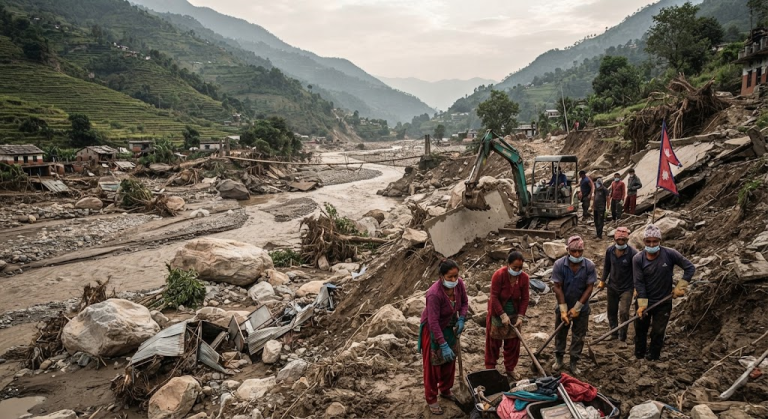
The defining feature of climate change is its inherent inequality. Nations and communities have contributed unequally to global emissions, nor do they bear the consequences equally. Developing and low-emitting countries like Nepal face disproportionately severe consequences compared to industrialized and high-emitting nations that bear historical responsibility. In Nepal, melting Himalayan glaciers, GLOF hazards, erratic precipitation, landslides, droughts, and disrupted agricultural cycles directly threaten local livelihoods and vulnerable populations.
Climate justice extends beyond asking “How do we reduce emissions?” It addresses a core moral question: How should major emitters assume greater responsibility, and how can finance, technology, capacity building, and essential support be delivered to those who contributed the least yet suffer the most? In this context, principles such as Common But Differentiated Responsibilities (CBDR), equity, intergenerational justice, loss and damage mechanisms, access to climate finance, and technology transfer are paramount. While international recognition of loss and damage through formal financial mechanisms marks a positive step, effective implementation and adequate resource mobilization remain critical.
For Nepal, climate justice requires more than addressing distinct regional risks across the high Himalayas, mid-hills, and southern Terai plains. It requires integrating climate policies across agriculture, energy, forestry, tourism, health, infrastructure, financial systems, federal governance, and local development. The voices and active participation of women, youth, farmers, marginalized groups, Indigenous Peoples, and resource-dependent communities must sit at the center of climate governance. The struggle against climate change must evolve from simple “green growth” into “just green growth.” Ultimately, climate policy success should be judged not merely by emission reduction metrics, but by how many lives are safeguarded, how many livelihoods are preserved, and how equitably resources and opportunities are distributed.
Himalayan Vulnerability and Local Governance
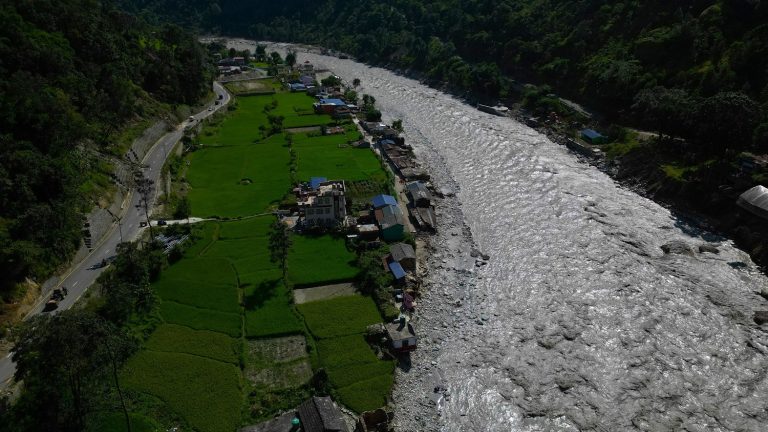
Nepal is exceptionally vulnerable to climate impacts. Threats range from glacier retreat and lake outbursts in the high mountains, to landslides and drying water springs in the mid-hills, to severe flooding and extreme heatwaves in the Terai. The significance of the Himalayas extends far beyond Nepal’s borders; its ecosystems sustain water resources, agriculture, energy production, biodiversity, and the livelihoods of hundreds of millions across South Asia.
Decentralizing climate governance to the local level is therefore imperative. Core local government functions—such as road infrastructure, drinking water, agriculture, forestry, tourism, public health, settlement planning, and disaster management—are on the front lines of climate impacts. Failing to incorporate climate risks into local development planning puts public investments at risk. Consequently, climate risk assessments, adaptive capacity, disaster risk reduction, and environmental sustainability must become integral components of local planning processes. Against this backdrop, the Gharpajhong Climate Change Conference 2024 (2083 BS), held in Mustang, stands out as a pivotal initiative.
The Gharpajhong Conference: Local Voices on the National Stage
Held on September 15–16 (Bhadra 30–31) along the banks of the Kali Gandaki River in Mustang, the two-day conference framed climate change not merely as an environmental issue, but as a complex development, economic, social justice, and human rights challenge. Beyond its symbolic high-altitude setting, the event succeeded in bringing local governments from across the country onto a shared platform to address common climate challenges.
Representating 431 local levels and 41 District Coordination Committees, the conference demonstrated a truly national scope. Initial invitations were extended to all 753 local levels across Nepal, signaling that climate action is no longer solely the domain of the federal government or environmental experts, but a direct responsibility of local governments serving on the front lines. Climate justice was the central theme.
Discussions highlighted that despite Nepal’s minimal contribution to global greenhouse gas emissions, its geographic sensitivity exposes it to extreme risks—including glacier retreat, outburst risks, irregular snowfall, snow and dry landslides, drying water sources, and adverse impacts on agriculture, livestock, and tourism. The conference successfully shifted the climate debate from abstract global targets and carbon metrics toward tangible local realities, local economies, and local governance.
The Mountain Agenda and Climate Diplomacy
Another critical milestone of the Gharpajhong Conference was linking Nepal’s mountain agenda to both national and international climate priorities. Because environmental changes in the Himalayas extend beyond national borders, preserving Himalayan ecosystems must be framed as a matter of global climate accountability. The conference emphasized that Nepal must leverage international forums to advocate strongly for its low-emission, high-vulnerability reality through the “Mountain Agenda” and climate justice principles. Climate diplomacy should move beyond seeking financial aid toward protecting fragile mountain ecosystems and safeguarding the rights of affected communities.
The Gharpajhong Declaration
The primary outcome of the gathering was the adoption of the 49-point Gharpajhong Declaration 2024 (2083 BS). The declaration recognizes the climate crisis as a multi-faceted challenge affecting national development, economic prosperity, social equity, and human rights. Key commitments include prioritizing climate-adaptive planning, safe settlement development, climate-resilient agriculture, natural resource conservation, watershed and glacier protection, waste management, and disaster risk reduction.
Inclusive climate governance is a central pillar of the declaration, pledging meaningful involvement for women, youth, Indigenous Peoples, and marginalized communities in decision-making processes. Because climate impacts are felt unevenly, local experience and traditional knowledge must inform policy alongside modern science. Himalayan and rural communities have relied for generations on traditional practices for spring conservation, local seed preservation, livestock management, and weather observation. Combining this indigenous wisdom with modern climate science, early warning systems, and technology will render adaptation efforts significantly more effective.
Local Governments and Climate Finance
Local governments are closest to citizens within Nepal’s federal structure. The direct impacts of climate change manifest locally—in community settlements, farmland, local roads, water sources, schools, health posts, and local economies. Local bodies must therefore serve as co-creators of policy rather than mere implementers. However, expanded responsibilities must be matched with adequate resources, technical personnel, information access, and institutional capacity.
Direct local access to climate finance is essential. Without streamlined financial flows to the local level, vulnerable communities will not receive intended benefits. Allocation mechanisms should account for local risk profiles, geographic sensitivity, population, and socioeconomic conditions. Integrating climate finance directly into local periodic plans and annual budget cycles will ensure adaptive programs yield concrete results. Furthermore, preparing local climate risk maps for every municipal unit will help identify high-risk settlements, drying springs, vulnerable agricultural systems, and critical infrastructure, shifting climate discussions from rhetoric to evidence-based governance.
Commitment to Implementation
The true test of any conference lies not in issuing a declaration, but in its execution. The ultimate success of the 49-point commitment depends on how effectively it is integrated into federal, provincial, and local government policies and budgets, how resources are secured, and how progress is monitored. The Gharpajhong Declaration must be aligned with the National Climate Change Policy, National Adaptation Plan (NAP), municipal periodic plans, and annual budgets.
Rather than treating climate change as an isolated environmental sector, local planning must mainstream climate risks across agriculture, drinking water, infrastructure, public health, tourism, settlement development, disaster management, and economic growth. The conference also announced the establishment of a “Local Government Climate Park” and committed to hosting a national-level climate conference every two years to sustain dialogue and collaboration. Developed effectively, these platforms can facilitate ongoing exchanges of knowledge, technology, and best practices.
The overarching message from Gharpajhong is clear: climate solutions cannot flow solely from the center; they must be built from local communities. The challenges of the mountains are not confined to the highlands, nor are Terai floods isolated to the plains. Climate change affects all regions in interconnected ways. Local experiences, innovation, and wisdom must form an integral part of the national climate strategy.
While global climate efforts have achieved notable progress, the challenge remains daunting. Climate policy must look beyond emission cuts to address underlying questions of equity: Who contributed most? Who suffered the greatest loss? How are resources distributed? And how are the rights of future generations secured? For Nepal, the climate crisis presents not only a threat, but an opportunity to forge a new path of sustainable development through green energy, resilient agriculture, eco-tourism, watershed conservation, green job creation, and local innovation.
In this light, the Gharpajhong Conference represents a vital step in bridging local voices with national and global climate agendas. Its lasting impact will be determined by how deeply its calls to action are reflected in policies, budgets, institutions, and daily practices. If these 49 commitments translate into action, Gharpajhong will stand not just as a location, but as a enduring symbol of climate justice, local governance, and mountain advocacy in Nepal.