
जितिया व्रत
Kathmandu, October 2
“Jitiya Pawani Bad Bhari,
Dhiya Putak Thoki Sutabai,
Apana Khayab Bhari Thari.”
(The Jitiya festival is grand and significant; mothers make their children sleep after eating, while enjoying a full plate themselves.)
Various ethnic communities living in our country have been celebrating diverse festivals, customs, and cultures. These festivals and traditions define our identity across the world. The culture, festivals, and customs of the Madhes region hold their own unique significance and characteristics. Among the festivals celebrated in the Tarai-Madhes region, Jitiya is one of the most prominent. It is a rigorous fast deeply connected with maternal affection and observed for the well-being, longevity, and birth of children. Women in Tarai-Madhes have been practicing this tradition since ancient times, and it is observed with equal devotion by the Tharu community.
This year, women in Tarai-Madhes officially began the rituals starting today, on the sixth day (Shasthi) of the lunar fortnight. Today, devotees bathe in ponds or lakes to initiate the formal procedures, and on Saturday (Saptami), they will observe a strict fast without drinking even a drop of water.
Rituals of the Fast
On the day preceding the main fast, women wake up early in the morning, clean, and purify their homes and courtyards with mud and cow dung. Carrying oil cakes (pina), oil, sponge gourd (ghiraula) leaves, jiyal leaves, bamboo leaves, and new clothes, women gather in groups to bathe at ponds, rivers, or water reservoirs using oil cakes. After putting on new clothes, they offer oil cakes and oil to their ancestors and the deity Jimutavahana.
On the first day of the fast (Ashtami), fasting women bathe in rivers or ponds and pledge their devotion (Sankalpa) by offering mustard oil and oil cake to the Sun God. Devotees also offer water (Tarpan) to deceased female ancestors within three generations, including grandmothers and mothers-in-law. Shambhu Mishra (75) of Rajbiraj Municipality-2 notes that this fast is also referred to as Shodasha Matrika Shraddha.
On the evening prior to the fast, fasting women traditionally consume various foods, yogurt, sweets, fish, and millet bread (kodo ko roti). The following morning between 3:00 AM and 4:00 AM, they place yogurt, beaten rice (chiura), sugar, bananas, sweets, betel leaves, and betel nuts on sponge gourd leaves in their courtyards as offerings to their ancestors and Jimutavahana.
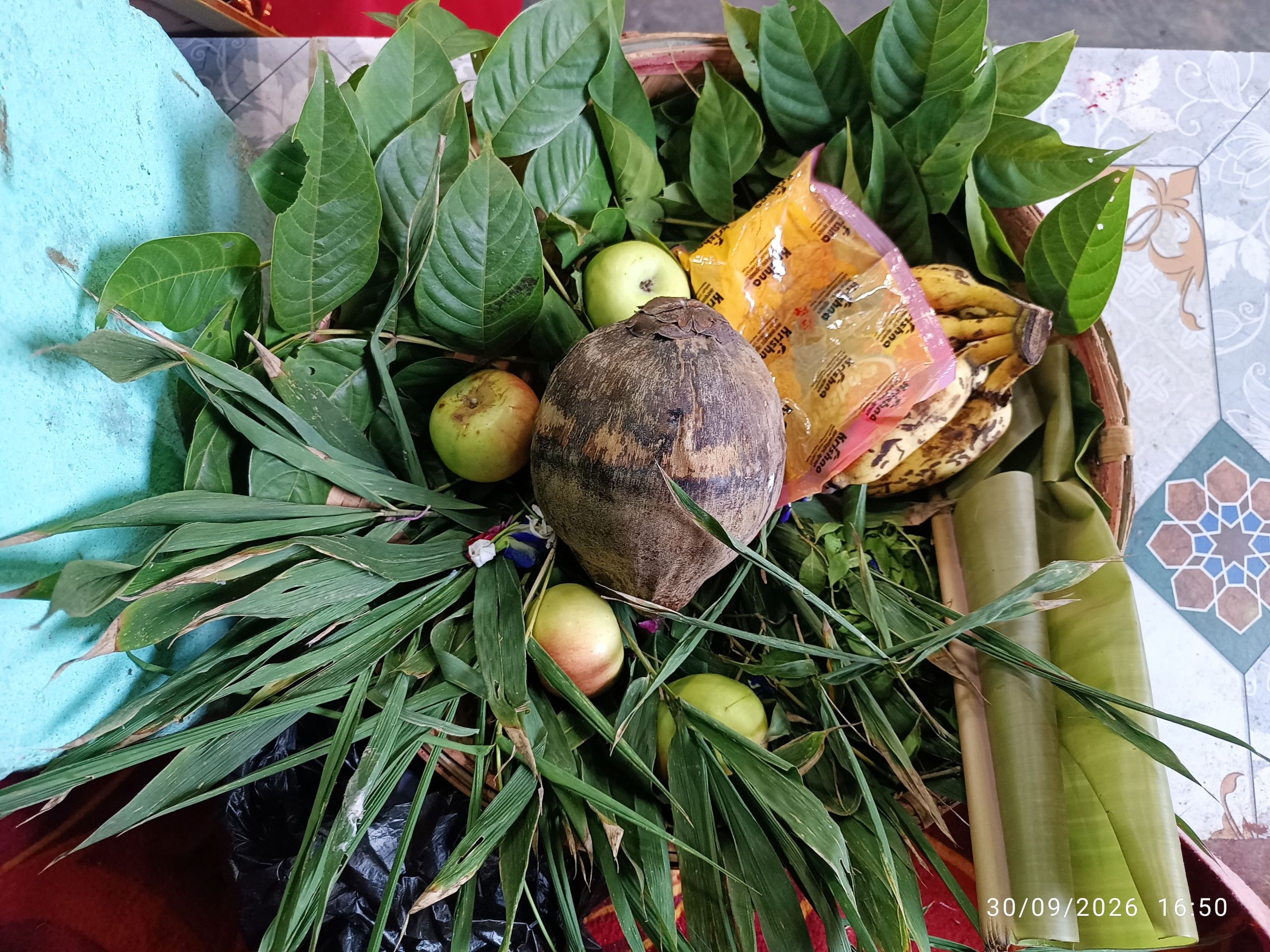
On the day of the fast, in the evening, women fill a basket (dali) with worship materials along with coconuts and fruits equal to the number of sons they have. Their sons then cover the basket with maan leaves. Once the fasting period concludes, sons or grandsons open the basket. The prasad is removed from the basket, offered again to the ancestors and Lord Jimutavahana, and distributed to everyone. Only then do the fasting women drink water and eat food.
Once the fast begins, devotees do not break it regardless of severe health challenges. Except for those with serious illnesses, all mothers who have sons strictly observe this fast for their longevity and good health. Pregnant women who initiated the fast prior to becoming pregnant must also continue observing it. In such cases, whether for 24 or 36 hours, women often fear potential health complications while fasting, yet they equally fear that skipping it might adversely affect their children. When absolute waterless fasting becomes difficult due to health issues, some women even resort to receiving IV saline fluids while maintaining the fast out of deep-seated obligation.
In this tradition, covering or opening the basket (dali) is strictly carried out by sons, grandsons, or husbands. If they are absent, male relatives or neighbors are called upon to open it, while daughters and granddaughters are generally not permitted to do so in most households.
Beyond its religious significance, this fast fosters mutual harmony and community enjoyment. It has also become a platform for women to showcase their talents. A new trend of gathering to eat a collective feast (Dar) among relatives, friends, and neighbors has emerged for Jitiya.
Reconnecting with friends and relatives who haven’t met throughout the year, exchanging greetings, and enjoying special meals together has strengthened interpersonal relationships. Collective programs during Jitiya now offer opportunities to sing traditional songs, tell stories, and display artistic talents.
The festival carries immense religious value while remaining low in cost. Because leaves of jiyal, bamboo, and sponge gourd are mandatory offerings, the fast also conveys a vital message regarding nature conservation and environmental protection.
Since this fast coincides with the Sohra Shraddha (pitru paksha) period, daughters and daughters-in-law alike show deep respect to ancestors. While traditional Sohra Shraddha rituals are predominantly performed by sons, this century-old practice enables women to offer water and prasad to ancestors, making them feel equally responsible toward their lineage—a aspect widely viewed as highly positive by local women.