नुरी
SEOUL, October 7.
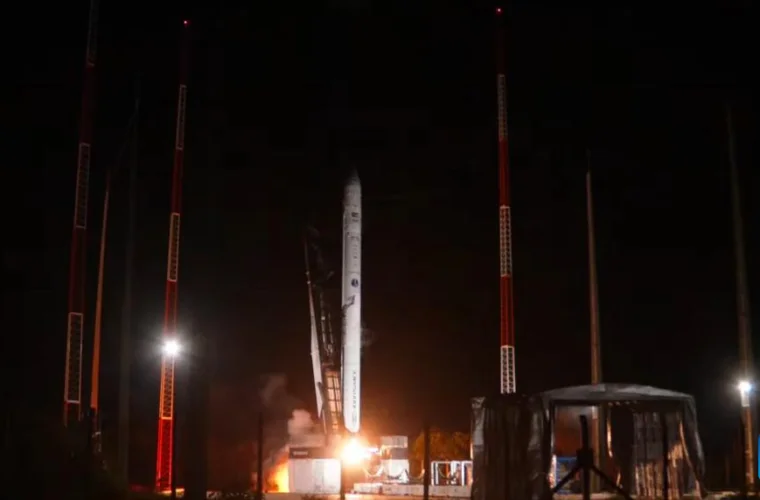
South Korea’s domestically developed space launch vehicle, Nuri, successfully lifted off on Wednesday, placing 15 satellites into their designated orbits. The achievement marks a significant milestone for South Korea’s space program in what has been described as the most complex and challenging mission in Nuri’s development history.
The three-stage, liquid-fueled rocket launched at 12:25 PM local time from the Naro Space Center in Gohung, located approximately 400 kilometers southwest of Seoul.
Following liftoff, the flight proceeded strictly according to plan. The first stage separated smoothly, followed by the payload fairing and the second stage. Approximately 12 minutes and 30 seconds into the flight, the third-stage engine shut down as intended.
The satellite deployment phase then commenced at an altitude of approximately 575 kilometers. This process required extreme precision, as multiple satellites had to be deployed sequentially into space at precise intervals during a single flight.
The primary objective of the mission was to deploy five small Earth-observation satellites for national security. These five main satellites were released one by one at intervals of 35 to 40 seconds. They are expected to monitor Earth’s surface and assist in analyzing various geological activities.
Following the deployment of the primary payloads, 10 additional small educational and commercial satellites were released in pairs at roughly 10-second intervals.
While Nuri’s previous fourth flight carried only one primary satellite, this mission was considerably more complex, requiring 15 satellites to be deployed at precise sequences, timing, and altitudes.
Having completed its primary objective, Nuri will perform collision-avoidance maneuvers to prevent impacts with other space debris before re-entering Earth’s atmosphere, where it will burn up due to atmospheric friction.
This successful launch further solidifies South Korea’s capacity to independently develop space technology and paves the way for more ambitious space missions in the future.
— RSS / Xinhua