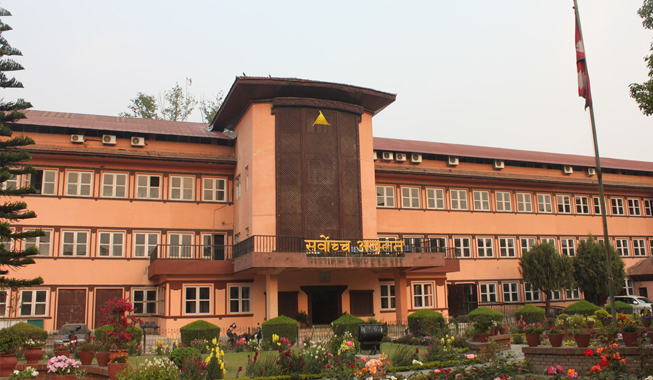
KATHMANDU, Oct 7 : The Supreme Court’s Constitutional Bench could not convene on Wednesday. Justice Hari Prasad Phuyal refused to sit, questioning what he called the Chief Justice’s arbitrary discretion in forming the bench. The Nepal Bar Association then issued a sharply worded press statement against discretionary bench formation.
Chief Justice Dr Manoj Kumar Sharma had named a bench of himself, Sapana Pradhan Malla, Hari Phuyal, Nahakul Subedi and Abdul Aziz Musalman. The surprise was Justice Phuyal’s name. It was the first time he had been called to the Constitutional Bench since Asar 31, about three months earlier.
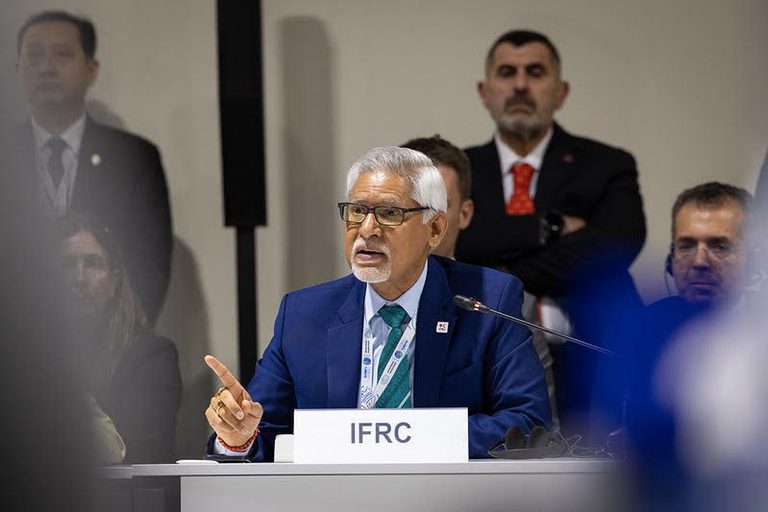
The trouble began in the joint chamber, before the bench was due to sit. Justice Phuyal asked the Chief Justice why he had been left off every bench until now, and why he was included today. He then stood firm that he would not sit, and the Chief Justice told staff to announce that the bench would not sit. The other justices also declined to proceed, so the five-member bench never convened. His position is that the Constitutional Bench should not be formed at the Chief Justice’s discretion. The Supreme Court website later recorded that the bench was not sitting.
The standoff has a history. The practice of forming the bench by seniority broke down once Sharma became Chief Justice, and that Justice Phuyal was kept off it. Sharma was recommended in May as the 33rd Chief Justice, ahead of three more senior justices: Malla, Kumar Regmi and Phuyal. Today’s bench was again not formed strictly by seniority. Justice Regmi was left out and placed on another joint bench, and the Bar Association and other lawyers had already voiced displeasure at the Chief Justice forming benches at will.
The legal text leaves room for both sides. Article 137(1) says the Constitutional Bench consists of the Chief Justice and four other justices designated by the Chief Justice on the Judicial Council’s recommendation. The question now is how far that designation power is a free choice and how far it must follow a settled, transparent method.
Nepal Bar Association’s Press Statement on the Formation of the Constitutional Bench
The Nepal Bar Association has taken serious note of today’s events within the Supreme Court concerning the formation of the Constitutional Bench. It has long, consistently and clearly demanded that the bench be formed on the basis of seniority, and that if this is objectively not possible, a lottery (golapratha) system be adopted. The Association remains firm and committed on this.
Bar stresses that this institutional voice keeps being ignored, and the formation of the Constitutional Bench is being kept a matter of the Chief Justice’s personal discretion. The Constitutional Bench is not a list of anyone’s personal choices, nor a field of personal prerogative for selecting judges according to Bar. Arbitrary selection without clear, objective and pre-determined criteria raises serious questions not only about judicial impartiality but about the institutional credibility of the judiciary itself, warns Bar.
“We have not forgotten the past. During the tenure of then Chief Justice Cholendra Shumsher J.B.R., the entire justice sector rose in an unprecedented movement against the arbitrary, opaque and subjective tendencies in bench formation and judicial administration. Today’s attempt to repeat the same practice gives the impression that the dead remains of that arbitrariness are trying to raise their head again.”, reads the statement.
The Association’s forthcoming programmes and further strategy will be decided at a meeting with its advisers, and all concerned are informed accordingly through this statement.