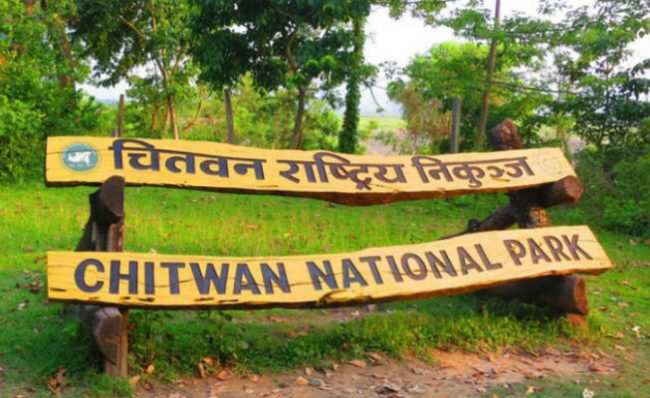
चितवन राष्ट्रिय निकुञ्ज
NARAYANGADH (Chitwan), October 16:
Chitwan National Park has introduced an e-ticketing (electronic ticket) system, enabling tourists to purchase entry tickets online. With this, visitors can now complete the park entry process by booking tickets directly from their homes.
In the first phase, arrangements for online ticket booking have been implemented from the Sauraha area. Authorities stated that services will be expanded to other entry points of the park based on the results of this trial. Previously, tourists and tourism entrepreneurs were compelled to be physically present and pay in cash to obtain tickets. The online service is expected to reduce the time and hassle involved in ticket purchasing.
The e-ticketing system was jointly inaugurated on Thursday by Hari Dhakal, Member of Parliament for Chitwan Constituency No. 1 and Chairperson of the State Affairs and Good Governance Committee, and Dil Bahadur Purja Pun, Senior Conservation Officer of the Park. Senior Conservation Officer Pun mentioned that the park administration had been making continuous efforts for a long time to launch e-ticketing. Following the successful introduction of e-ticketing at the Shivapuri National Park, he noted that its necessity was felt strongly in Chitwan as well.
He said, “Since 70 to 75 percent of Chitwan National Park’s revenue is collected from the Sauraha area and a proportionate number of tourists enter the park from this sector, e-ticketing has appeared highly essential here.” He added that tourists can now complete entry procedures by purchasing tickets from home, and tutorials will be posted on the park’s Facebook page and website to guide users on how to use the system.
MP Dhakal stated that launching the e-ticketing system in Sauraha was made possible through continuous initiatives by tourism entrepreneurs and himself. He mentioned that he had been regularly pursuing this matter over the past six months since assuming office for his second term.
He remarked, “There might be some confusion initially when using technology. However, just as we operate various applications on our phones, we should not hesitate to use mobile banking. This is the initial stage, and we must make the system more systematic and practical by resolving technical issues as they arise.”
He emphasized incorporating feedback from tourists and tourism entrepreneurs to make the e-ticketing system more effective. According to him, including details reflecting the contribution and commitment of tourism entrepreneurs toward conservation within the ticketing system could help promote healthy competition. MP Dhakal also shared that initiatives are underway to change the current rule—where a ticket is valid for only one day—to allow tickets to be used for up to three days.
Tourists enter the park through various checkpoints including Sauraha, Kasara, Ghatgai, Meghuli, Banakatta, Madi, Kujouli, Nawalparasi, and Amaltari. Within the park, 32 jeeps operate from Sauraha, 22 from Kasara, 11 from Meghuli, 8 from Amaltari, and 1 from Madi. Visitors come here to observe wildlife such as the one-horned rhinoceros, Royal Bengal tiger, bear, and elephant, alongside various species of birds.
According to the park office, current entry fees require Nepali citizens to pay NPR 150 per person per day, tourists from SAARC nations NPR 1,000, and other foreign nationals NPR 2,000. Tourist jeeps must pay a fee of NPR 5,000 per entry into the park. The park stated that once tourists fill out the required details and complete the process, a QR code will be generated, which can be presented at the gate to enter the park.
In the last fiscal year, 272,923 tourists visited Chitwan National Park and its intermediate community forests, compared to 231,329 in the previous fiscal year. During the last fiscal year, the park collected NPR 276,339,950 in revenue from ecotourism.
— RSS/Unified Nepal