राष्ट्रिय तथ्याङ्क कार्यालय
LALITPUR, Oct 31.
The National Statistics Office has released a comprehensive data report featuring indices analyzing the status of water supply, sanitation, and hygiene (WASH) across all 753 local levels of the country.
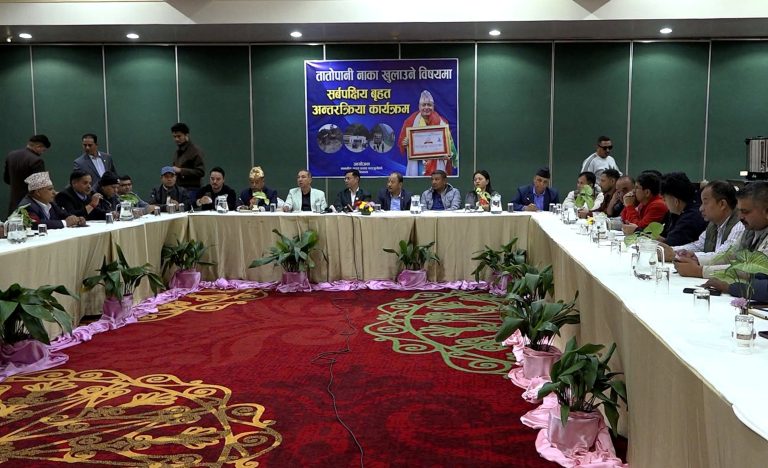
Speaking at a program organized by the National Statistics Office in Lalitpur on Friday to unveil the report titled “Status of Water Supply and Sanitation in Nepal”, Chief Statistician Laxmi Basnet stated that the data will facilitate prioritized development and infrastructure construction activities in the water supply and sanitation sector.
“The report comparatively analyzes the status of water supply and sanitation across provinces and all 753 local levels, identifying disparities and service gaps.
It emphasizes that relevant ministries and bodies must prioritize regions with weaker conditions while formulating policies and plans to bridge these gaps.
Furthermore, the report highlights the necessity of ensuring quality and safety alongside the availability of drinking water,” she said.
Madhav Prasad Adhikari, Joint Secretary at the Ministry of Infrastructure Development, noted that the report reveals disparities in the safe access to water and sanitation while underscoring the need to increase investments in weaker local levels.
Presenting the statistics at the program, he noted that the current status of improved drinking water access and safely managed services in households stands at 62.5%, pointing out that despite infrastructure expansion, safe and sustainable drinking water services have not yet been ensured.
Emphasizing that the status of water supply and sanitation varies across the Himalayan, hilly, and Terai regions as well as different provinces from a public health perspective, Adhikari stressed that data should serve as the basis for future development planning.
He shared the view that since disparities are evident in water supply and sanitation access across all 753 local levels, the report highlights the urgent need to channel investments preferentially into areas with lower indices.
According to Binod Sharan Acharya, Director of the Population Branch at the National Statistics Office, the local-level indices were prepared based on data from the National Census 2021 and the Nepal Multiple Indicator Cluster Survey 2024/25.
The report identifies areas requiring improvement and investment priorities in water supply, sanitation, and hygiene by analyzing geographic, economic, social, and demographic disparities.
Pragya Pradhan, Programme Manager at the United Nations Human Settlements Programme (UN-Habitat) in Nepal, stated that this is the second thematic report integrating statistics on infrastructure, services, environment, and economy to link them with development and service delivery.
Informing that the third report on water supply and sanitation has been prepared using a scientific and index-based innovative methodology enabling local levels to easily utilize census data, she noted that water and sanitation are fundamental human rights and basic needs.
Consequently, data will play a vital role in ensuring quality, safety, and equitable distribution alongside service expansion.
She expressed her belief that the data serves as a guiding framework for prioritizing actions during planning and implementation.
Dhundiraj Lamichhane, Deputy Chief Statistician of the Office, stated that this exercise was undertaken to provide data down to the local level by scientifically integrating limited surveys and census data.
According to him, field verification was conducted across 20 local levels to test the reliability of the generated data.
Highlighting that field discussions revealed a declining trend of groundwater levels particularly in the Terai and Madhesh regions, he shared that the ground realities and recommendations from local levels have been duly incorporated into the report.
RSS