



Washington, Nov 22:
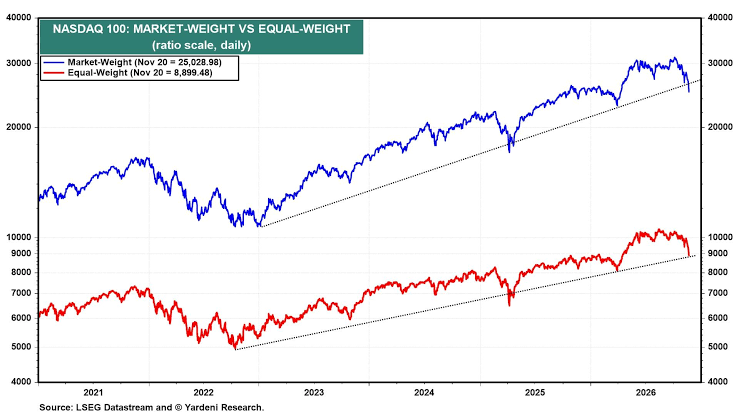
The US stock market has fallen 10 percent from the record high it set last month. The drop comes as investor concern grows over challenges facing the artificial intelligence (AI) industry and its future.
This decline in the benchmark S&P 500 stock index is referred to in Wall Street parlance as a “correction” or market adjustment. Such pullbacks have occurred periodically for more than a century.
According to market analysts, a pullback that occurs when share prices climb excessively above underlying economic fundamentals can help rebalance the market. When investor enthusiasm pushes stock prices to abnormally high levels, a market correction can help bring them back to more realistic territory.
However, such declines often heighten immediate anxiety and uncertainty among investors. In particular, investors frequently worry whether a correction could deepen into a larger downturn—known as a “bear market.”
Under Wall Street’s definition, a bear market occurs when a stock market index falls by at least 20 percent from its most recent high. That condition is widely viewed as a sign of a deep market slump or recession.
The latest pullback has intensified debate over the rapid expansion of the AI industry, challenges emerging in the sector, and investor confidence in the future of technology companies.
Even so, a 10 percent decline is not in itself proof that a market downturn or recession has begun.
RSS/AP