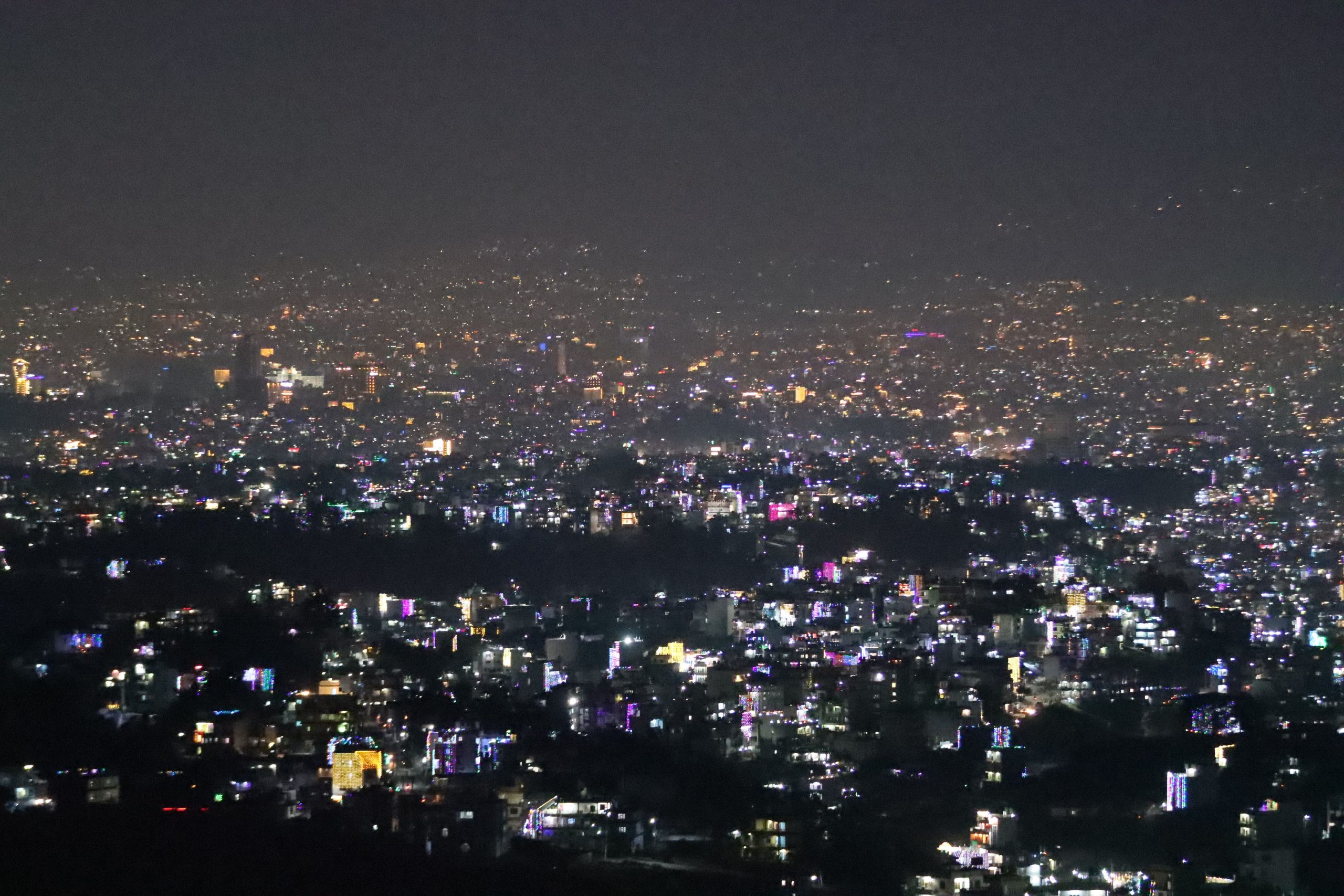
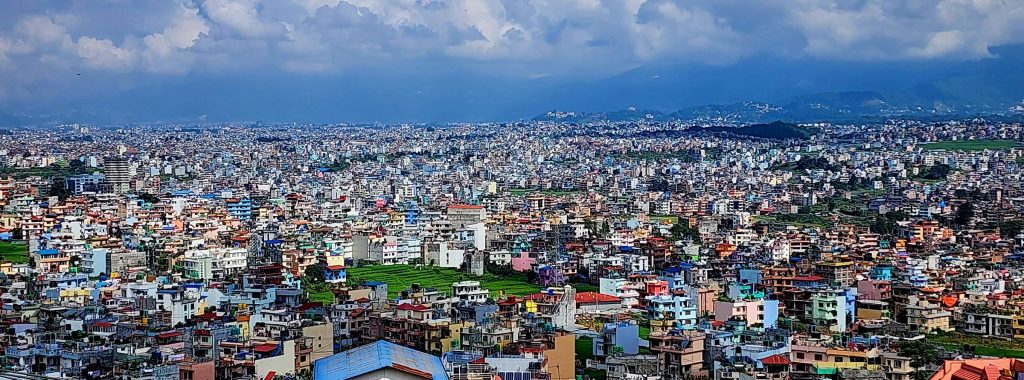
काठमाडौँ, २२ कात्तिकः काठमाडौँको तारकेश्वर नगरपालिका-२ स्थित काभ्रेस्थलीबाट लक्ष्मी पूजाको साँझ देखिएको काठमाडौँ उपत्यकामा बिजुली बत्तीको झिलिमिली । तस्बिरस् हरिराम भेटुवाल/रासस
Will an Open Kathmandu Become a Hub for Tourism and Business, or a Night-time Haven for Crime, Drugs and Social Disorder?
KATHMANDU, November 18 — As the Kathmandu District Administration Office moves ahead with preparations to operate the capital city around the clock, an important question remains unanswered: Is Kathmandu truly ready to become a 24-hour city, and can it guarantee safety and security for tourists, residents, workers and businesspeople throughout the night?
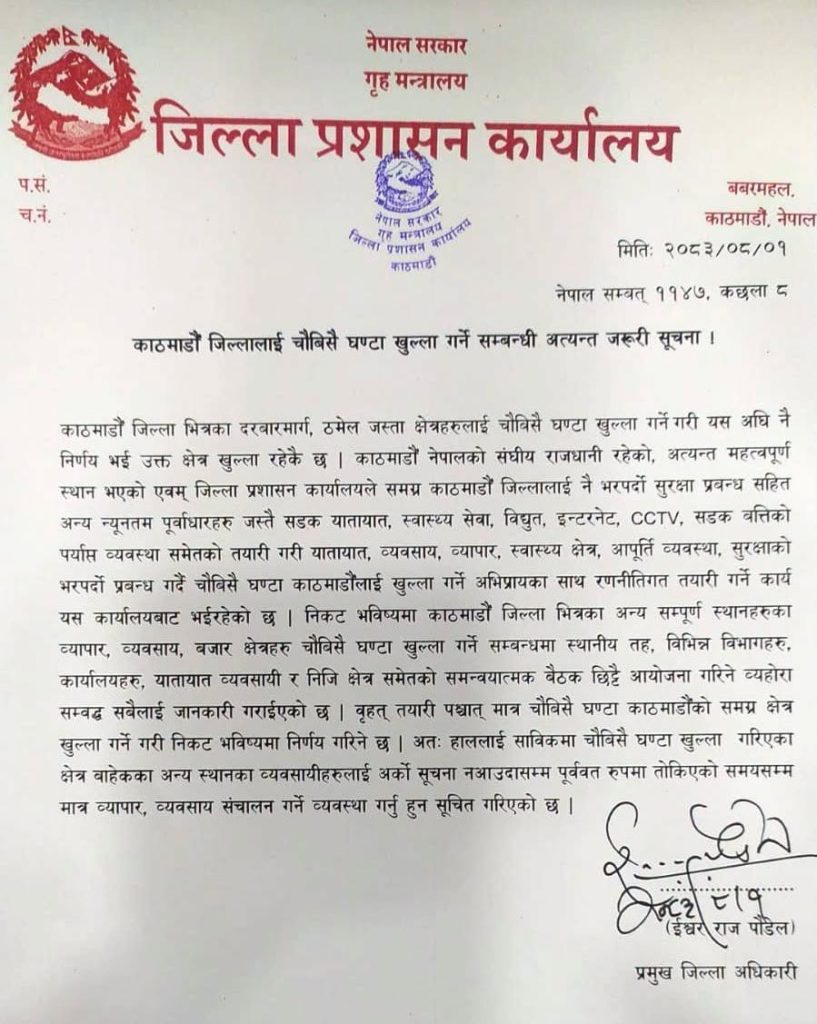
Chief District Officer Ishwar Raj Poudel has announced that preparations are underway to make Kathmandu safer, more organized and business-friendly, with the necessary infrastructure and security arrangements to support round-the-clock operations.
The popular tourist and commercial destinations of Thamel and Durbar Marg have already been allowed to operate 24 hours a day since April 13, 2024, in the presence of then Deputy Prime Minister and Home Minister Rabi Lamichhane. The administration now appears to be considering extending the initiative across Kathmandu district.
The plan promises economic opportunities, increased tourism, employment generation and greater convenience for people who work unconventional hours. Restaurants, hotels, entertainment venues, transportation services and other businesses could benefit from an extended operating schedule.
However, opening an entire city for 24 hours is not simply a matter of keeping businesses open. It requires effective law enforcement, reliable public transportation, emergency healthcare, adequate street lighting, CCTV surveillance and strong coordination among government agencies.
Who Will Take Responsibility for Night-time Security?
One of the biggest concerns surrounding the proposal is whether law enforcement agencies have sufficient capacity to maintain public order throughout the night.
Will an open Kathmandu attract more tourists, investors and legitimate entertainment businesses, or could poorly regulated nightlife create opportunities for drug trafficking, substance abuse, illegal activities, exploitation and other forms of crime?
There are also concerns about the safety of women, young people, tourists, night-shift workers and people travelling alone. Entertainment venues, including adult-oriented businesses, must operate within the law, with effective monitoring to prevent exploitation, trafficking and other criminal activities.
The issue is not about restricting nightlife or targeting particular groups. It is about ensuring that freedom to operate at night does not come at the expense of public safety, dignity and the rule of law.
Can Kathmandu’s Infrastructure Support a 24-Hour Economy?
A successful 24-hour city requires much more than open restaurants and entertainment venues. Public transportation must be available and reliable at night. Hospitals and emergency services must remain accessible. Streetlights, electricity, internet connectivity and surveillance systems must function effectively.
The administration has acknowledged the need to strengthen these essential services. However, the public deserves clear answers about implementation, funding, manpower and accountability.
Who will monitor businesses operating after midnight? How will authorities respond to complaints, street violence, theft, harassment and drug-related offences? Will police patrols be increased? Will safe transportation be available for women and other vulnerable commuters?
These are not minor administrative questions. They are fundamental requirements for a city aspiring to operate around the clock.
Economic Freedom Must Come with Social Responsibility
Kathmandu has the potential to become a vibrant 24-hour destination, competing with international cities that have successfully developed night-time economies. Such a transformation could strengthen tourism, generate employment and improve the capital’s economic image.
But economic growth cannot be measured solely by the number of businesses remaining open until dawn. The quality of public safety, social responsibility and urban management must also be considered.
The government must establish strict operating standards, regular inspections, transparent complaint mechanisms and effective coordination between police, local governments, transport operators and private businesses.
Residents must also be consulted, particularly those living near entertainment and commercial districts, where noise, traffic congestion, waste management and disturbances could become serious concerns.
A 24-Hour City Needs 24-Hour Governance
The government’s ambition to transform Kathmandu into a round-the-clock city may be a progressive step. But opening the city without first establishing strong security and management systems could create more problems than opportunities.
Kathmandu must not become a city where businesses enjoy 24-hour freedom while ordinary citizens struggle to find safe transportation, protection and emergency assistance.
The real question is not whether Kathmandu should remain open for 24 hours. It is whether the government can ensure that the city remains safe, clean, disciplined and accessible for everyone, regardless of the time.
A truly open Kathmandu should be a haven for tourists, entrepreneurs, workers and responsible entertainment—not a safe hiding place for criminals, traffickers or illegal activities.
The success of this ambitious initiative will ultimately depend not on how long Kathmandu stays awake, but on how responsibly the government manages the city while it does.