


Myagdi, Nov 27 :
The 40-megawatt Rahughat Hydropower Project, built in Myagdi by Raghuganga Hydropower—a subsidiary of the state-owned Nepal Electricity Authority (NEA)—has entered commercial power generation a decade and a half after construction began.
Initially planned at a capacity of 32 megawatts, the project is nearing completion 15 years on due to contractor issues, contract termination, restructuring, selection of a new contractor, the COVID-19 pandemic, floods and landslides, and shortages of river-based construction materials, among other factors.
Ganesh KC, Managing Director of Raghuganga Hydropower, stated that the project, built in Raghuganga Rural Municipality of Myagdi, has begun commercial generation after completing its testing period. “The testing period of the project, which began on Ashoj 6, was prolonged after flooding in the Kaligandaki River eroded and damaged the powerhouse premises at Tilkenichaur in Raghuganga Rural Municipality–3 on Ashoj 11,” he said. “Construction of the project was delayed due to natural disasters, COVID-19, customs process complications, effects of international conflicts, and restrictions placed on extracting riverine materials from the Kaligandaki River.”
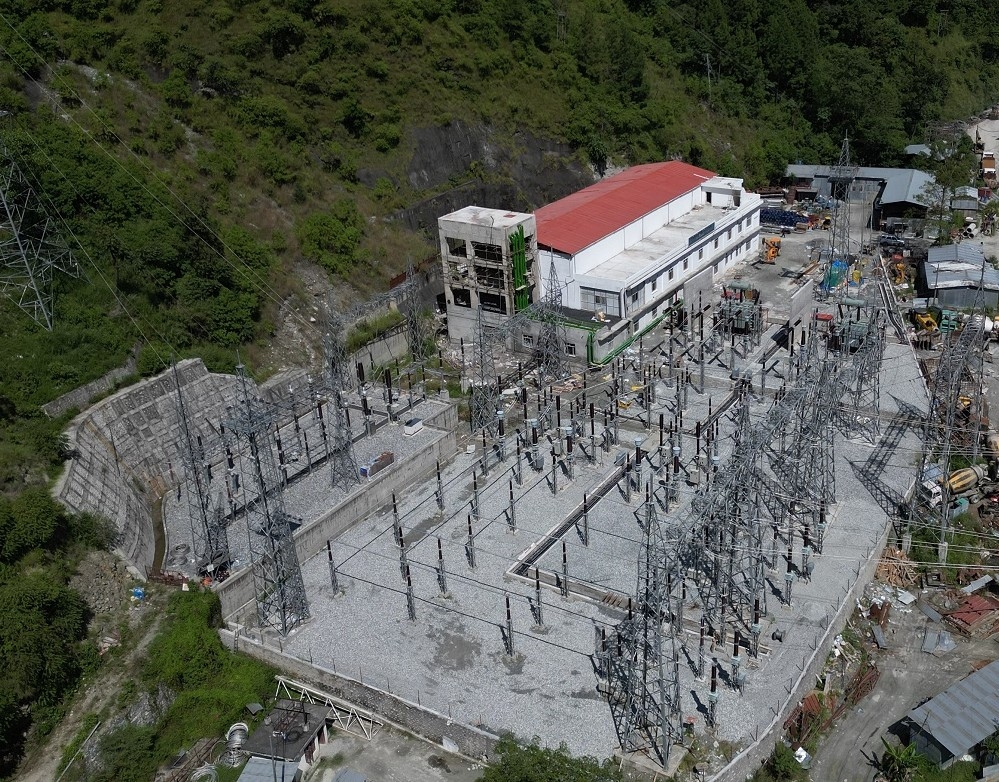
The headworks, a 6.27-kilometer main tunnel, and two settling basins are located at the base of Dagnam in Raghuganga Rural Municipality–4 and Jhin in Ward No. 5. The powerhouse is situated at Tilkenichaur in Raghuganga Rural Municipality–3, alongside the Beni–Jomsom section of the Kaligandaki Corridor road. Project Chief Raj Bahadur Bisht informed that an 11-kilometer access road from Tilkenichaur through Ghumaunetal, Piple, Mauwaphant, and Bugal to the dam site, along with a Bailey bridge over the Rahughat, has been constructed. A switchyard at the powerhouse premises, four towers, and a transmission line have also been built to connect via loop-in loop-out (LILO) to the 220 kV double-circuit Dana–Kushma transmission line under the Kaligandaki Corridor.
The project signed a Power Purchase Agreement (PPA) in Chaitra 2075 BS with a target of generating 240,593,034 units (24 crore 5 lakh 93 thousand 34 units) of electricity annually. India’s WAPCOS serves as the project’s consultant.
For the construction of the Rahughat Hydropower Project, the Nepal Electricity Authority signed a civil contract worth NPR 2.50 billion (रु दुई अर्ब ५० करोड) with Indian construction firm IVRCL on Kartik 18, 2067 BS. Had IVRCL worked according to the agreement, Rahughat would have started generating power by 2070 BS.
Unable to proceed due to weak financial condition, the electricity authority terminated IVRCL’s contract in 2072 BS. When the contract was canceled, physical progress over five years remained limited to 12 percent.
The authority decided to restructure the project, increase capacity from 32 MW to 40 MW, and move forward under a company model. Following the termination of IVRCL’s contract, the authority established subsidiary Raghuganga Hydropower Limited in 2073 BS to advance the project. Rahughat was taken forward under an Engineering, Procurement, and Contract (EPC) model using a USD 67 million concessional loan from the Export-Import Bank of India alongside investments from the Nepal Electricity Authority and the Government of Nepal.
A contract worth approximately NPR 6 billion (रु छ अर्ब) was signed on Mangsir 6, 2074 BS with the newly selected civil contractor, Indian company Jaiprakash Associates (JP), with a target to complete within 45 months. Access road work began in Ashadh 2075 BS, and tunnel excavation started from Adit No. 3 in Piple on Ashadh 8, 2076 BS. The main tunnel breakthrough at Rahughat was achieved on Shrawan 15, 2081 BS. Extensions were granted in February 2022 (first), February 2022 (second), and until November 2025 (third), with the project completed within a fourth deadline extension. An electromechanical contract worth USD 10,293,022.35 was signed in Kartik 2076 BS with Bharat Heavy Electricals Limited (BHEL), an Indian government-owned enterprise.
According to Subin Shrestha, President of the Myagdi Chamber of Commerce and Industry, Rahughat—the first government-invested project in the district—was regarded as the “gateway” to hydropower development.
“Since Rahughat began, 10 projects that entered Myagdi have been completed,” he said. “Even though delayed, we are excited that the Rahughat Hydropower Project has begun commercial generation after a wait of a decade and a half.”
RSS