Photo: christies.com
Amrit Kharel

As a 12th-century masterpiece of Newar craftsmanship sets a world auction record at Christie’s Hong Kong, experts question how Nepal’s sacred art entered private collections and whether the international art market is rewarding cultural dispossession.
KATHMANDU, November 2, 2026
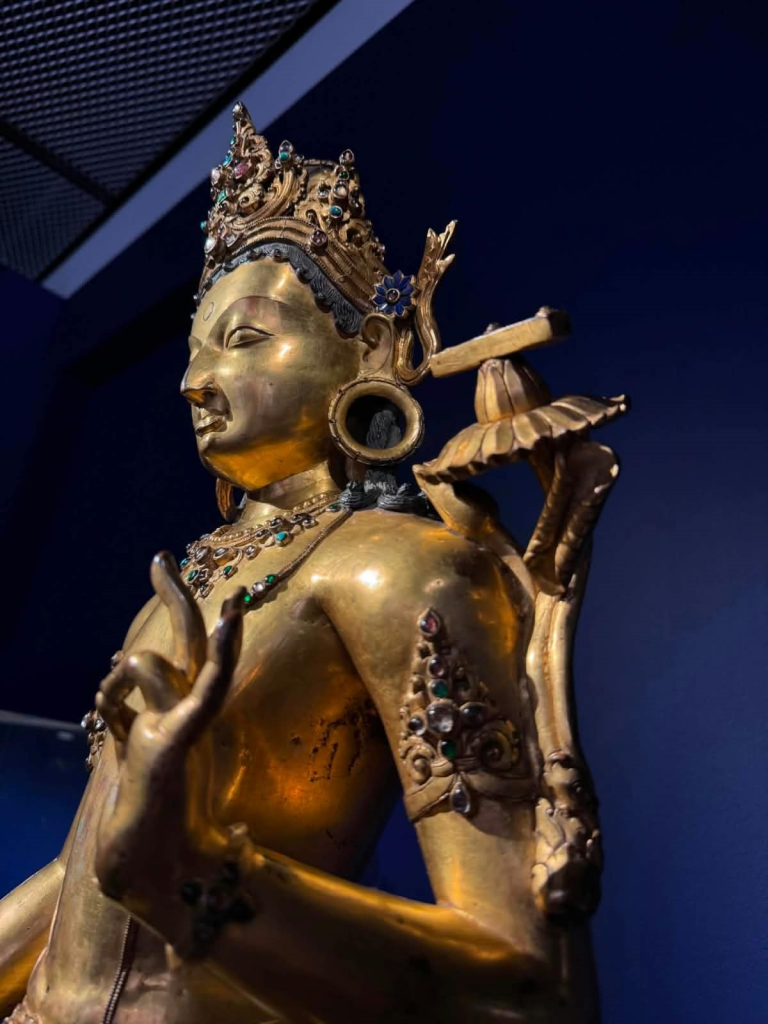
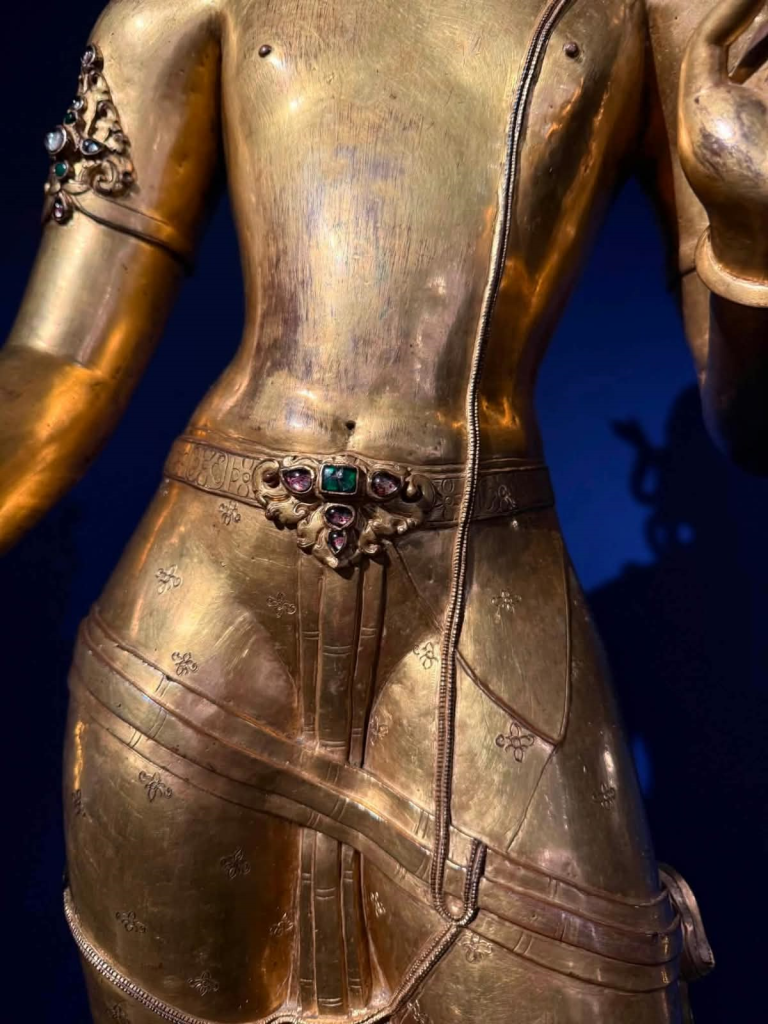
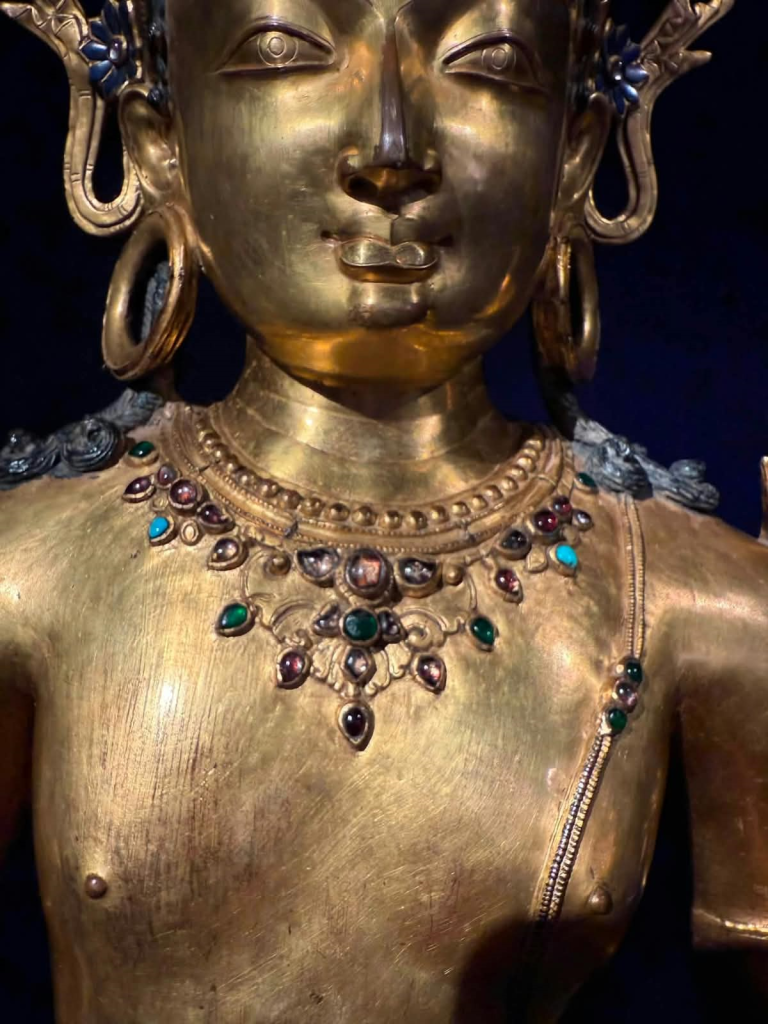
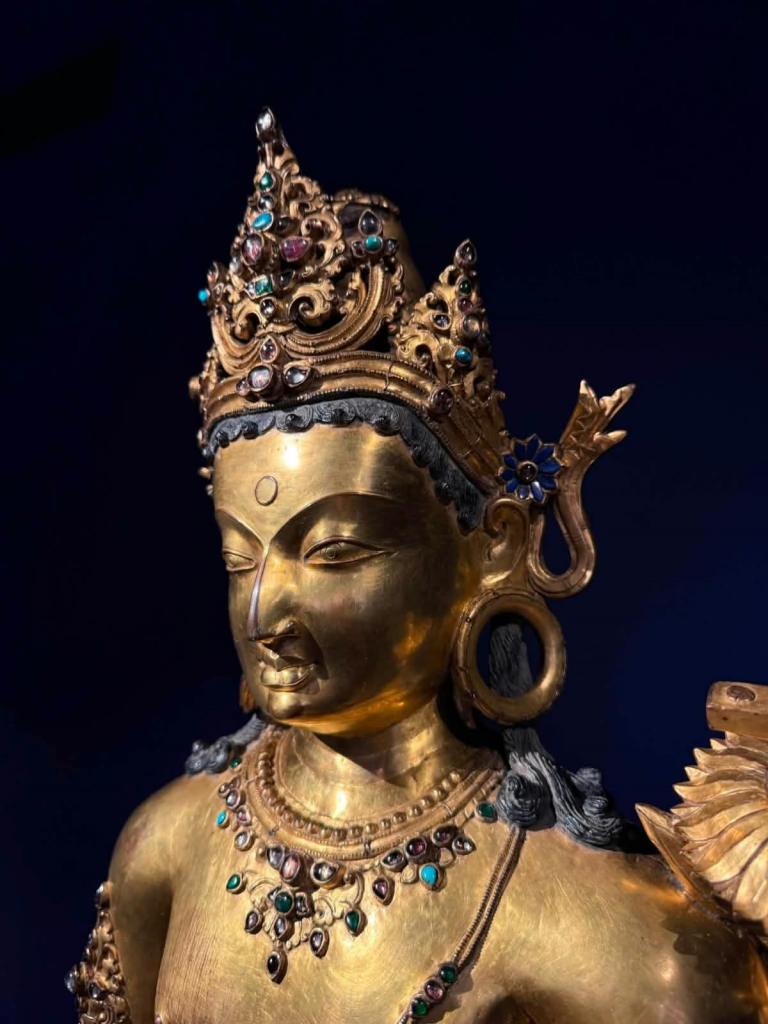
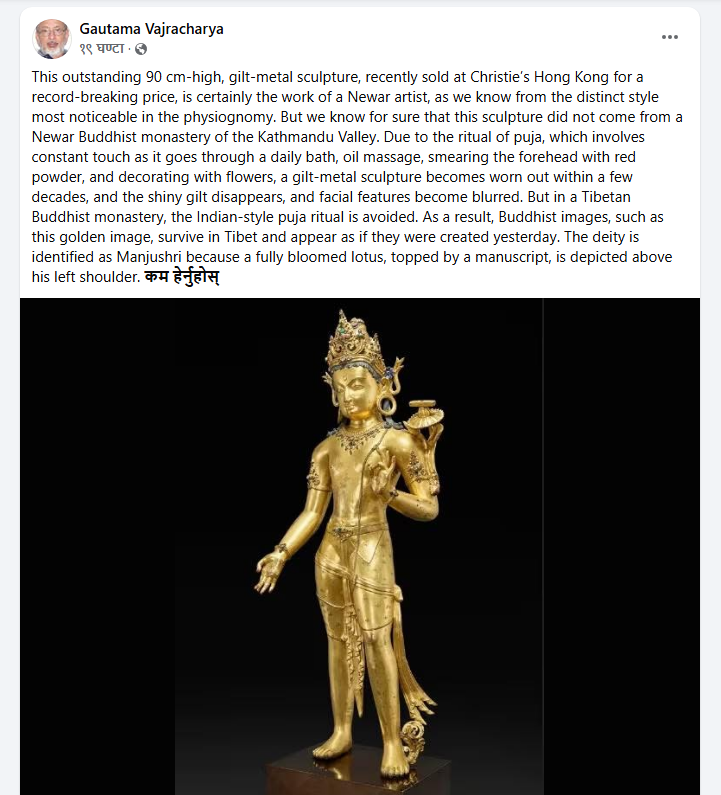
A 12th-century sculpture of Manjushri, the Buddhist Bodhisattva of Wisdom, created by a master Newar artisan in Nepal, has become one of the most expensive Himalayan sculptures ever sold at auction.
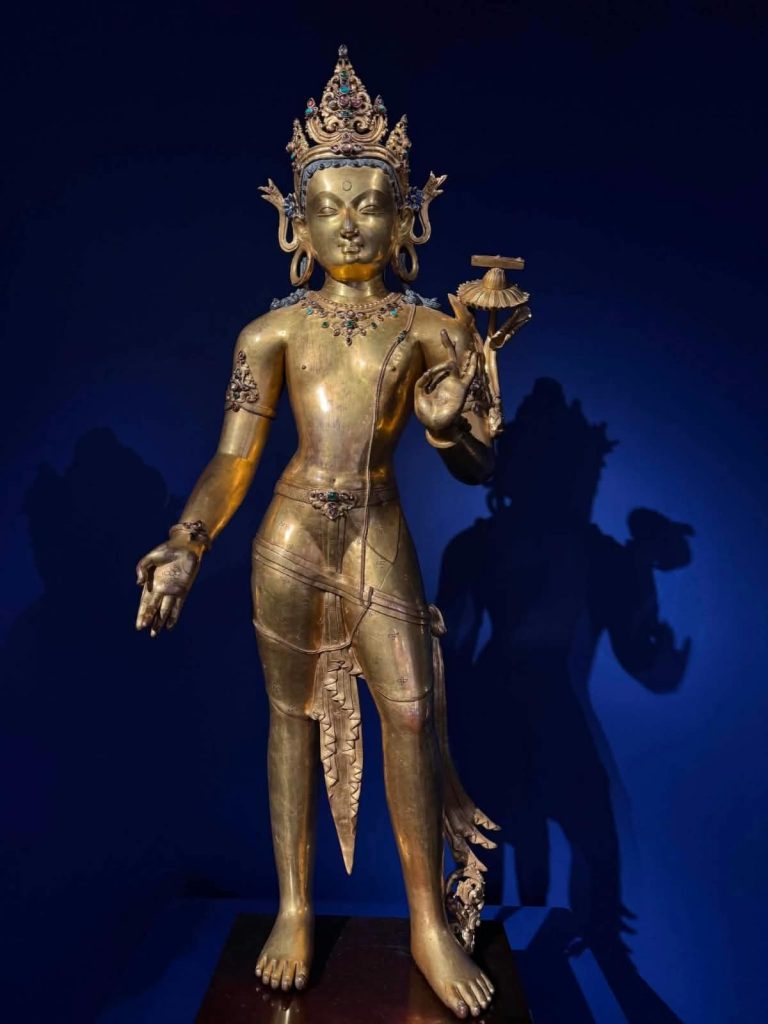
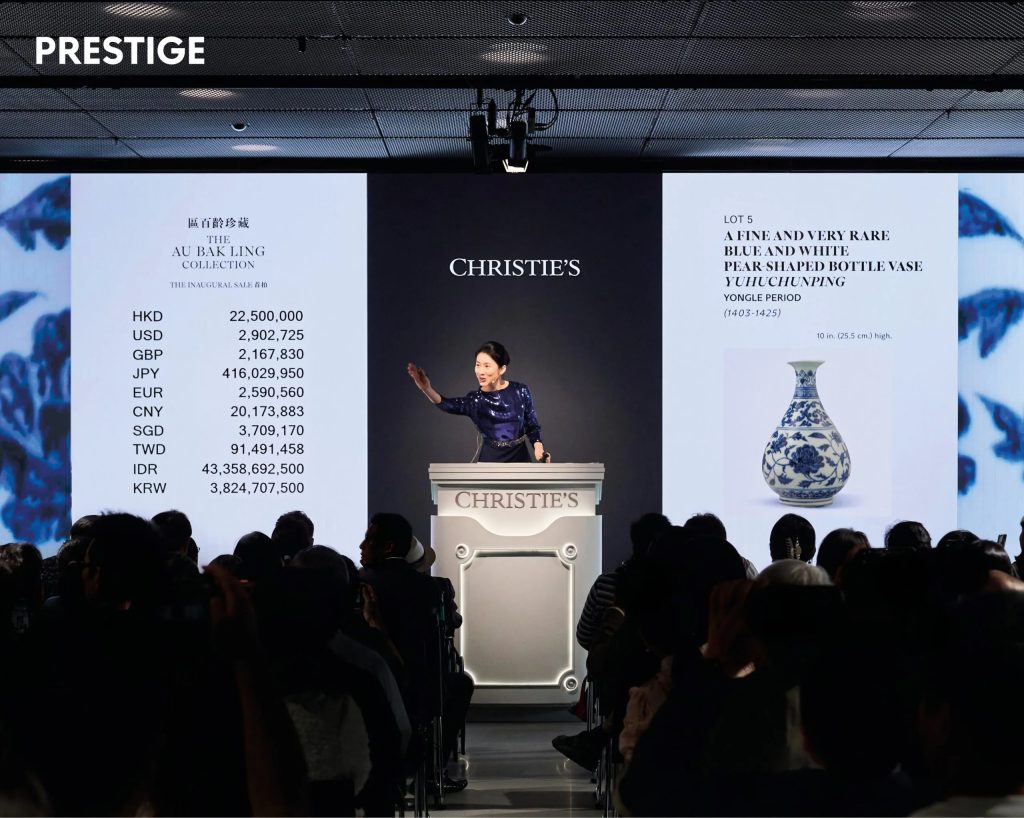
The 93-centimetre-tall gilt-copper alloy sculpture fetched HK$137.35 million (approximately US$17.5 million or NPR 2.65 billion) at Christie’s Hong Kong on October 30, establishing a world auction record for a Himalayan gilt-bronze sculpture. The price was more than twice its low estimate and made the sculpture the most valuable lot of Christie’s Hong Kong autumn season.
Yet, behind the spectacular price lies a much bigger story—one involving the international appetite for Himalayan art, the uncertain histories of displaced Nepalese religious objects, and growing questions about the responsibility of auction houses and collectors in dealing with cultural heritage.
The sale has reignited an uncomfortable debate: when a sacred object from Nepal becomes a multimillion-dollar international commodity, should the conversation end with its artistic excellence, or should it begin with the question of how it left its original home?
Why is this sculpture worth $17.5 million?
The extraordinary price is not simply about the age of the sculpture or the gold covering its surface. It reflects a rare combination of artistic mastery, historical significance, physical condition, scale and international demand.
The sculpture is an outstanding example of the Newar metalworking tradition of the Kathmandu Valley, whose influence extended across the Himalayan Buddhist world. Newar artisans developed exceptional skills in bronze casting, gilding, modelling and ornamentation. Their works became highly influential in Tibet and beyond.
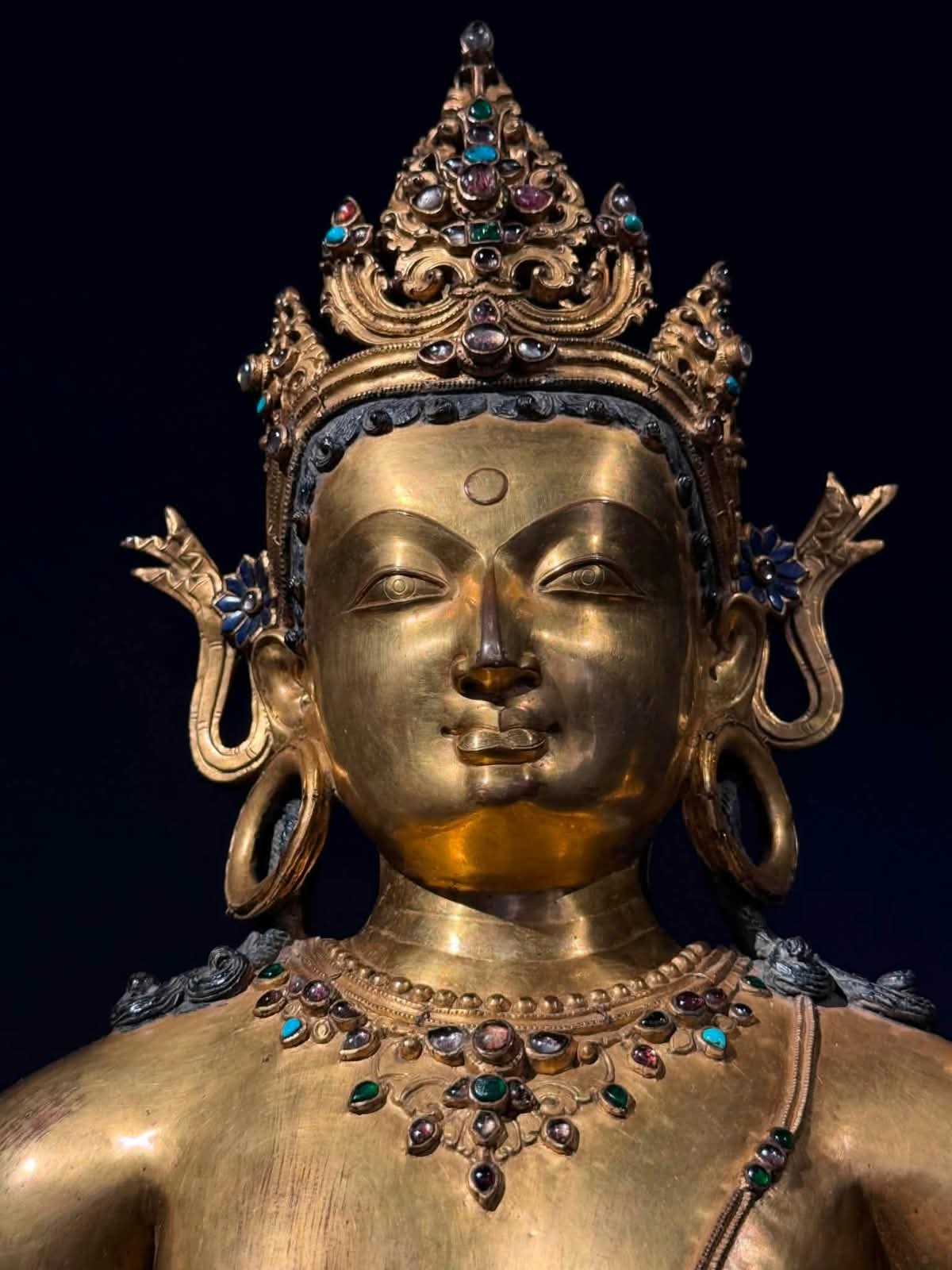
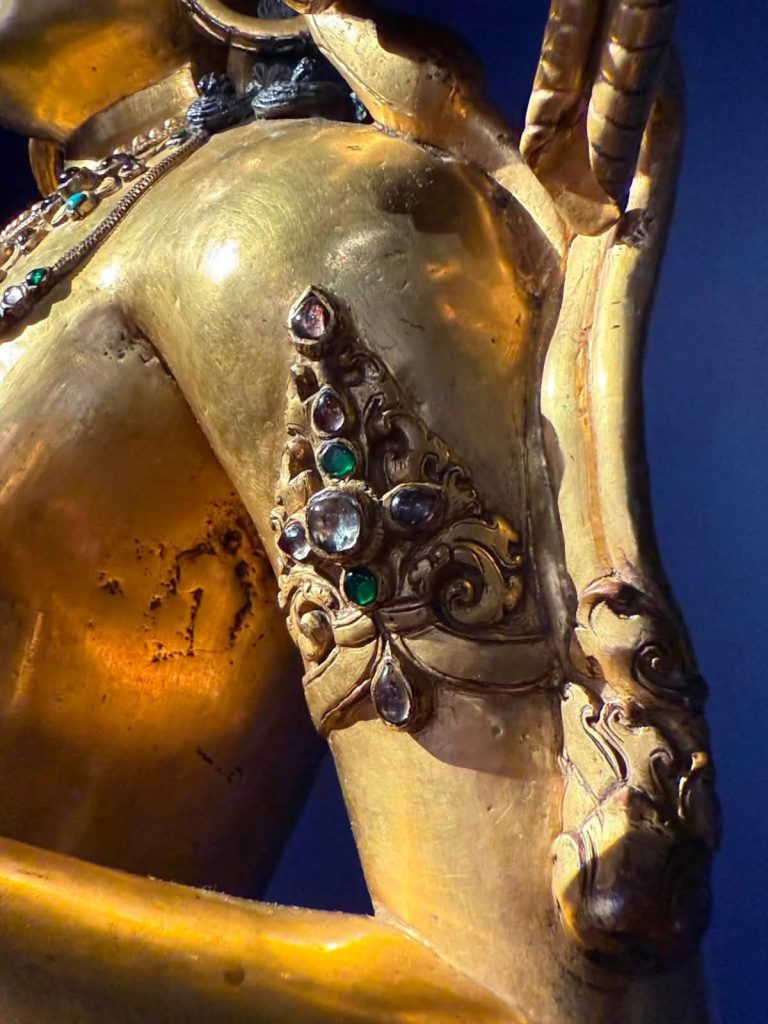
Standing 93 centimetres tall, the Manjushri is unusually monumental for a medieval Himalayan metal sculpture. Its elegant proportions, elongated body, elaborate jewellery, refined facial features and luminous gilded surface demonstrate an extraordinary level of craftsmanship.
Its iconography adds another layer of significance. A manuscript of the Prajnaparamita Sutra rests on a flowering lotus above the figure’s left shoulder, identifying the deity as Manjushri, the embodiment of transcendent wisdom in Buddhist philosophy.
The sculpture also represents an important period in the transmission of Buddhist art across Asia. Newar artists and their artistic traditions played a major role in shaping Buddhist imagery in Tibet and eventually influenced artistic production at the imperial courts of China.
Christie’s described the sculpture as one of the most important surviving works of Himalayan art to appear at auction in recent years. Its rarity, monumental scale and exceptional preservation helped make it particularly attractive to international collectors.
There is also a powerful market factor. Exceptional Himalayan Buddhist sculptures are rarely available, while wealthy private collectors increasingly compete for historically significant works of Asian religious art. When a rare object attracts sustained bidding from several interested buyers, its price can rise dramatically.
The result was a record-breaking HK$137.35 million.
But a record price establishes commercial value, not necessarily legitimate ownership.
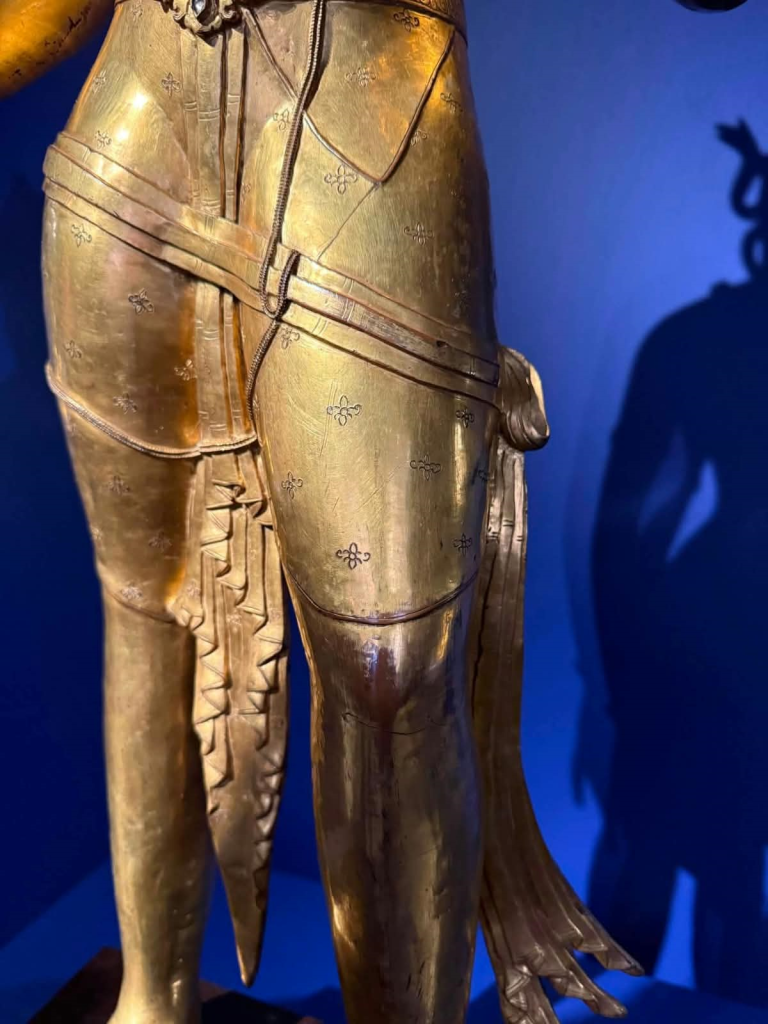
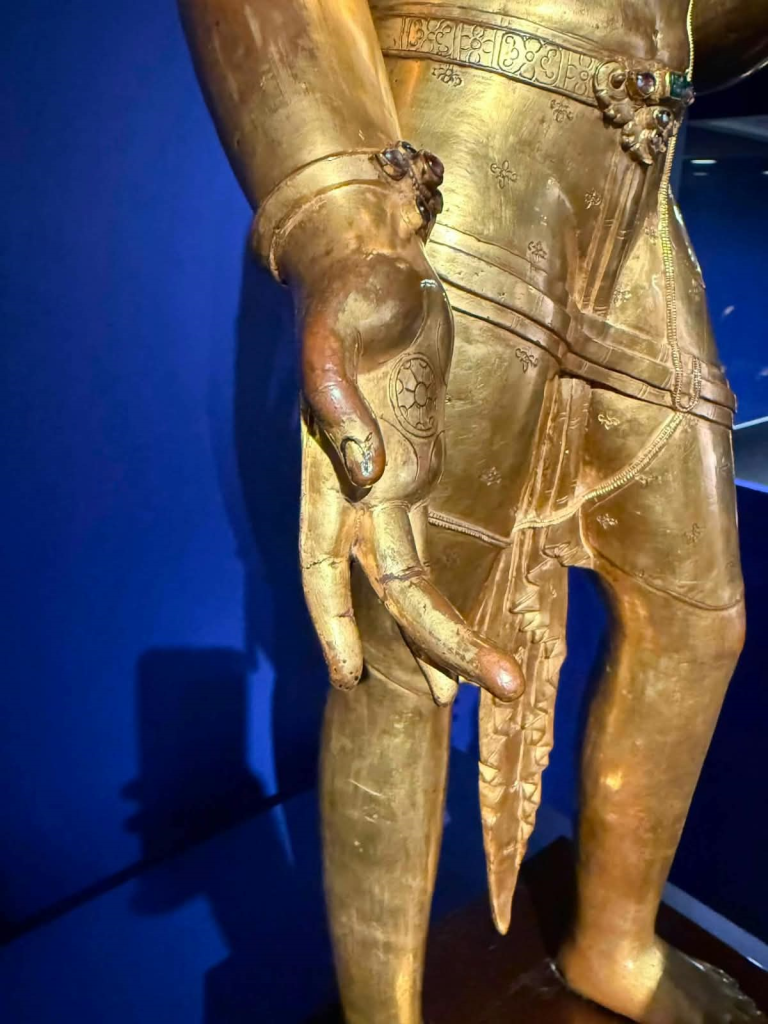
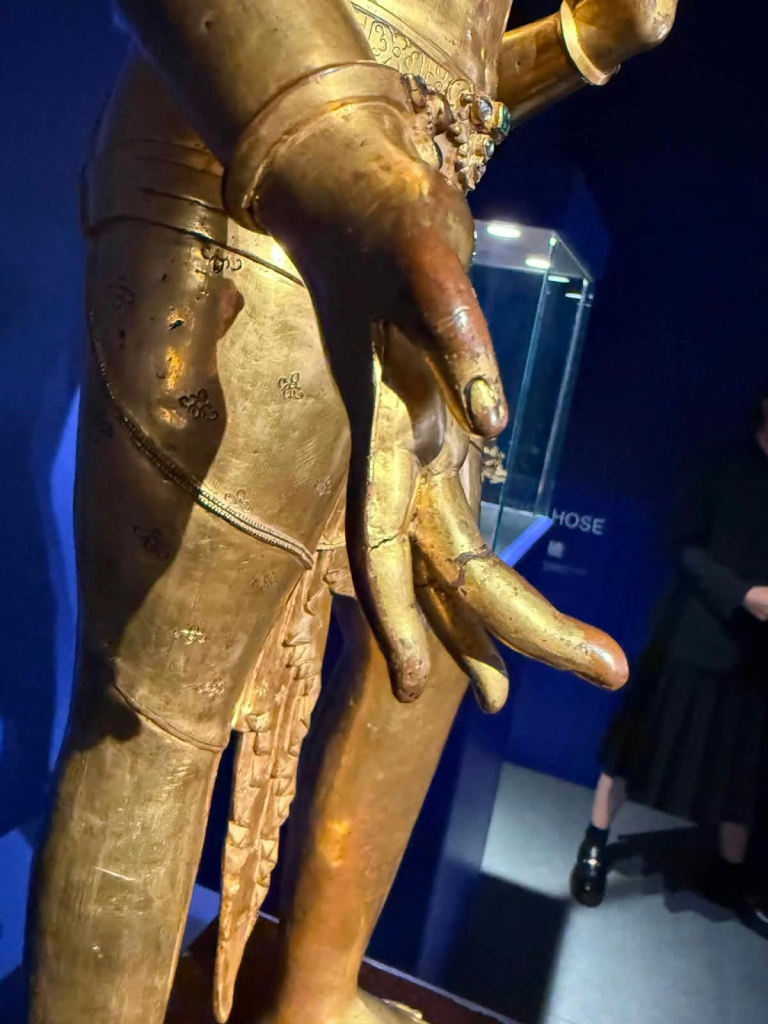
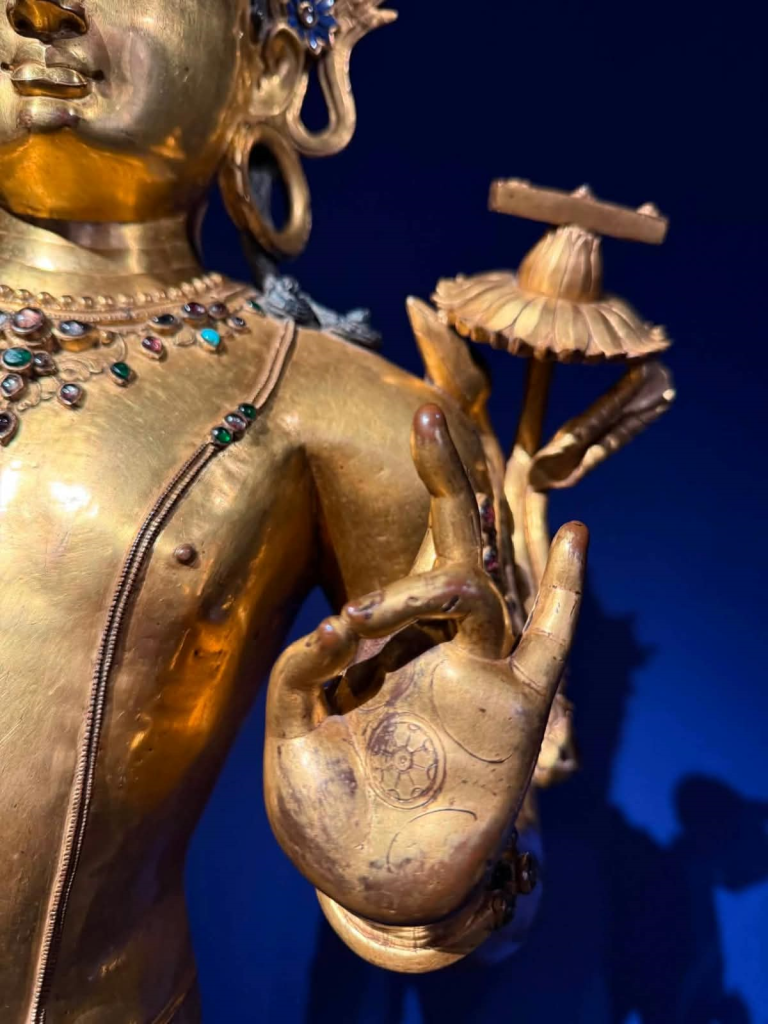
Photos: christies.com
The missing chapters in its ownership history
One of the most important questions surrounding the sale concerns the sculpture’s provenance—the documented history of its ownership and movement.
According to Christie’s published catalogue, the earliest identified owner in the sculpture’s provenance was the George Ortiz Collection in Geneva, by 2002. It subsequently passed through an important private collection in New York, Carlton Rochell Asian Art in 2017, and a private Asian collection before appearing at the Hong Kong auction.
The published record does not establish where the sculpture was before 2002, when it left Nepal, or under what circumstances it entered the international art market.
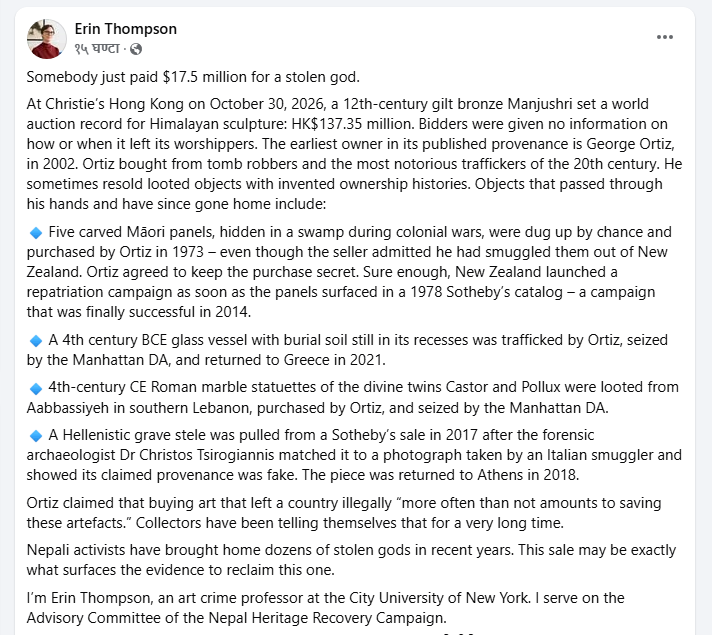
This gap has attracted the attention of Erin Thompson, a professor of art crime at the City University of New York and an adviser to the Nepal Heritage Recovery Campaign.

In a strongly worded social media post following the auction, Thompson wrote:
“Somebody just paid $17.5 million for a stolen god.”
Thompson questioned the absence of an earlier ownership history and drew attention to the controversial record of George Ortiz, whose collection included objects associated with illicit antiquities trading.
She cited several examples of objects that passed through Ortiz’s hands and were subsequently returned to their countries of origin.
These included five Māori carved panels from New Zealand, a fourth-century BCE glass vessel returned to Greece in 2021, Roman marble statuettes looted from southern Lebanon, and a Hellenistic grave stele whose claimed provenance was challenged through forensic archaeological research.
Thompson argued that the familiar justification offered by some collectors—that purchasing objects that have left their countries illegally amounts to saving them—can help normalise the trade in looted cultural property.
She also noted that Nepali heritage activists have helped bring home dozens of stolen religious objects in recent years. In her view, the publicity surrounding the Manjushri auction could help generate evidence and public attention needed to investigate its history and potentially pursue its return.
However, the appearance of the sculpture in the Ortiz Collection by 2002 does not, by itself, establish that this particular Manjushri was stolen. That conclusion requires further documentary and historical evidence.
A different interpretation: Was it originally in Tibet?
Art historian Gautama Vajra Vajracharya has offered another perspective on the sculpture’s possible history.
He identifies the figure as unquestionably the work of a Newar artist, based particularly on its distinctive facial and bodily characteristics. However, he argues that the sculpture did not originate in a Newar Buddhist monastery in the Kathmandu Valley.
His interpretation focuses on differences in Buddhist worship practices.
In Kathmandu Valley Buddhist monasteries, traditional puja often involves regularly bathing sacred images, applying oil, placing red powder on their foreheads and decorating them with flowers. Repeated physical contact, Vajracharya argues, would gradually wear away the gilding and soften the sculpture’s facial details.
In Tibetan Buddhist monasteries, he explains, Indian-style rituals involving such regular physical contact with the images are generally avoided. Consequently, gilt-metal sculptures preserved in Tibetan monasteries can retain remarkably fresh-looking surfaces over centuries.
He suggests that the Manjushri may therefore have been preserved in a Tibetan Buddhist monastery rather than a Kathmandu Valley shrine.
This is an important art-historical argument. Newar artisans did produce Buddhist sculptures for patrons and monasteries beyond the Kathmandu Valley, particularly in Tibet. A sculpture made by a Newar artist does not necessarily mean it was originally worshipped in Nepal.
However, the condition of the gilding alone cannot establish the sculpture’s precise place of origin or prove that it was legally exported. Those questions require independent historical, documentary and scientific investigation.
When scholarly interpretation becomes a question of legitimacy
Thompson has also sharply criticised Vajracharya’s interpretation, arguing that scholarly endorsement can make the international sale of Nepalese cultural objects easier.
In her pointed response, she wrote:
“When scholars like Bajracharya endorse it, selling Nepalese heritage becomes easy.”
She continued with a sarcastic description of how a stolen object could supposedly be taken from a temple, repainted or regilded and then presented as something that had never been worshipped.
Her comments raise an important question about the relationship between art history and the commercial art market.
Scholars have an essential role in identifying artistic traditions, interpreting religious iconography and reconstructing the historical movement of cultural objects. But identifying a sculpture as a Newar creation, or suggesting that it may have been preserved in Tibet, does not settle the separate question of its legal ownership.
There is a fundamental distinction between establishing where an object was made, identifying where it may have been worshipped and determining whether it was legally removed from its country of origin.
These questions should not be conflated.
The controversy also demonstrates why provenance research must be independent, transparent and supported by evidence rather than relying solely on stylistic interpretation.
Do record-breaking auctions create incentives for smuggling?
The international art market does not necessarily promote theft every time a historical object is sold. Legitimate collecting, museum acquisitions and the responsible circulation of cultural objects can contribute to research and public appreciation of art.
But the enormous financial rewards attached to rare antiquities can create incentives for illegal excavation, temple theft and trafficking when provenance requirements are weak or inadequately enforced.
The process can be difficult to detect.
An object disappears from a temple or archaeological site. It moves through intermediaries and private collections. Years later, it appears in a gallery or auction catalogue with a limited ownership history. Once exhibited, published and handled by recognised dealers, it may acquire greater commercial prestige and attract wealthy buyers.
This is why provenance is so important. It is not enough to know that an object belonged to a particular collector in 2002. Researchers and buyers need to understand how it reached that collector, who owned it before then, and whether its removal from the country of origin complied with the relevant laws.
The stakes are not merely historical. The high-value international art market also faces concerns about money laundering and the use of cultural objects to move or conceal illicit wealth.
Some commentators have raised questions about whether proceeds from narcotics trafficking, smuggling, terrorist financing and other criminal activities can enter the international art market through expensive transactions.
These are legitimate areas of concern for financial regulators and law-enforcement agencies. However, no publicly established evidence presented in connection with this particular Manjushri sale demonstrates that its buyer or purchase funds were linked to terrorism, narcotics trafficking or other criminal activity.
The appropriate response is not to make unsupported accusations, but to insist on effective buyer identification, beneficial ownership checks, source-of-funds verification and compliance with applicable anti-money-laundering requirements.
A transaction worth US$17.5 million deserves transparency proportionate to its scale.
What responsibility do auction houses have?
Christie’s states in its cultural stewardship policy that it researches the provenance of objects offered for sale, complies with applicable cultural property laws and works to prevent the sale of objects looted from archaeological sites or conflict zones.
The company also says its catalogues are publicly accessible and that its provenance research is subject to additional checks by the Art Loss Register.
These are important commitments. But the Manjushri case illustrates why the public should be able to examine the evidence behind a published provenance.
The earliest identified ownership entry of 2002 leaves an important historical gap. Even if the auction house has conducted additional research, greater transparency about the sculpture’s earlier history would help address the questions raised by scholars and heritage advocates.
Was the sculpture documented in Nepal before it entered the Ortiz Collection? Does an old photograph exist? Was there a temple or monastery record? Is there evidence of a lawful export? Was its movement investigated by relevant authorities?
Christie’s, the present owner, Nepalese heritage institutions and independent researchers all have a role in answering these questions.
The auction house’s own cultural stewardship principles make this an important opportunity to demonstrate what responsible provenance research should look like.
Beyond the price tag: Who owns Nepal’s artistic history?
The Manjushri sculpture is undoubtedly a masterpiece of Nepal’s artistic heritage. Its record-breaking price demonstrates the extraordinary international recognition of Newar craftsmanship, which flourished centuries ago and continues to influence the visual culture of Himalayan Buddhism.
But international recognition should not come at the expense of historical accountability.
For Nepal, this auction should be more than an occasion to celebrate the financial value of its artistic traditions. It should become an opportunity to strengthen the country’s cultural heritage documentation, build international research partnerships, investigate missing ownership records and pursue the return of objects where evidence supports repatriation.
The government, Department of Archaeology, museums, art historians, religious institutions and heritage recovery campaigners need to work together to develop stronger inventories and digital archives of missing sculptures.
The country also needs to engage more actively with international auction houses, collectors, museums and law-enforcement agencies.
A sculpture can be transported across continents. It can be displayed in prestigious exhibitions, published in scholarly books and sold for millions of dollars. But its cultural history cannot be erased by a change of ownership.
The Manjushri auction has established a world record for the price of Himalayan sculpture. The more important question is whether it will also become a turning point in how the international art market treats Nepal’s cultural heritage.
After all, the value of a sacred object cannot be measured only by what a wealthy collector is willing to pay. It must also be measured by the history it carries, the people who created it and the community whose cultural memory it represents.