
dead bodies collection in flood
Kathmandu, September 1
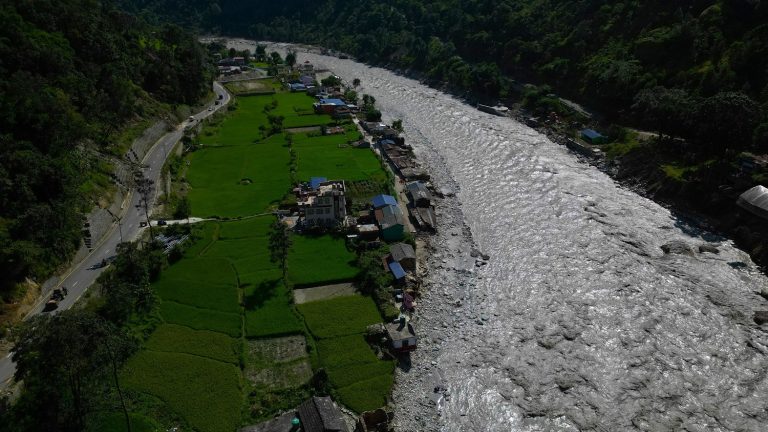
Six days after the Bhotekoshi River tore through Rasuwa on August 26, the task of accounting for its dead has outgrown the district where the disaster began. Bodies carried down the Bhotekoshi and into the Trishuli and Narayani river systems have surfaced as far as Nawalparasi, while dozens more, recovered from riverbanks in Nawalpur, Dhading, Tanahun and Gorkha, have been ferried to Pokhara for identification. What was a single flood has become a more than five-district operation involving police, disaster officials, forest land, DNA science and rooms full of grieving relatives staring at photographs on a screen.
At the source, in Rasuwa
In Rasuwa itself, 66 bodies have so far been retrieved — 10 from Betrawati, 50 from Timure and six from Syafrubeshi — according to Ashok Thapa, Chief of the District Police Office. Only six have been identified. The remaining dead are being consolidated at Dhunche as search operations continue for those still missing.
More than 600 people affected by the flood have been rescued so far. The disaster swept away roads and bridges, cutting off settlements in the western part of the district, and displaced families have scattered across makeshift shelters: those from Kaindaltar in Betrawati are housed at Shanti Tole in Tarkeshwor Municipality, Kathmandu; residents of Timure and Syafrubeshi are sheltering at Pahelo Gumba in Raniban; others have been accommodated at Turkuchiling Gumba in Dhunche and at the Bhimsen and Shivalaya primary schools in Majhgaun.
With roads cut, relief has moved by air. Helicopters have carried supplies to Thomang, Chilime, Goljung, Haku, Dadagaun and Thulogaun, and food to Laharepauwa, Betrawati, Pahirabesi, Ramche, Khaidi in Timure, Birding, Sherpa Gaun, Khamjing and Syafrubeshi. Communication services have been restored in most of the district, and the Nepal Electricity Authority is extending a transmission line from Balaju in Kathmandu — via Shivapuri, Chaugada, Narja, Saramthali and Kalikaisthan — to Dhunche, to bring back regular power.
Downstream, the toll multiplies
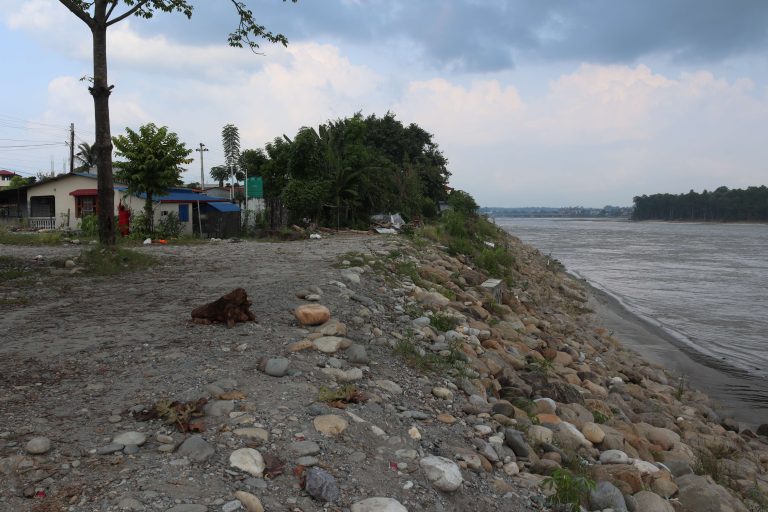
The river did not stop at Rasuwa’s border. In Nawalparasi (Bardaghat–Susta East), where bodies swept from Rasuwa were carried into the Narayani, police have logged 216 bodies in the district; 159 have now been “managed,” in the language local officials use for the disposal of unidentified remains. Anil Pandit, Information Officer and Deputy Superintendent of Police at the District Police Office, said unidentified bodies held at the district’s hospitals have been temporarily buried at Jyotikunja Community Forest in Kawasoti Municipality and Divya Madhyabarti Community Forest in Devchuli Municipality.
Of the bodies handled this way, 29 are women, 47 are men, seven are boys and seven are girls; a further 69 body parts have also been managed separately. Across the district as a whole, the bodies of 47 women, 73 men, 11 boys and 15 girls have been recovered to date. Only 17 have been identified and returned to relatives.
In Pokhara, a forensic clearing house
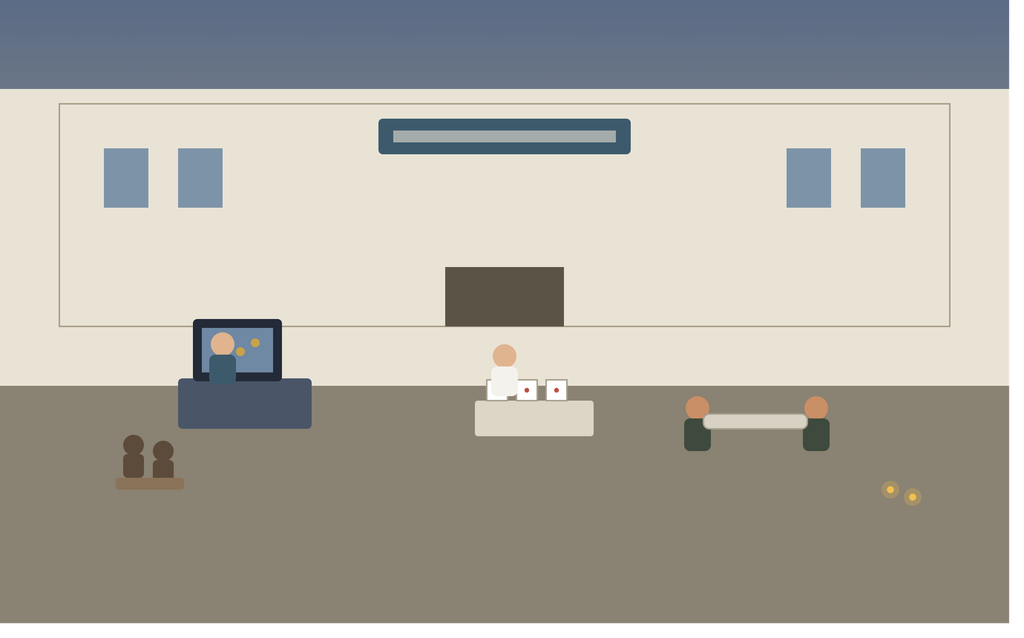
Further still from the flood’s origin, Pokhara has become a hub for identifying bodies pulled from riverbanks in four separate districts. Chief District Officer of Kaski, Kumansingh Gurung, said 102 bodies were brought to Pokhara for identification and examination — 41 from Nawalpur, 27 from Dhading, 23 from Tanahun and 11 from Gorkha. As of Monday, only 16 had been identified and handed over to family members.
The remaining unidentified bodies will be buried underground in accordance with legal procedure, Gurung said, but only after DNA samples are collected and the full legal and scientific process is completed. Should a DNA match surface later, the bodies can be exhumed and returned to relatives — a system designed to keep identification possible even after burial. The process follows Nepal’s directive on managing unidentified and unclaimed bodies, and officials say preparations, including the search for a suitable burial site and other logistical arrangements, are already underway. All bodies held at hospitals have been examined.
To help relatives identify the dead, authorities have set up a photograph-screening system, allowing families to view images on-screen rather than the remains themselves, alongside a help desk on the hospital premises and arrangements for food and lodging for relatives who have travelled to search for missing family members. Officials acknowledge the work is only getting harder: because the flood scattered bodies across so many districts, and because many remains are severely damaged, a significant number may never be visually recognizable at all. Both bodies are held at the Pokhara Academy of Health Sciences and Manipal Teaching Hospital.
A single, unfinished ledger
Taken together, the numbers from Rasuwa, Nawalparasi and Kaski describe not three separate disasters but one — a flood whose dead are still being counted, identified and laid to rest hundreds of kilometres from where the water first broke loose, in a process that is as much about DNA labs and legal directives as it is about grief.