

Photo: Facebook page of Green Army Nepal, Kathmandu
Kathmandu, Sept 6 — The controversial organization known as the “Green Army” has reportedly been deregistered, but the claim has not yet been officially confirmed by Nepal’s Office of the Company Registrar.
Several reports, citing senior military sources, have said that the registration of the Green Army was recently cancelled and that its activities were consequently barred. However, the Office of the Company Registrar has not yet been able to officially verify the reported deregistration.
The Unified Nepal contacted Ram Prasad Gyawali, spokesperson and deputy registrar at the Office of the Company Registrar, regarding the matter. Gyawali said the office had been closed for consecutive public holidays since Friday and that its officials and staff did not have access to the Company Administration Management Information System (CAMIS) during the holidays.
He said the actual status of the organization could only be established after officials return to the office and examine the relevant records.
The clarification raises questions about the gap between the publicly reported claim that the Green Army has been deregistered and the absence, at least for now, of official confirmation from the authority responsible for maintaining the company registration records.
The Green Army was registered with the Office of the Company Registrar as a non-profit company in July 2020. Its stated objectives included providing school-level students with training in environmental protection, waste management, first aid and disaster management, as well as mobilizing them in related activities.
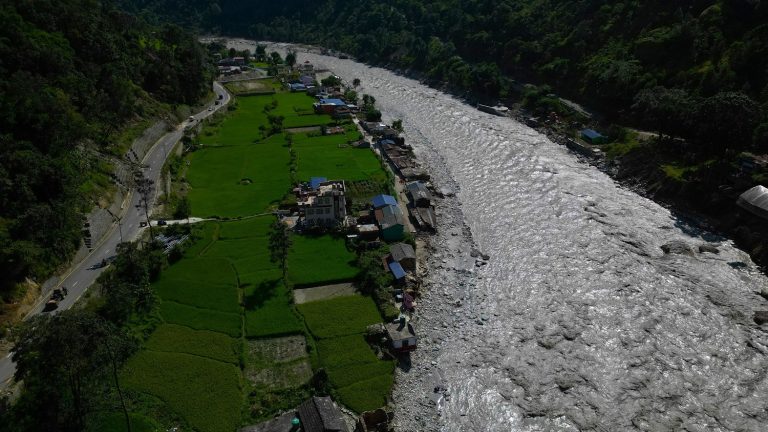
The organization, however, came under controversy after its members were seen wearing military-style uniforms during flood and disaster response activities in the Bhotekoshi and Trishuli areas. Questions were subsequently raised over its use of the name “Army,” its military-style uniforms, ranks and organizational structure, and whether these features created the appearance of an organization operating parallel to Nepal’s security agencies.
The issue became more contentious after reports emerged that the organization had received permission to use a green paramilitary-style uniform and ranks such as marshal and cadet.
According to details reported publicly, the Kathmandu District Administration Office had granted permission for the use of such attire based on approvals or recommendations involving security authorities. Kathmandu Chief District Officer Ishwar Raj Poudel has said the administration is looking into how the permission was granted and on what basis.
Military sources have also claimed that permission for the use of military-style uniforms had been given by senior Nepal Army officials and that a subsequent request had been made to correct or withdraw the permission. The exact legal basis and administrative process behind the authorization, however, remain unclear.
The Green Army was also affiliated with the Social Welfare Council. Council Member Secretary Chakra Bahadur Budha has said that the organization’s affiliation with the Council had not yet been cancelled and that cancellation of such affiliation follows a separate procedure.
The controversy therefore goes beyond the immediate question of whether the Green Army has been deregistered.
The more fundamental question is how an organization could be registered as a non-profit company, obtain administrative authorization for its activities, become affiliated with the Social Welfare Council and, at the same time, develop a name, uniform and organizational structure resembling those of the country’s security institutions.
If the organization was indeed allowed to adopt military-style ranks and uniforms, questions also arise about the responsibility of the state agencies that granted, facilitated or failed to scrutinize such permissions.
The issue exposes a potential regulatory gap in which an organization may obtain recognition or approval from different government bodies through separate legal and administrative processes, without adequate coordination among those institutions.
Therefore, the central question is not merely whether the Green Army has been deregistered. If a cancellation decision has been made, where is the official record of that decision, which authority made it, on what legal grounds, and why was an organization with such a controversial structure allowed to operate in the first place?
The organization’s legal status is expected to become clearer once the Office of the Company Registrar resumes regular operations and its CAMIS records and relevant decisions can be examined.
Until then, the reported deregistration should be treated as a claim awaiting official administrative verification, rather than as an established fact.