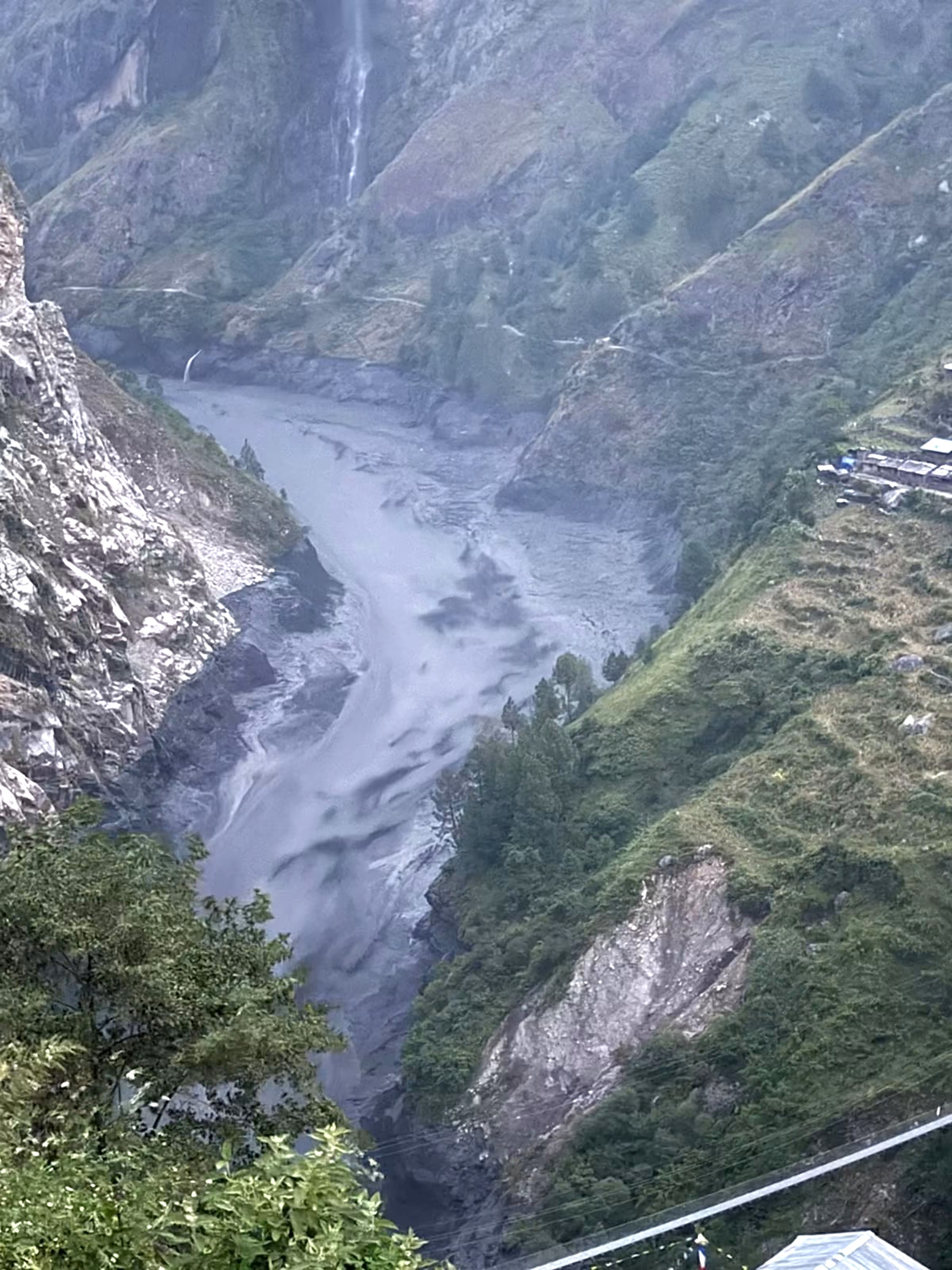
बूढीगण्डकी नदीमा आएको बाढी
KATHMANDU, October 11.
Nepal is a country at high risk of natural disasters due to its geographical diversity and complex terrain. Issues such as landslides, floods, and river blockages—particularly during the monsoon season or due to various other factors—have been recurring frequently. Following the Bhote Koshi flood on August 26, a sudden flash flood in the Budhigandaki River located in the northern region of Gorkha today, along with the damage it has caused, has sent shockwaves through the area.
A sudden landslide in the Philim area of Chumanubri Rural Municipality-3, Gorkha district, blocked the Budhigandaki River. After a short period, as water pressure increased behind the artificial lake formed by the blockage, the makeshift dam suddenly burst. With the bursting of the dam, a flood carrying mud, sand, gravel, and large boulders posed an immense threat to the river’s downstream settlements.
Because the flash flood occurred around 4:30 in the morning, widespread panic gripped the settlements along the riverbanks. With the river’s flow surging dramatically, residents in coastal areas were forced to flee in search of safe ground. Preliminary estimates indicate that this sudden flood has severely impacted physical structures, arable land, and the environment around the river.
Upon receiving information of the incident, the Government of Nepal and security agencies immediately adopted high alertness and intensified rescue operations. Under the active coordination of the National Disaster Risk Reduction and Management Authority (NDRRMA) and the Nepali Army, rescue teams have been mobilized via air and land routes into the affected areas.
Six individuals were successfully rescued by a Nepali Army helicopter from the Jagat area, which was severely vulnerable to landslides and affected by the flood. A special “Composite Quick Reaction Team” dispatched from Kathmandu has been deployed at the site with aerial equipment to coordinate rescue efforts. Security personnel have continuously urged local residents in riverine and surrounding settlements to stay away from the riverbanks and move to safe, elevated locations.
Gorkha and surrounding areas were heavily impacted by the 2015 earthquake. The cause of this flood is likely due to the fragile and sloping terrain of the mountains here, where even normal rainfall or minor tectonic movements easily trigger landslides. Due to climate change-induced shifts in weather cycles and intense rainfall, debris-laden landslides frequently block rivers in narrow gorges. Since most sections of the Budhigandaki River flow through narrow and deep gorges, falling landslides easily dam the river to form massive waterlogged lakes, which subsequently burst to create terrifying floods in downstream areas.
While natural disasters cannot be entirely prevented, proactive preparedness and awareness can significantly minimize loss of life and property. This flood in Gorkha’s Budhigandaki River has served as a stark reminder of how sensitive we must be toward natural hazards.
Although prompt action by the Nepali Army and security agencies prevented a massive human tragedy, future strategies must accelerate long-term embankment construction, enhance early warning systems, and systematically relocate riverbank settlements to safe zones to withstand such disasters. Public awareness and state preparedness remain the most formidable tools for disaster management.
Ram Kumar Rai / Unified Nepal