तलेजुको जात्रा
Bhaktapur, October 22 (Kartik 5):
The Payadyo (Khadga Jatra) and the white horse Jatra (Taleju’s vehicle), which began at midnight on the day of Vijaya Dashami, concluded this morning on the day of Ekadashi.
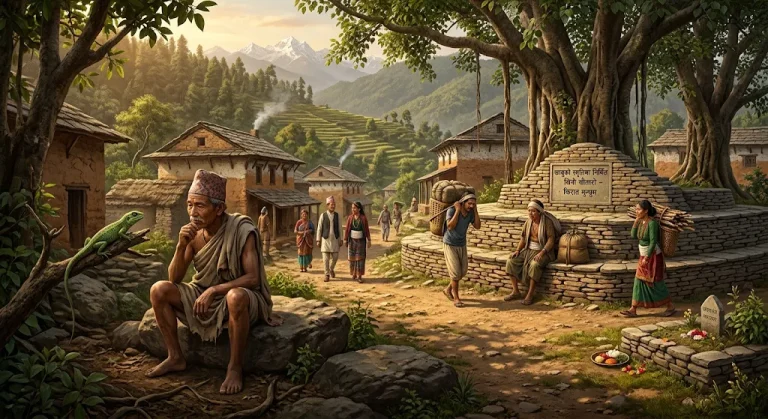
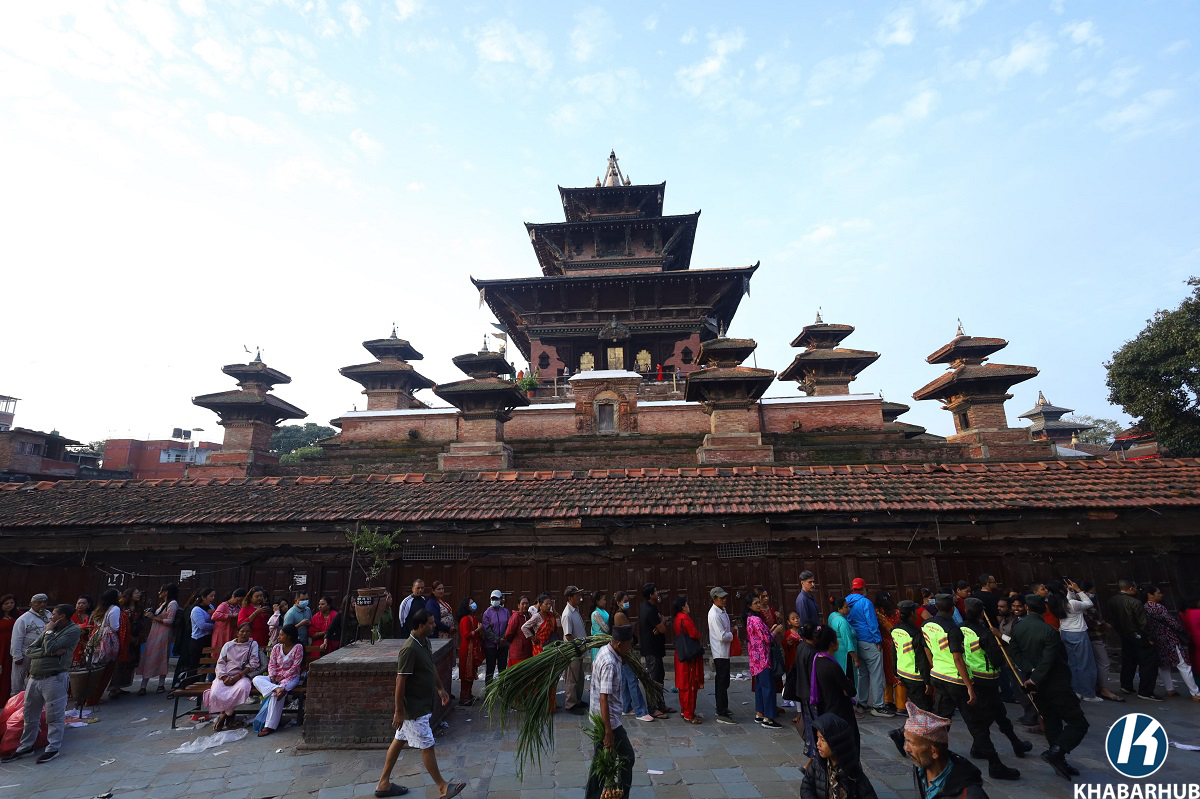
According to tradition, the festival concluded after the deities of Nava Durga Bhawani—who spent the day of Vijaya Dashami performing rituals at the Brahmayani Temple—toured various neighborhoods of Bhaktapur at night and arrived at Durbar Square. There, younger sister Brahmayani paid respects and offered prayers to elder sister Taleju Bhawani to attain mantra siddhi (spiritual perfection). Late at night, the Nava Durga deities returned to their devagriha (abode) after circumambulating the Jagannath (Pashupati) Temple at Taleju Durbar Square, concluding the festival in the early morning hours.
During the Khadga Jatra, a Rajopadhyaya associated with Taleju carries the Payadyo on his shoulders from the Taleju Mulchowk to Beko Chowk, where it is traditionally opened for the public to worship and pay homage.
Narendra Prasad Joshi, former Chief Naik of Taleju, shared that the Jatra officially begins at midnight on Bada Dashain. The ritual involves handing over the Payadyo—a representation of Taleju accompanied by sacrificial items and weapons worshiped through Tantric rituals inside the Kha Kuthi room of the Taleju Agam House (Temple)—by Taleju’s chief Achaju and priest to the Rajopadhyaya.
Cultural expert Prakash Kayastha noted that during the Payadyo Jatra, the deity considered the living embodiment of Taleju Bhawani is wrapped in red cloth and adorned with battle armor.
According to cultural expert Kayastha, once Taleju is brought to the Golden Gate at Durbar Square at night, mantra siddhi is conferred sequentially upon the lined-up waiting Nava Durga deities by Taleju. Following the attainment of mantra siddhi from Taleju Bhawani, the living deities (Payadyo and Nava Durga) proceed along the procession route.
In accordance with lunar calendar dates and movements, the Jatra was celebrated this year by taking the procession to the lower areas of the city at night—including Khauma, Itachhe, Tekhapukhu, Vansagopal, and Taumadhi—where Taleju pays respects to Nava Durga to attain Nava Durga siddhi.
On the night of Vijaya Dashami, after the four chief Naiks of Taleju (Achaju, Joshi, and Rajopadhyaya) complete the Kalaratri worship, Tika auspicious-time worship, and immersion rituals according to Tantric methods, the white horse Jatra traditionally begins.
Before the horse Jatra commences, a sheep is sacrificed to the white horse. Following this, the white horse is brought out from Taleju Mulchowk and paraded around Bhaktapur city. Traditionally, as Brahmayani and Taleju are circumambulated around various parts of the city, Taleju’s vehicle, the white horse, follows closely behind to complete the Jatra. However, the white horse Jatra has been suspended for the past two years, and the organizers have not provided any official explanation regarding this suspension.
RSS/Unified Nepal