बेलनौत’ विधि
Mahottari, October 16.
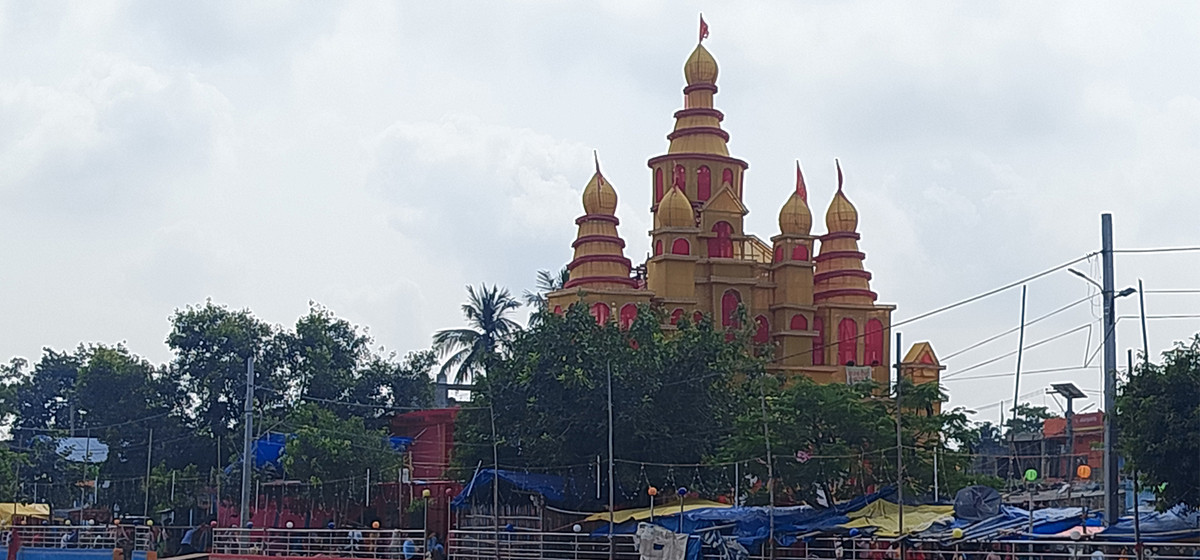
Today marks the sixth day of Sharadiya Navaratra. The traditional ‘Belnaut’ ritual is being performed today as part of the ongoing Dashahara (Bada Dashain) festival across the ancient Mithila region, including Mahottari in Madhes Province.
According to Shobhakant Jha, a teacher of ritual studies (Karmakanda) at the Rajakiya Sanskrit Secondary School (Gurukul) in Matihani, Maithil tradition dictates that this ritual is performed on the sixth lunar day (Sashthi Tithi). In the Mithila region, the ‘Belnaut’ ritual involves using the stem of a bael (wood apple) fruit to open the eyes of clay-molded Goddess Durga idols on the seventh day (Saptami).
As part of this tradition, on the afternoon of Sashthi—the day prior—people proceed with musical instruments from the idol installation site to a nearby bael tree, climb it, and tie a single bael fruit with a red cloth. This ritual is known as ‘Belnaut’ in Mithila, the literal meaning of which is “inviting the bael fruit.” This ritual is being celebrated with great enthusiasm today on Sashthi.
“On the sixth day of Navaratra, the bael fruit is tied with Vedic chanting after formally inviting it. On Saptami, that fruit is plucked, and its stem is used to symbolically open the eyes of the idol according to Maithil tradition. Following the tradition of using the stem of the bael fruit—which is considered sacred by scriptures—to open the eyes of the goddess’s idol, this ritual is performed with the sentiment of inviting the bael fruit for that purpose,” explained Gurukul teacher Jha.
On Saptami morning, people again go with musical instruments to pluck the invited bael fruit along with its stem. This ritual of plucking the bael is called ‘Beltodi.’ Goddess idols have been set up in settlements across the Mithila region for the Dashahara festival. Excitement and activity have increased across the area since early this morning to complete the ‘Belnaut’ ritual, with men and women finishing their household chores early to participate.
Experts on Mithila culture and traditions note that for idols made of wood or metal rather than clay, the eye-opening ritual is not required. Nevertheless, even at such temples, the custom of plucking the invited bael fruit and placing it near the goddess’s idol is still observed.
According to tradition, the goddess idols prepared specifically for the festival are immersed in religiously significant rivers or deep ponds on Vijaya Dashami, a practice known in Mithila as Murti Bhasaune.
RSS/Unified Nepal