लमजुङ कालिका
LAMJUNG, Oct 15:
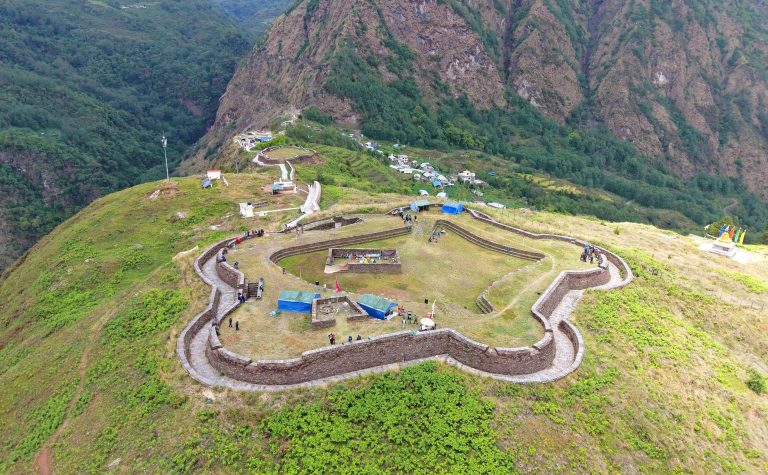
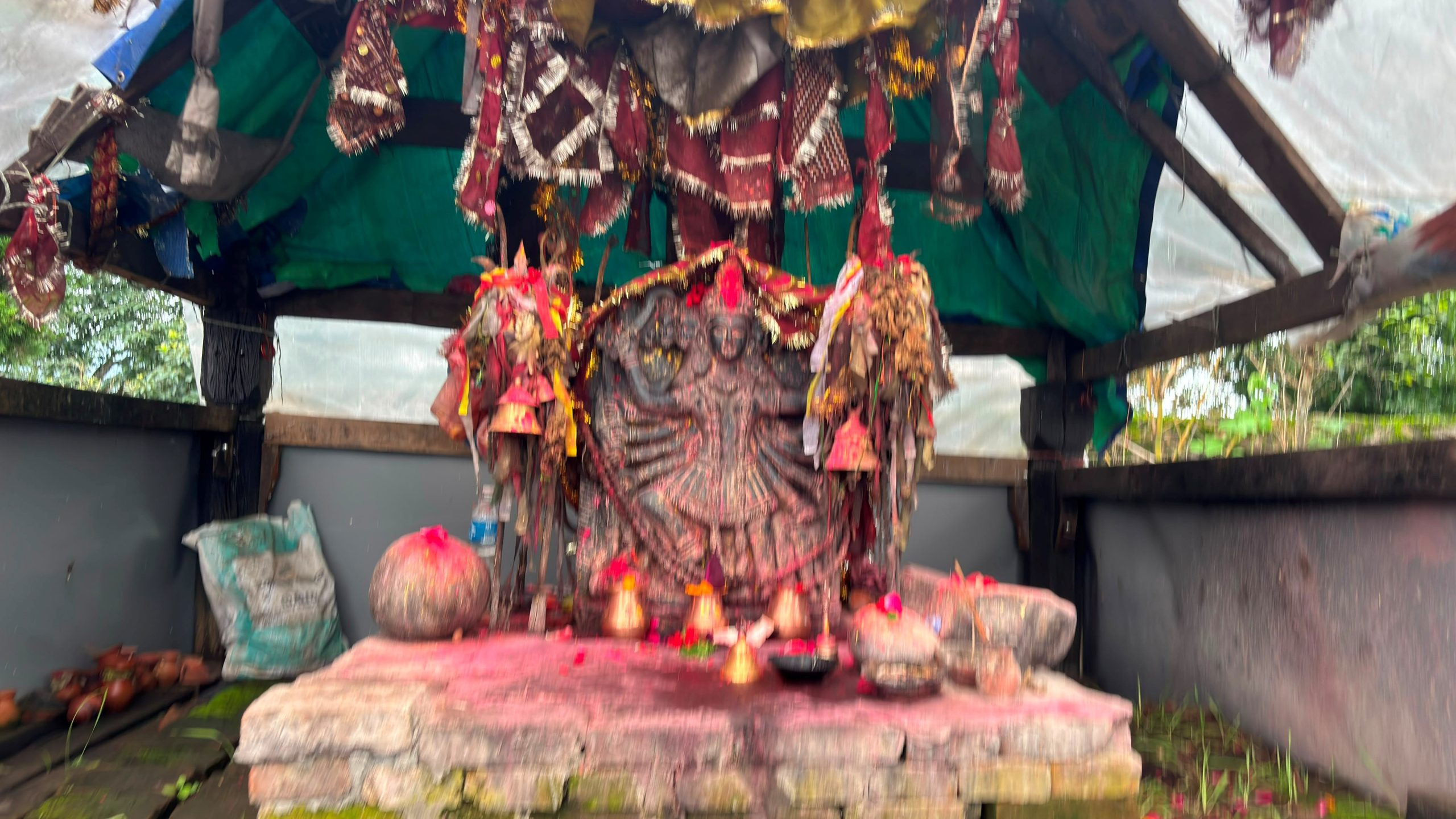
At the Kalika Bhagwati Temple in Lamjung Palace, located in Gaunsahar, Besisahar Municipality-3, prayers are now offered for the happiness, peace, and prosperity of the Nepali people.
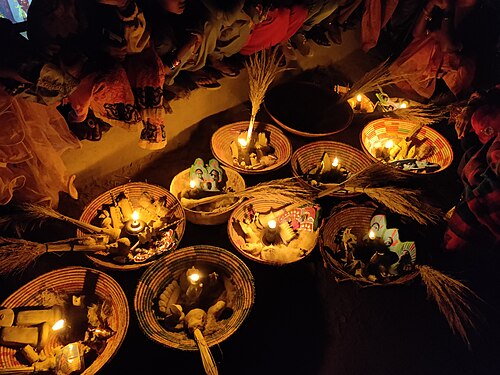
Although the objective of the resolution (sankalpa) during worship has evolved over time, the religious rituals and traditions passed down through generations remain continuous. According to Chief Priest Somraj Baral, special worship conducted from Ghatasthapana to Purnima is dedicated to wishing for the welfare of the public.
“Earlier, the resolution was made for the well-being and prosperity of the king. Nowadays, prayers are performed wishing for the happiness, peace, and prosperity of the citizens of the country,” he stated. Along with the invocation of Kalika Bhagwati, the tradition involves worshipping various deities by calling upon their names.
Chief Priest Baral noted that prayers are offered while remembering the thirty-three crore deities, including Mahakali, Mahalaxmi, Mahasaraswati, Brahma, Vishnu, Maheshwar, the deities of the Ten Avatars, Chiranjeevi, Panchayan deities, Gorakhnath, Shiv Panchayat, and Chandideurali.
According to local religious beliefs, Lamjung Kalika is regarded as the eldest sister (jethi), Gorkha Kalika as the second (maili), Udipur Kalika as the third (sainli), and Baglung Kalika as the youngest (kanchi). There is a deep-seated public faith viewing these four Kalika temples as sisters, Baral added.
According to Rajendra Bohora, Chairman of the Gaunsahar Kalika Temple Conservation and Management Committee
, Kalika Bhagwati was the lineage deity (kuldevi) of the erstwhile Shah royal family. It is believed that the tradition of worshipping the deity began in 1550 BS when Yasho Brahma Shah became the King of Lamjung and established the Kalika Temple alongside the Gaunsahar Palace. While the purpose of the resolution has changed since the era of the royal family, the traditional methods remain intact, he stated.
A total of 22 attendants (susare) play a vital role in the worship and management of the temple. The tradition of entering the temple to worship the deity is associated with priests from the Baral, Bohora, Ale, and Rana communities, while other attendants assist in preparation and management.
The ritual of bringing in Phoolpati during the Dashain festival holds special significance here. On Shashthi, the day prior to Phoolpati, special worship is conducted on the palace premises. Subsequently, an eight-member team of attendants goes to the Laxminarayan Temple in Besisahar.
After performing worship and devotional singing (bhajan) there, the team proceeds to the banks of the Marsyangdi River near Marsyangdi Campus in Besisahar Municipality-7. A goat is sacrificed there, following which the team spends the night keeping vigil with bhajans.
The next morning, after taking a bath, the team heads toward Phoolbari in Besisahar Municipality-8 to collect Phoolpati materials. Gathering necessary flowers and worship items from Phoolbari, they reach Chandithumka. Phoolpati is prepared by gathering bel leaves, ashok leaves, jayanti, akuri-makuri flowers, and other ritual items. There is a tradition that the collected flowers must not be set down on the ground along the way.
A procession comprising the Dashavatar-worshipping, kalash-carrying Mauleni, devotional singers, Malshri singing group, Naumati Baja, and Nishan starts from Lamjung Palace and reaches Chandithumka. Upon the meeting of both groups, worship is performed, and a pumpkin (kupindo) along with a sacrifice is offered. Afterwards, accompanied by Malshri tunes, bhajans, and traditional instruments, the palanquin of Phoolpati is brought to the Kalika Temple and enshrined in the Dashainghar.
In accordance with state traditions during Bada Dashain, 27 animals including goats, pigs, and sheep, alongside six water buffaloes, are sacrificed. Since devotees also offer individual sacrifices, the total number of animals sacrificed during Dashain can reach up to 60.
For Chaite Dashain, the traditional number of sacrifices is 27. According to Ishwar Kamal Shrestha, Chief of the Bhasmi Administration Office in Lamjung, expenses for temple rituals amount to Rs 500,000 for Bada Dashain and Rs 270,000 for Chaite Dashain. The budget allocated for worship has been increasing since 2078 BS, though funds for this year have not yet been disbursed, he noted.
The remembrance of deities, the religious belief connecting the Kalika temples as sisters, and the tradition of welcoming Phoolpati continue to keep the historical and cultural significance of this temple vibrant today.
(RSS)