सहरको स्वादका लागि छुट्छ हिमालको दसैँ–तिहार
BAJHANG, October 12.
While families gather at home to celebrate Dashain with tika and jamara and share joy during Tihar, the festive season is not a time for homecoming for Ghuran Bahadur Bohara of Saipal Rural Municipality, Bajhang. Instead, it is the time he must leave home for trade.
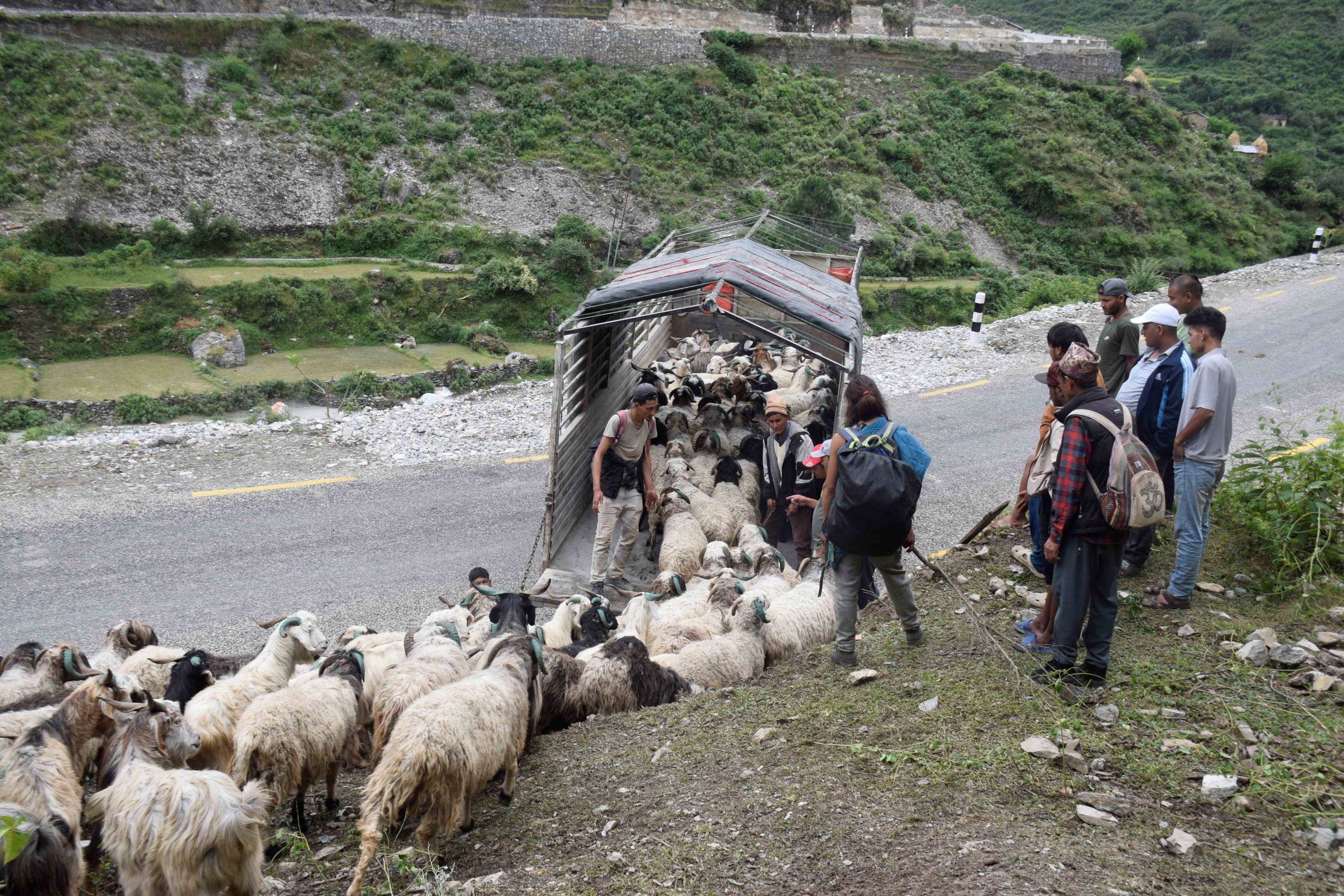
Ghuran travels all the way to Pokhara and Kathmandu with herds of mountain goats and sheep (bheda-chyangra). Even as urban households prepare meals with Himalayan mountain goat meat, he is deprived of receiving tika from his mother’s hands or celebrating Dashain with his family.
The labor of traders like Ghuran adds flavor to the city’s festivals, but the trade itself strips away the joy of celebrating their own. Ghuran Bahadur, from Dhaloun in Saipal Rural Municipality-1, has not received tika from his mother during Dashain for over 15 years.
Trade vs. Tradition
Because the mountain goat trade is a crucial source of income, the responsibilities of business pull these traders toward urban markets despite their strong desire to return home. Blessings from mothers and festival greetings to children must be exchanged entirely over phone calls.
“Being the only son in the family, and missing from home during Dashain, my mother doesn’t feel like the festival has arrived at all. When the head of the family is absent, it feels better if the festival just passes by,” Ghuran shares.
Ujjwal Bohara from Dhaloun-2 shares a similar experience. For a decade and a half, he has been unable to celebrate Dashain and Tihar with his family. Dashain is spent on the road, while Tihar ends in the hustle and bustle of the city. More than a hundred traders and assistants from Saipal, including Ghuran, Ujjwal, Rajendra, and Surendra, face this reality. Altogether, over 150 people travel from Saipal to Pokhara and Kathmandu with livestock. While truck drivers return a day after reaching the market, the livestock owners and their assistants spend weeks on the road.
Logistical Challenges and Risks
Bringing mountain goats from Bajhang to Pokhara typically takes five days to a week. Animals cannot be kept in vehicles all day; they must be grazed in nearby forests during the daytime and loaded for travel only by evening.
According to local trader Rajendra Bahadur Dhami, 38 trucks of mountain goats were dispatched from Saipal Rural Municipality this year alone, up from 28 trucks last year. Across the entire district, about 60 truckloads of mountain goats are exported to Pokhara. With each truck carrying an average of 65 animals, approximately 2,470 mountain goats were transported from Saipal this season.
Traders face significant financial, social, and practical hurdles:
- High Costs: Purchasing a single mountain goat in the village requires an investment of NPR 25,000 to NPR 30,000, with an additional NPR 5,000 per animal spent on transport, grazing, feed, and labor.
- Uncertain Markets: Selling prices are not guaranteed, and unexpected market slumps or rumors (such as past misinformation questioning the authenticity of mountain goats from Bajhang) can result in severe financial losses.
- Travel Difficulties: Grazing animals along the route requires permission and payments to locals, and traders often face friction and harassment despite carrying proper documentation.
To prevent the spread of disease during mass transport, all livestock undergo health checks, primary treatments, and documentation verification by veterinary professionals like Dr. Ravi Tharu before export.
The local government collects a revenue of NPR 100 per animal exported. While this trade opens up broader markets for Himalayan livestock and meets urban consumer demand, the traders behind it continue to trade their own family celebrations for the city’s festive feasts.
Rss/Unified Nepal.