हराउन थाले दसैँका परम्परागत पिङ
DADELDHURA, Oct 12.
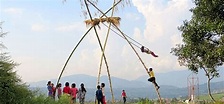
Although Bada Dashain, the great festival of Nepalis, officially began on Sunday, the traditional swings (ping)—which have long been synonymous with the festival—are gradually vanishing from villages. With Sunday marking Ghatasthapana, this year’s Dashain has officially entered households.
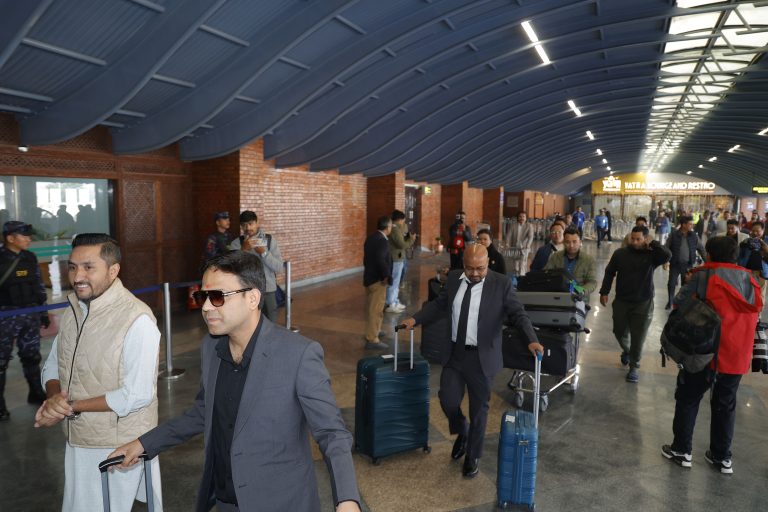
Despite the rituals and Ghatasthapana performed at homes and temples, the festive atmosphere and hustle-bustle in both markets and rural areas feel notably different. Whether returning from foreign employment or city jobs, people are eagerly rushing back to their ancestral homes to receive the traditional Dashain tika from their elders.
Suresh BK of Navadurga Rural Municipality-3, who returned home four years after working in Bangalore, India, shared that while meeting childhood friends after years apart is joyful, this year’s Dashain feels a bit dull compared to the past because traditional customs and cultural heritage are no longer being preserved.
Jograj Bhatta of Alital Rural Municipality-4 said, “While swings had already disappeared from urban areas years ago, they are now vanishing from villages too, which dampens the festive spirit. Putting up a swing used to bring entire neighborhoods together. It was an excuse for friends, who hadn’t seen each other in years, to gather at the swing grounds, and the excitement among children was unmatched. It’s not just the swings that disappeared; it feels like the joy of Dashain went with them.”
The disappearance of Dashain swings is driven by a lack of open public spaces in market areas, alternative forms of entertainment, and a growing fixation on social media. Gitanjali Saud of Amargadhi Municipality-3 notes that swings, which used to be set up in every single neighborhood, are now hard to find even across an entire village.
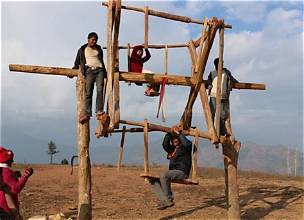
Traditionally, villagers used to set up rotary swings (rote ping) a week before Dashain, but this practice is fading away. Eighty-five-year-old Padam ADI of Ajaymeru-3 recalled, “A week before Dashain, there used to be a rush to find swing poles, cut bamboo, and twist babiyo grass into ropes if store-bought ropes weren’t available. Now, everything feels foreign, and the tradition of putting up swings in villages is declining.”
While swings are still sparsely erected here and there, their numbers are vastly lower than before. Traditional rope-and-bamboo swings (linge ping) were constructed by planting bamboo poles in four directions, using a rope made from babiyo grass, and decorating the top with marigold and red velvet flowers, making the finished swing look like a brilliantly adorned bride. People of all ages, from children to the elderly, used to ride them, with youths being the most enthusiastic participants. However, advancing technology is eroding these traditional cultural roots.
As more people spend their time absorbed in social media, the fading tradition of putting up swings during Dashain is slowly diminishing the deeper significance of Nepali festivals. Yet, a popular belief still persists in rural areas that one must ride a swing and leave the ground at least once on the day of Dashain tika.
People are increasingly engrossed in Facebook, Instagram, and TikTok. Ajaymeru Rural Municipality Chairman Bikash Bhatta expressed concern that traditional practices, along with the swings put up during festivals like Dashain and Tihar, might be lost entirely. He noted that people nowadays show little interest in these customs, remaining completely occupied with social media instead.
— RSS / Unified Nepal