सखिया नाच
BANKKE, Oct. 20:
Traditional Sakhiya dances have enlivened Tharu villages across Banke district, creating a vibrant cultural festival atmosphere as communities celebrate the Dashain festival.
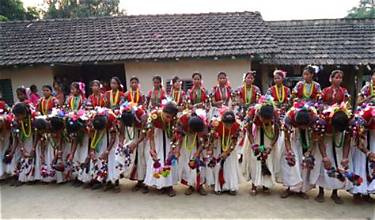
Beginning a few days prior to Dashain and continuing for several days after its conclusion, the dance has transformed local settlements into centers of cultural celebration. In villages with dense Tharu populations, young men and women gather every evening after completing their daily chores to participate in the collective dance, fostering mutual harmony, unity, and cultural identity.
According to Dipendra Chaudhary, a Tharu community leader from Kohalpur Municipality-Matahwa, the daily performances have significantly heightened the festive spirit. He noted that during the dances, a traditional healer (Guruwa) is appointed to ward off evil spirits, while village elders (Barghar) and respected community leaders oversee its preservation and management.
Vikram Tharu, a community leader from Raptisonari Rural Municipality-Baijapur, explained that the dance traditionally features women performing the choreography while men play the traditional drums (madal). Performances typically include four to five drummers, and the excitement builds as the rhythm and number of drums increase.
The dance generally involves 15 to 20 young women adorned in traditional attire—white skirts (fariya), red blouses (choliya), and red ribbons—alongside traditional Tharu jewelry and seven-colored cymbals (manjira), which add to the visual appeal.
Shankar Singh Tharu of Titihiriya, Banke, shared that Sakhiya dance songs invoke various deities such as Demondaura, Ghotaili, Jaganthwa, Pasiya, Katkatuwa, Zinguni, Maduwa, Shiva-Parvati, Pandavas, and Lord Krishna, praying for community peace, happiness, and security.
Performers wear an array of traditional jewelry including fefi, bulaki, magauri, jhumka, bijaliwala, kansehari, airam, tariya, pachela, gataiya, tataiya, kara, ghughna, and kukarlagauti, while traditional garments like gonya, cholya, and fariya showcase the distinct heritage of the Tharu community.
Community leaders note that the gathering of friends and youth for the group dance—from which the name “Sakhiya” originates—strengthens a sense of collectivism, mutual cooperation, and unity. Following the conclusion of the dance sessions, participants use collected funds to prepare and share communal meals featuring traditional dishes like fish and meat, deepening social bonds alongside entertainment.
As an essential cultural heritage tied to the Tharu community’s indigenous art and traditions, the Sakhiya dance continues to be actively passed down through generations during the Dashain festival.
RSS/Unified Nepal