काठका सामग्री
Bhojpur, Kartik 12
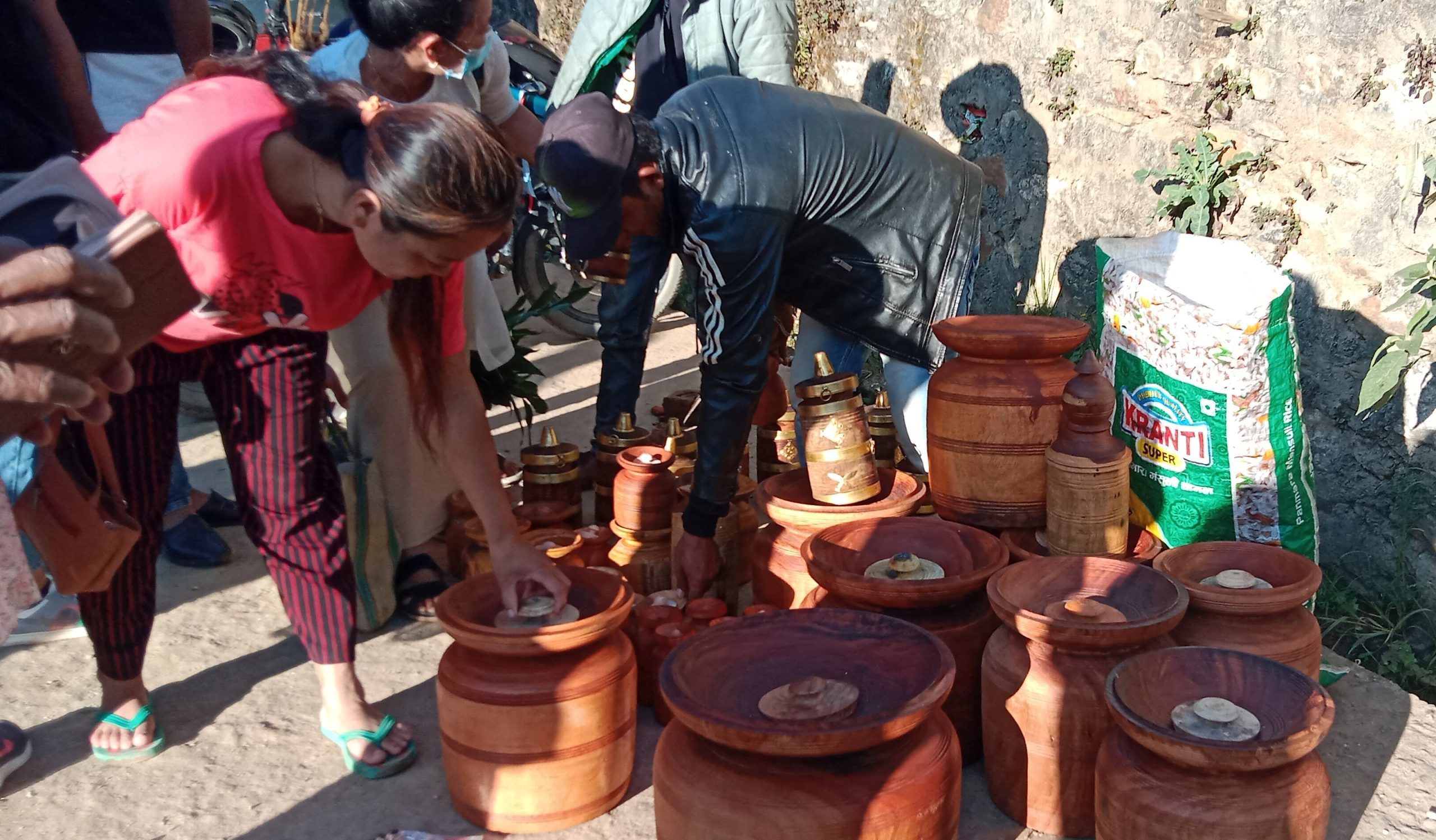
That were not just household utensils, but reflections of the traditional rural lifestyle and indigenous skills. Nowadays, both the production and use of these items are gradually disappearing.
Local resident Rambahadur Bista from Temkemayung Rural Municipality–5 stated that the tradition of making traditional wooden items has been declining in recent times.
He noted that with plastic, metal, and other modern alternatives readily available in the market, the use of wooden items has dropped significantly.
As the usage declines, the skills required to craft these items and the traditions built upon them are on the verge of extinction, he added.
Padam Bahadur Basnet, another local resident, shared that changes in people’s lifestyles, household needs, and market accessibility over time have impacted the use of wooden items.
He mentioned that these items, once made from local resources, are now being replaced by market alternatives. While this has eased daily life, it has posed a challenge to the continuity of traditional skills handed down through generations.
Crafting wooden items requires specific skills, starting from selecting the appropriate wood to shaping it into the desired form. Such skills have been passed down across generations through practice and hands-on experience.
As the younger generation’s attraction grows toward other professions and modern lifestyles, participation in making traditional items is steadily decreasing.
Locals emphasize the growing need to focus on preserving wooden items, which are deeply tied to the use of local resources, traditional skills, and the indigenous identity of rural villages.
Local experts opine that encouraging the use and production of traditional items can help preserve local skills while safeguarding old lifestyles and cultural identity.
RSS